Table of Contents
Introduction
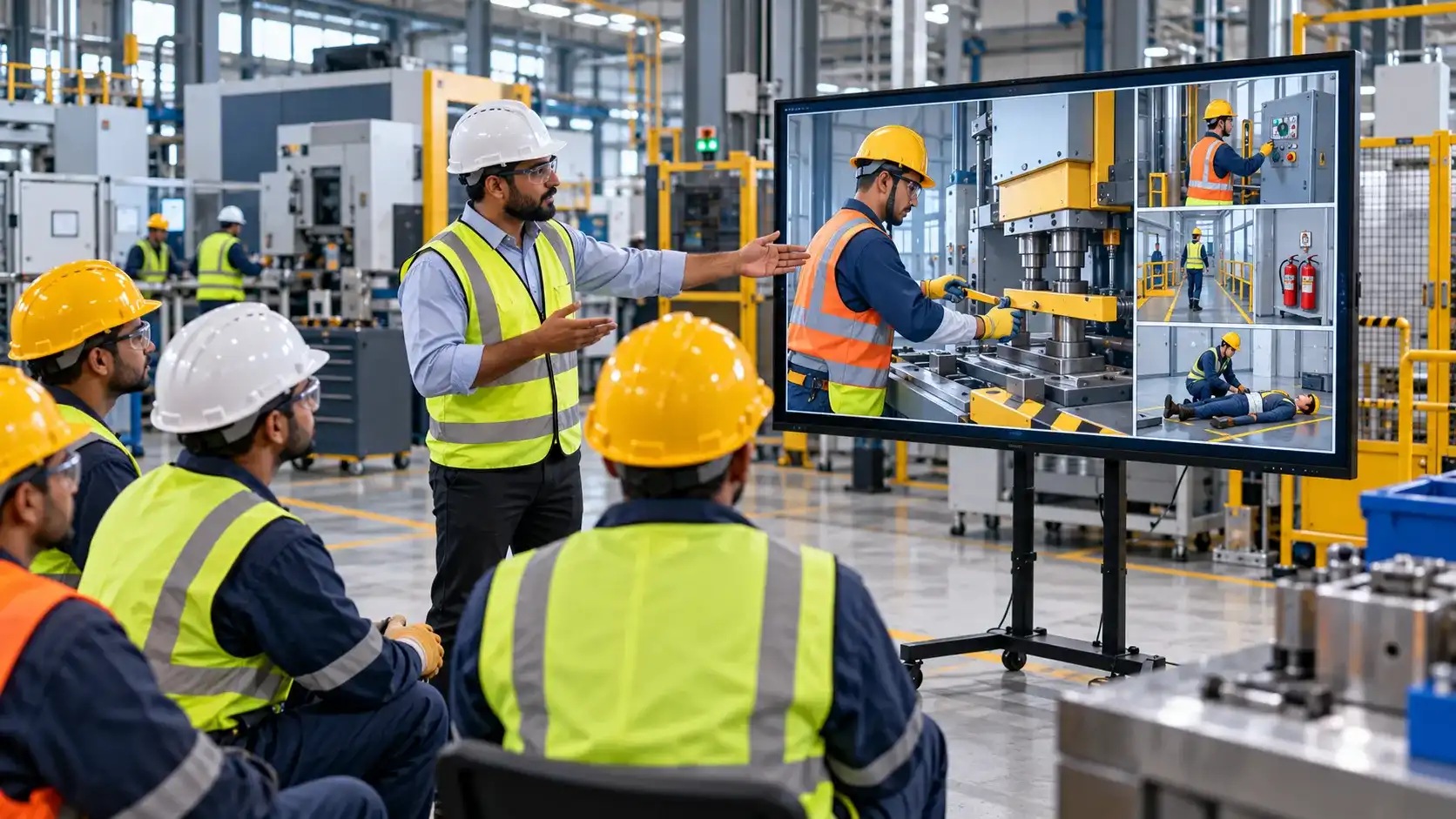
Safety induction is often the first serious safety conversation a new employee, contractor, or visitor has with your organization. It sets expectations, explains site rules, and introduces key hazards and controls. In 2026, more companies are moving from paper checklists and rushed verbal briefings to animated induction videos because they deliver clearer, more consistent, and more engaging onboarding.
For safety-critical industries, animated safety induction videos are becoming a core part of EHS and HSE strategy, helping teams meet legal duties, standardize induction across sites, and overcome language and literacy barriers.
What a modern safety induction must cover
Regulators and HSE bodies emphasize that induction must be site-specific and cover key risks and controls, not just generic corporate information. Typical guidance and checklists for health and safety induction include topics such as:
- Site-specific hazards and risk controls.
- Health and safety policy and worker responsibilities.
- Emergency procedures, alarms, exits, and muster points.
- PPE requirements and where to find equipment.
- Accident, incident, and near-miss reporting.
- Permit-to-work systems and authorization rules (where relevant).
- Housekeeping standards and welfare facilities.
- Ongoing briefings such as toolbox talks and safety meetings.
In many workplaces, induction also needs to touch on lifting, working at height, vehicle safety, hot work, compressed gases, housekeeping, waste management, and environmental expectations. That is a lot of information to cover effectively in a short time.
Why traditional briefings struggle
Traditional induction often relies on:
- Printed checklists and forms.
- Slide decks presented quickly.
- Verbal walk-throughs by busy supervisors.
- Posters and static signage in reception or training rooms.
While these methods can meet minimum requirements, they struggle when:
- The information is complex and technical.
- Workers have different language and literacy levels.
- Inductions must be repeated frequently for contractors and visitors.
- The site environment changes and procedures evolve.
Workers may sign forms without fully understanding what they have read. Supervisors may deliver inconsistent messages depending on time pressure and personal style. Visitors may receive a brief generic talk that does not reflect the real risk profile of the site.
How animated induction videos change the game
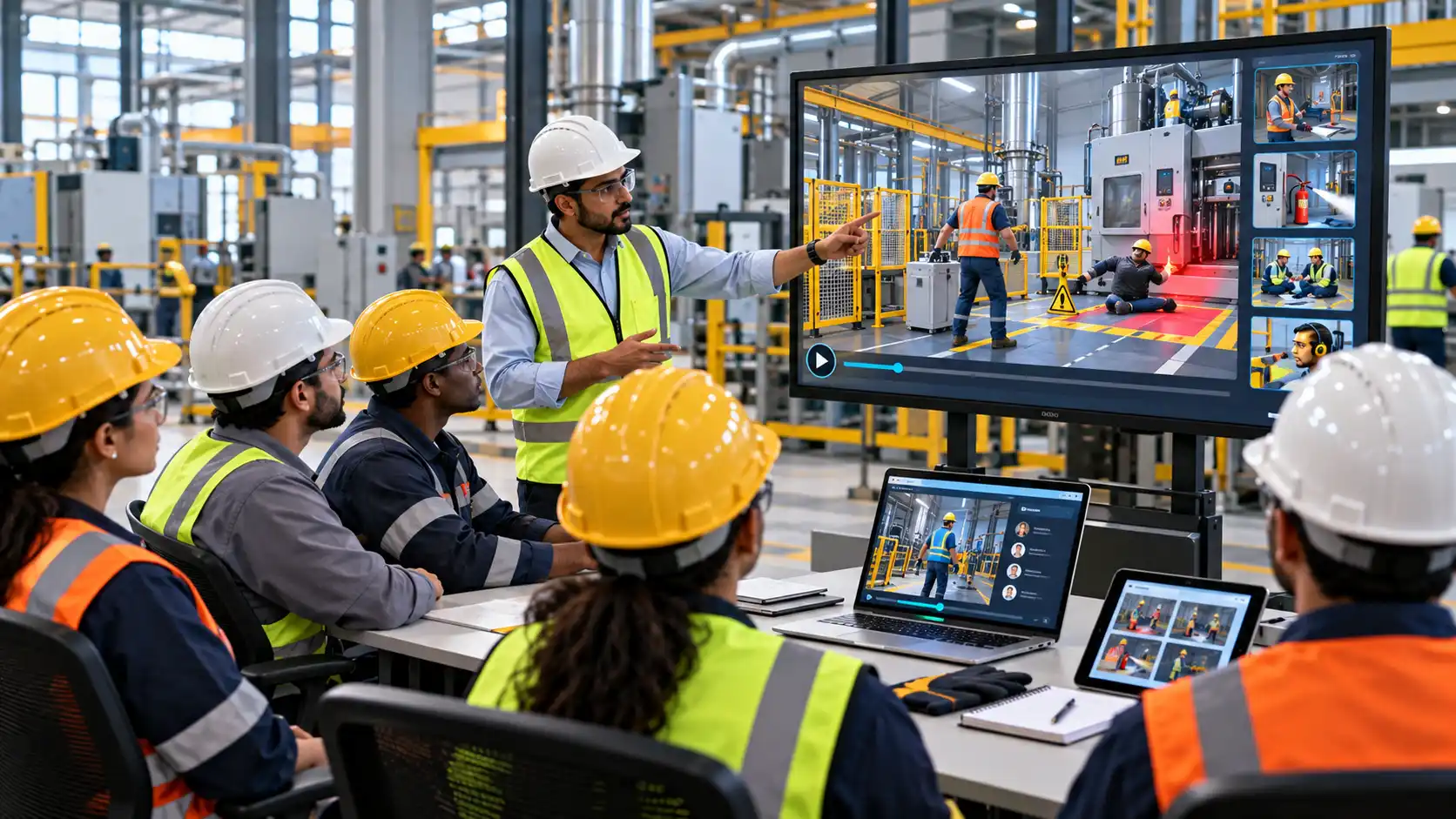
Animated safety induction videos replace static explanations with visual stories that show how the site works and what safe behavior looks like. They help new people see the environment, routes, hazards, and expectations in a clear, controlled way.
Key advantages include:
- Visual clarity: Induction videos can show site layouts, hazard zones, safe routes, and emergency procedures rather than just describing them.
- Consistency: Every visitor or new hire receives the same core message, reducing variability between sessions.
- Engagement: Animation keeps attention longer than text or static slides, improving recall.
- Accessibility: Voiceover, subtitles, and visual cues help multilingual and mixed-literacy audiences understand expectations.
For busy sites, this means induction becomes more than a compliance checkbox. It becomes a dependable learning experience.
Employee, contractor, and visitor induction needs
Employee induction
Employee safety induction typically covers:
- Company HSE policy and responsibilities.
- Job-specific hazards and controls.
- Emergency arrangements and first aid.
- Reporting of hazards, incidents, and near misses.
- PPE rules and equipment locations.
Animated induction videos can illustrate specific work areas, common tasks, and role-based hazards clearly, making it easier for employees to see how safety rules apply to their job.
Contractor induction
Contractors often move between sites and may be unfamiliar with specific procedures and hazards. Checklists for HSE induction highlight the need to cover topics such as permits to work, lifting operations, working at height, excavation safety, electrical safety, vehicle safety, PPE, emergency procedures, and life-saving rules.
Animated contractor induction videos can:
- Show site entry procedures and authorization rules.
- Explain permit systems visually.
- Highlight high-risk zones and restricted areas.
- Reinforce PPE and behavioral expectations.
This helps contractors integrate faster and follow local safety requirements, not just their own company’s rules.
Visitor induction
Visitors may not perform work but still face risks when entering plants, warehouses, or construction sites. Visitor induction guidance emphasizes explaining hazards, routes, PPE (if any), escort rules, and emergency behavior.
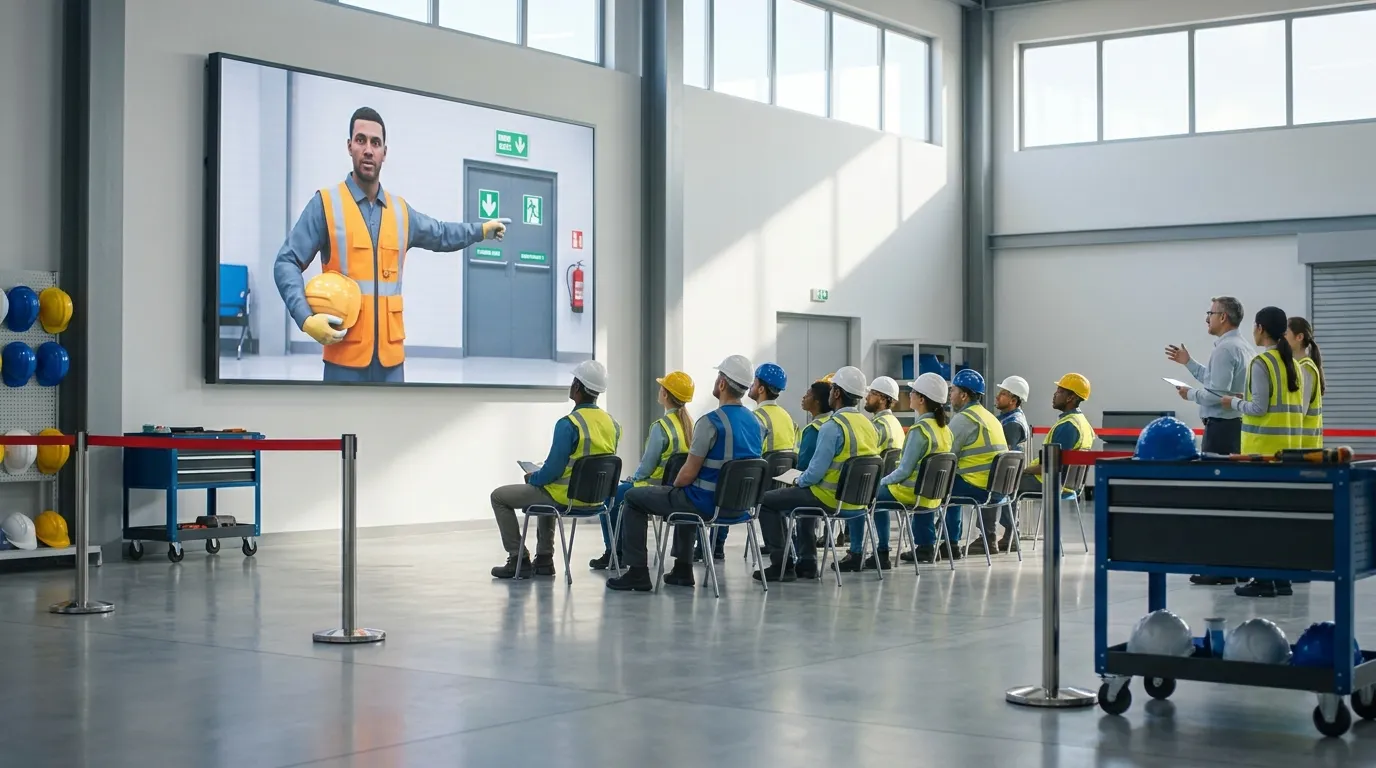
Animated visitor induction videos can:
- Show where visitors may walk and where they must not go.
- Explain what to do if alarms sound.
- Clarify escort and sign-in/out procedures.
- Highlight basic safety dos and don’ts.
Because visitors might be on-site briefly, an animated video is an efficient way to deliver essential information before entry.
Overcoming language and literacy barriers
Many induction checklists and guidelines note the importance of making sure workers understand instructions, especially when English is not their first language or when reading ability varies. Animated induction videos offer practical solutions by:
- Using visuals to show hazards and behaviors directly.
- Adding voiceovers in multiple languages.
- Including subtitles and icons for clarity.
- Reducing reliance on dense written passages.
This makes induction more inclusive and reduces the risk that people sign forms without fully understanding what they mean.
Induction as part of a broader safety program
Induction is only the first step. HSE guidance emphasizes ongoing briefing arrangements, toolbox talks, consultation, and regular training to maintain safety awareness. Animated induction videos can be reinforced by:
- Short animated refreshers in toolbox talks.
- LMS modules that revisit key induction topics.
- Micro-learning clips focused on specific hazards like slips, hot work, or working at height.
Treating induction as the foundation rather than the whole training program helps organizations build a stronger safety culture over time.
How animated induction videos fit into LMS and digital onboarding
Modern induction programs increasingly use LMS and digital platforms to manage new starters and visitors. Health and safety induction templates and checklists are being turned into digital forms and workflows.
Animated induction videos integrate smoothly into these systems by:
- Serving as the core content for induction modules.
- Being paired with short quizzes to confirm understanding.
- Providing completion records and signed declarations.
- Supporting remote pre-induction before site visits.
This makes the induction process measurable and auditable rather than ad hoc.
When to upgrade to animated safety induction
Organizations should consider animated induction videos when:
- Inductions rely heavily on rushed verbal briefings.
- Multiple sites or departments deliver different messages.
- Visitors and contractors are not fully absorbing safety rules.
- Incident investigations reveal induction gaps.
- Workforce diversity (languages, literacy) makes text-heavy induction ineffective.
In these situations, safety animation becomes a strategic improvement rather than a cosmetic change.
How Sanskriti Infotech supports safety induction in practice
Sanskriti Infotech offers safety induction video production tailored to industrial workplaces, drawing on HSE guidance and real-world site needs. By focusing on employees, contractors, and visitors, Sanskriti Infotech can help organizations:
- Turn induction checklists into clear visual stories.
- Build site-specific animated induction videos for plants, warehouses, and construction sites.
- Add multi-language voiceovers and subtitles.
- Deliver LMS-ready content for digital onboarding.
- Align induction animations with broader safety animation services like SOP visualization and incident recreation.
For safety and operations teams, this means induction content is not only compliant but genuinely helpful.
Practical steps to modernize safety induction
Organizations planning to modernize their induction can follow a straightforward process:
- Audit current induction
Review current induction checklists, presentations, and briefings against HSE and internal requirements. - Prioritize content
Identify the most critical topics for employees, contractors, and visitors—hazards, PPE, emergency procedures, and rules that must be understood before entry. - Gather site references
Collect layouts, photos, existing induction slides, and hazard information to inform animation. - Define audiences and languages
Determine which groups need induction (roles and locations) and which languages are necessary. - Design animated induction modules
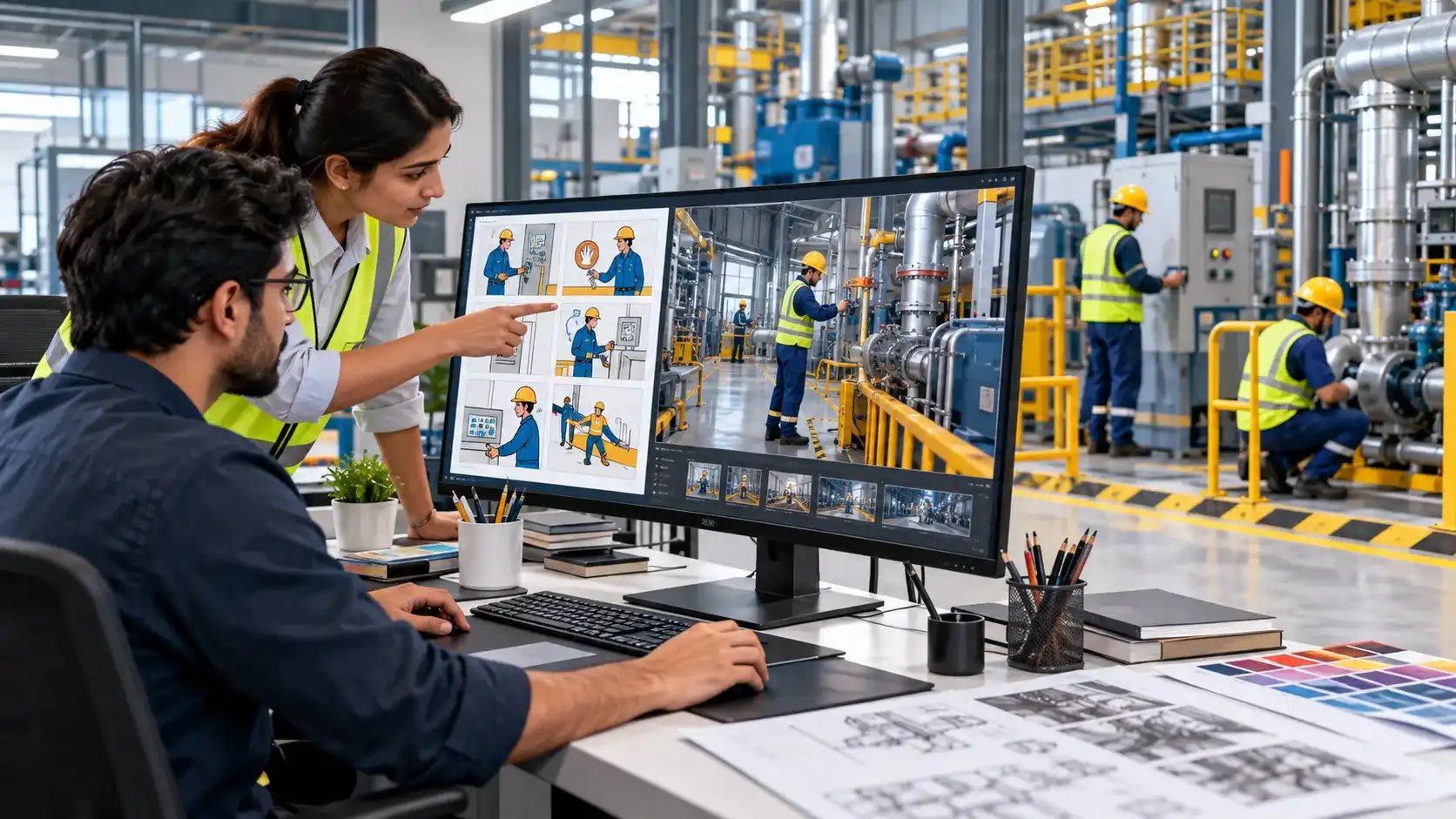
Partner with a safety animation provider to develop scripts, storyboards, and final animated videos that match site conditions and checklists. - Integrate with LMS and sign-in workflows
Embed induction videos in LMS modules or reception systems, pair them with acceptance forms or quizzes, and track completion. - Review feedback and incident data
Use worker feedback, observation, and incident trends to refine content periodically.
This ensures safety induction is cohesive, modern, and aligned with the wider safety program.
Ready to enhance workplace safety with engaging visuals? Contact us