Table of Contents
Introduction
When industrial businesses look for a safety animation company, they are not looking for a general animation studio. They need a partner that understands plant environments, workforce training, process risks, and how to explain complex procedures clearly. In safetycritical industries, the difference between a confusing training module and a clear one can affect onboarding speed, operational consistency, and workforce understanding.
Sanskriti Infotech is positioned as a specialized partner for industrial safety animation, helping companies convert complex procedures into clear 3D training content for induction, SOP communication, process safety, machine guarding, and emergency awareness. Instead of relying only on manuals, slides, or classroom sessions, businesses can use animation to show the correct sequence, the risk points, and the expected action in a way that is easier to understand and remember.
Why Safety Animation Matters in Industrial Training
Industrial training is o en difficult because many tasks involve motion, timing, danger zones, and multiple steps that are hard to explain through text alone. A written SOP may define the process correctly, but workers, contractors, and visitors may still misunderstand how the procedure actually looks in a real working environment.
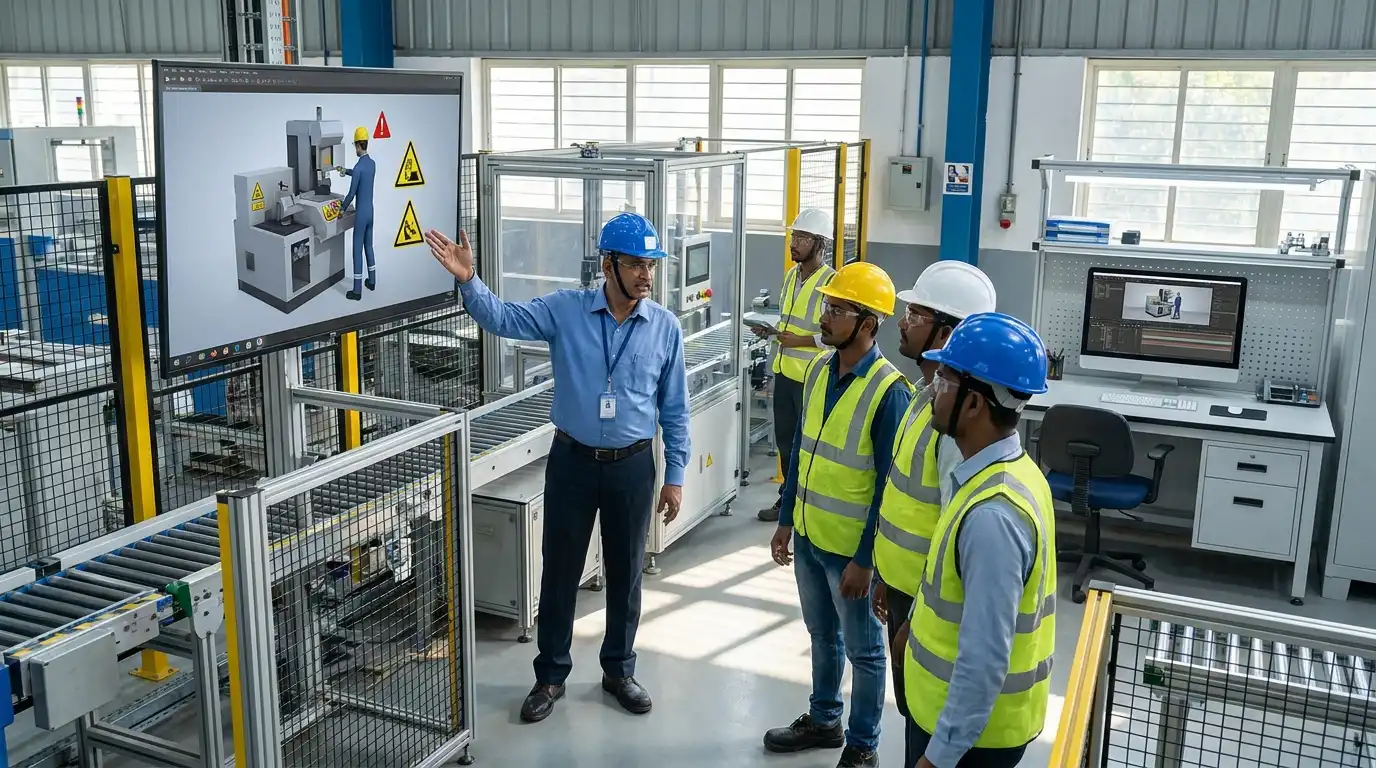
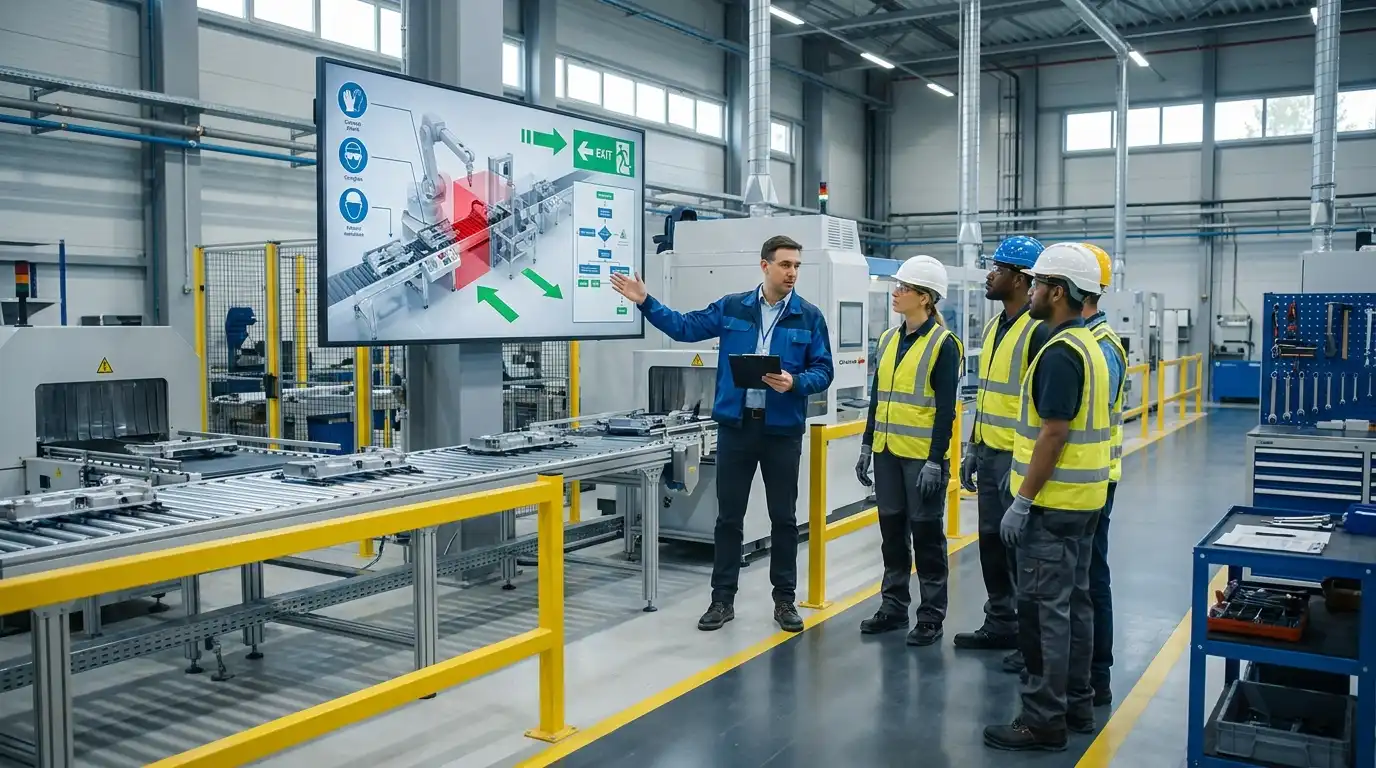
Safety animation helps solve that problem by visualizing the process. It can show moving equipment, restricted areas, operator-safe zones, emergency exits, hazard interaction, PPE use, and correct behavior in a way that reduces ambiguity. This makes it especially useful for induction programs, process communication, machine safety, and role-based industrial training.
For companies that operate across multiple teams, contractors, shi s, or locations, animation also helps standardize the training message. Every viewer gets the same approved explanation, which improves consistency and supports better communication across the organization.
What a Safety Animation Company Does
A safety animation company creates visual training content designed for industrial learning and compliance communication. The purpose is to make technical procedures easier to understand, repeat, and deploy across the workforce. Typical applications include:
- Employee induction animation
- Contractor induction animation
- Visitor induction animationSOP animation
- HSE and EHS training animation
- Process safety animation
- Emergency response animation
- Incident recreation animation
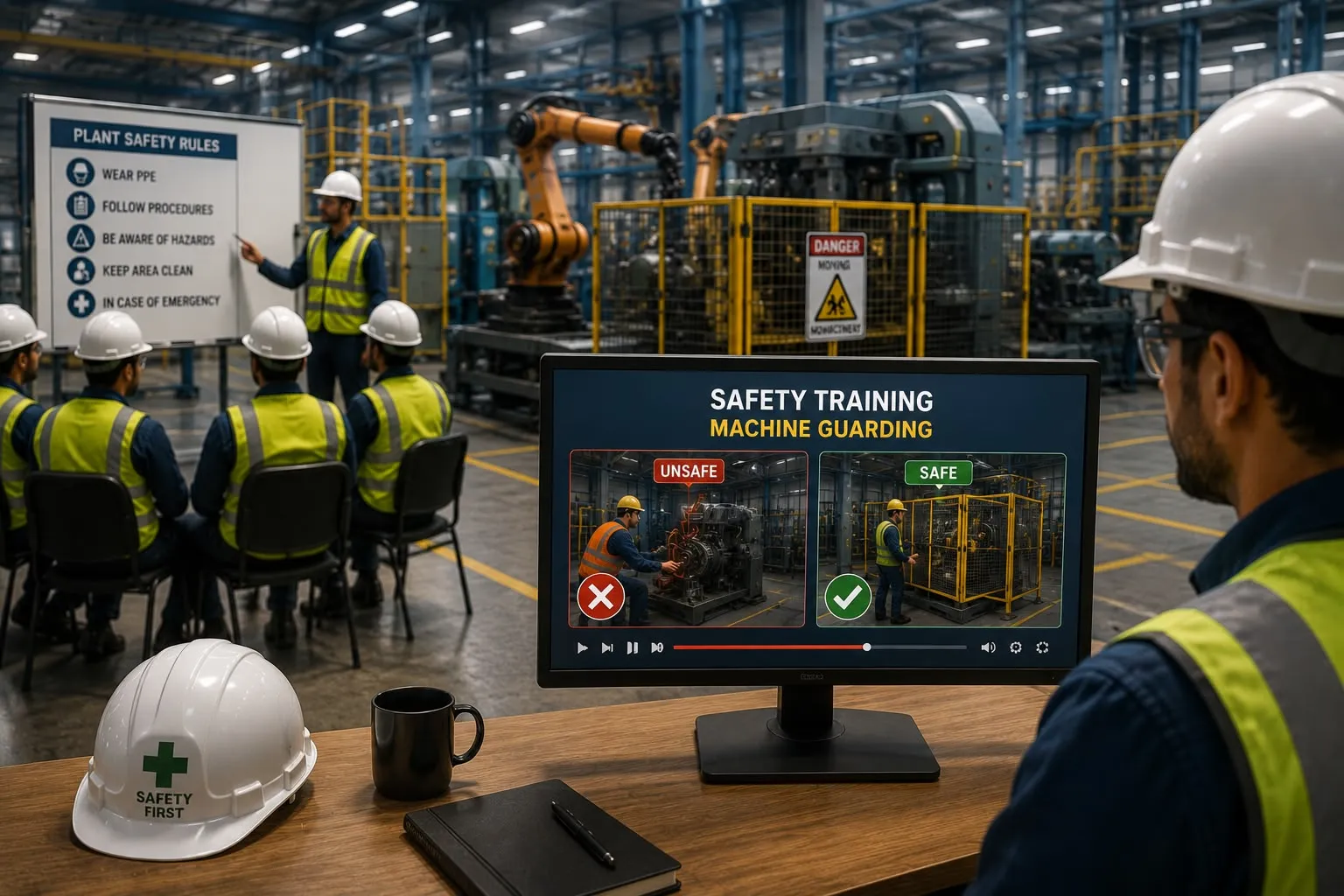
- Machine guarding animation
- Plant walkthrough and hazard-awareness animation
This kind of work requires more than animation capability alone. It also requires an understanding of how people learn in industrial environments, how procedures are followed on-site, and how to communicate safety without overcomplicating the message.
Why Choose Sanskriti Infotech
Sanskriti Infotech stands out by focusing on practical industrial animation rather than generic motion graphics. Its service offerings are aligned with real training needs such as induction, SOP communication, process safety, machine guarding, and industry-specific safety training.
This makes Sanskriti Infotech a strong fit for organizations that want training content that is not only visually polished but also operationally useful. A specialized safety animation company should be able to communicate risk clearly, simplify complex processes, and support workforce understanding across different roles and facilities.
Another advantage is flexibility. Industrial companies o en need training content for different audiences, from new employees and contractors to supervisors, technicians, and site visitors. A well-built animation approach makes it easier to tailor communication while maintaining a clear and standardized message.
Industries That Benefit Most
Safety animation is especially valuable in industries where procedures are technical, environments are hazardous, and training consistency matters.
Manufacturing
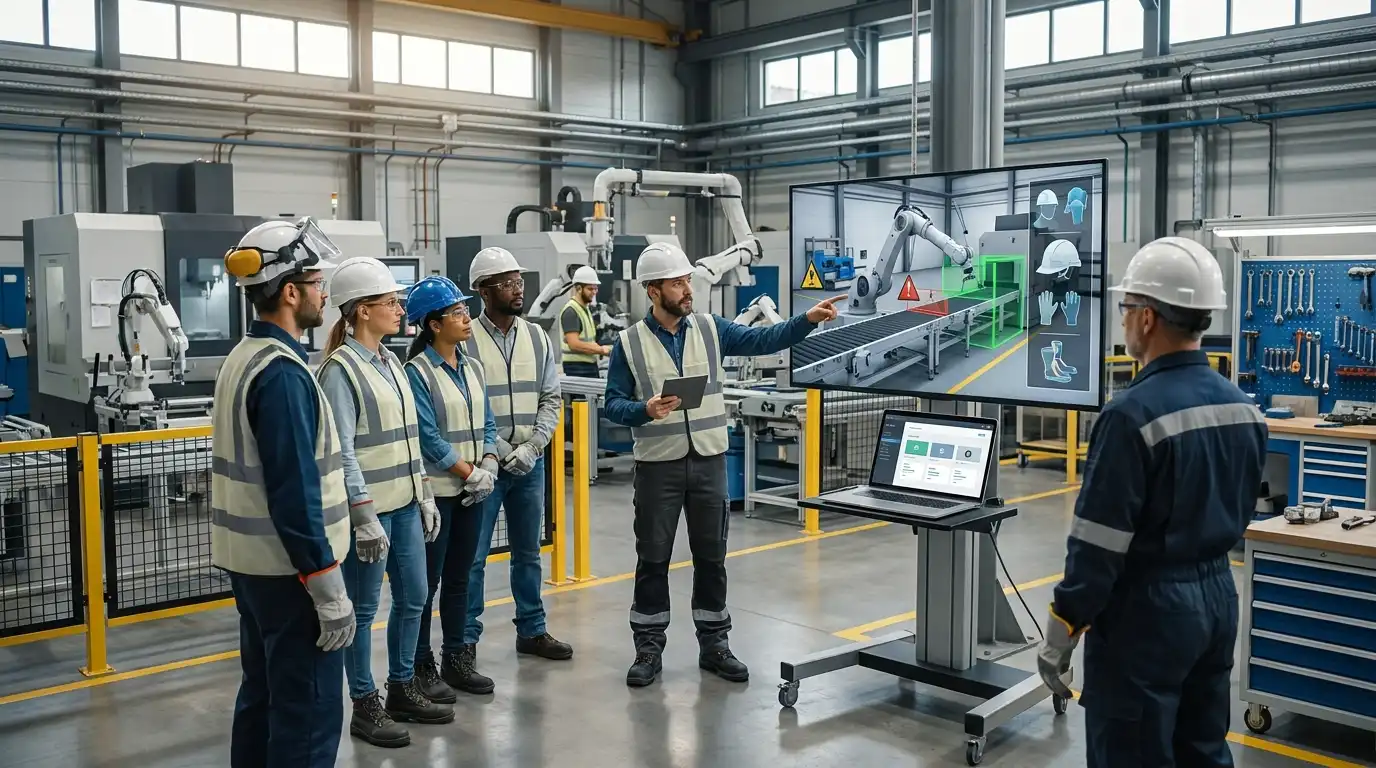
Manufacturing plants need clear communication around machine guarding, lockout and tagout, startup and shutdown procedures, safe operator zones, line movement, maintenance awareness, and standard operating procedures. Animation works well here because it can show movement, spacing, and safe interaction with equipment more clearly than static documents.
Construction
Construction businesses need induction content, PPE awareness, movement rules, work-atheight training, equipment-safety guidance, and site hazard orientation. Animated training is useful because it can simplify complex site rules for workers, contractors, and temporary staff.
Process Industries
Chemical, oil and gas, power, pharma, and food-processing environments o en require strong communication around process safety, emergency response, hazard identification, SOP adherence, and control measures. Safety animation helps teams visualize procedures and risk scenarios before they face them in real operations.
Warehousing and Logistics
Warehouses and logistics facilities benefit from visual training for vehicle movement, pedestrian segregation, loading bay safety, forkli behavior, route discipline, and contractor movement. These are dynamic environments, and animation helps explain those dynamics clearly.
Core Benefits of Safety Animation
The main benefit of safety animation is clarity. It helps people understand not just the rule but also the environment, sequence, and context behind the rule.
Better understanding of complex procedures
Animation can show the full process in one visual flow, including the machine, worker position, risk area, safe action, and incorrect action. This makes it much easier to teach subjects that involve movement or multi-step coordination.
More consistent training delivery
When training depends only on classroom sessions or individual trainers, the explanation can vary. Animation creates a repeatable training asset that delivers the same approved message every time.
Faster induction and onboarding
Induction o en has to be delivered quickly, especially in high-volume or contractor-driven environments. Visual content helps communicate essential rules in less time while keeping the message clear.
Stronger retention and engagement
People generally understand and remember visual demonstrations more easily than long written explanations. This makes animation useful for both first-time learners and refresher training.
Support for compliance and communication
Standardized visual modules can support safety communication, internal alignment, and process discipline. They are useful not only for onboarding but also for ongoing awareness and operational training.
Traditional Training vs Safety Animation
| Factor | Traditional Training | Safety Animation |
|---|---|---|
| Procedure explanation | Often text-heavy or trainer-led | Visual and step-based |
| Hazard communication | Limited in dynamic scenarios | Clearer for movement and zones |
| Consistency | Depends on instructor | Standardized |
| Repeatability | Resource-heavy | Easy to reuse |
| Induction efficiency | Variable | Faster and more scalable |
| Suitability for complex equipment | Limited | Strong |
How the Process Works
An effective safety animation project starts with the real working environment. The best results come when the training content is built around actual procedures, equipment, workflows, and learning objectives. A typical workflow includes:
- Collecting SOPs, reference material, process inputs, and audience details.
- Defining the training objective, such as induction, machine safety, emergency response, or SOP communication.
- Writing the script and planning the storyboard.
- Building 3D scenes, equipment, worker actions, and environment details.
- Animating the correct sequence, hazards, and required actions.
- Reviewing the content for technical and safety accuracy.
- Delivering the final output for induction, LMS use, training sessions, or internal communication.
This structured process helps ensure that the final animation is not only visually strong but also practical for real industrial use.
Conclusion
The best safety animation company for industrial training is one that understands more than animation. It understands how industrial training works, how safety communication can fail, and how visual content can make procedures easier to understand, easier to repeat, and easier to scale.
Sanskriti Infotech is well suited for this role because its focus is aligned with industrial safety animation, process safety, machine guarding, induction, and operational training. For companies looking to improve workforce understanding and communicate procedures more clearly, safety animation can be a practical and high-value solution.
Looking for a safety animation company for industrial training? Sanskriti Infotech helps factories, plants, and industrial businesses create 3D safety animation for induction, SOP communication, machine guarding, process safety, emergency response, and workforce training. Contact Sanskriti Infotech to discuss a custom animation solution for your facility and training goals.