Table of Contents
Introduction
Advanced Behavior-Based and Scenario-Driven Safety Training for High-Hazard Industries
Sanskriti Infotech is the go-to provider for complex behavioral safety cues and specialized high-risk simulations, helping manufacturing, chemical, oil & gas, power, construction, logistics, mining, pharma, and other high-hazard organizations move beyond basic rule-based safety training to deep, scenario-driven learning that changes how people think, decide, and act on the job.
We combine behavioral science, instructional design, and advanced 2D/3D animation to create training that:
- Makes subtle risk cues and decision points visible and memorable.
- Simulates high-risk scenarios that are too dangerous or impractical to rehearse live.
- Builds situational awareness, judgment, and self-correction in real work contexts.
- Supports enterprise-wide rollout with multilingual, LMS-ready modules.
This page explains how we design behavioral safety cues and high-risk simulations that improve understanding, standardize safe behavior, and strengthen safety culture in complex industrial environments.
Related: Safety Animation Company
Related: 3D Safety Animation Company
Complex Behavioral Safety Cues
What Are Behavioral Safety Cues?
Behavioral safety cues are the subtle signals, patterns, and decision points that influence whether workers:
- Notice a developing hazard before it becomes an incident.
- Choose the safe procedure over a shortcut under time pressure.
- Speak up when something doesn’t look right.
- Self-correct when they or their peers drift from safe practices.
Examples include:
- Pre-task cues: Pausing to scan the area, checking permits, verifying isolation, confirming roles.
- During-task cues: Noticing changes in sound, vibration, pressure, or behavior of equipment; recognizing fatigue, distraction, or rush.
- Post-task cues: Reporting near misses, debriefing what went well or could improve, resetting the work area safely.
Traditional safety training often states the rules but does not teach workers how to recognize and respond to these cues in real time.
Related: Safety Animation Services
How We Design Behavioral Safety Cue Training
We create modules that make behavioral cues visible, explicit, and practiced:
- Scenario-based videos that show realistic work situations with embedded cues (e.g., a slightly open guard, an unusual noise, a missing tag, a rushed handover).
- “Pause and decide” moments where learners identify what they notice, what they think, and what they would do next.
- Contrast sequences showing subtle differences between safe and at-risk behavior in similar situations.
- Narration and callouts that highlight internal thought processes: “What am I noticing? What could go wrong? What’s the safe choice here?”
- Reflection prompts that connect the scenario to the learner’s own work: “Where do you see this on your shift? What would you do differently?”
These modules are used in:
- Behavior-based safety (BBS) programs.
- Leadership and supervisor coaching on observing and reinforcing safe behavior.
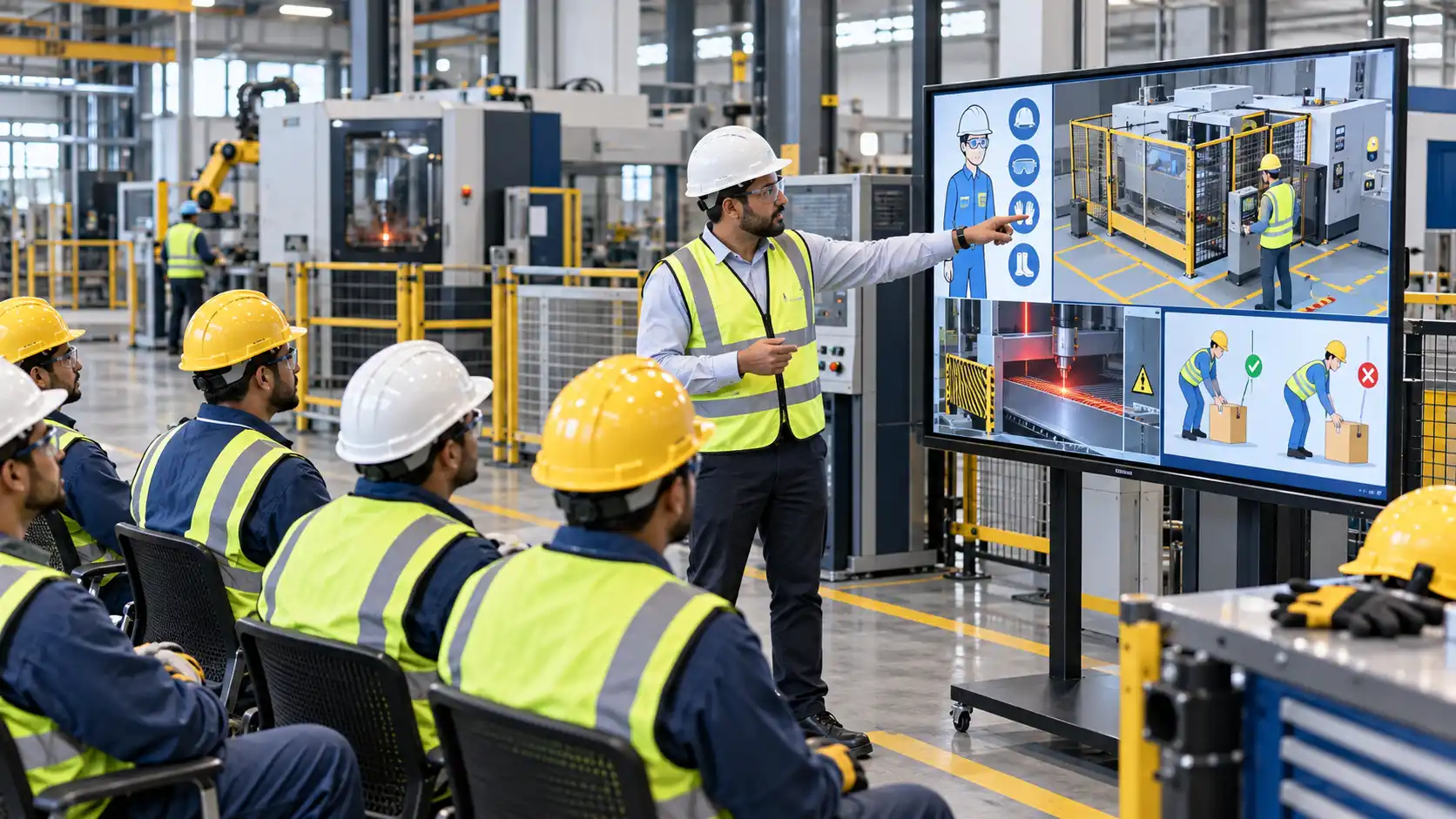
- Toolbox talks and safety meetings focused on real-world decisions.
- Refresher training after incidents or near misses linked to behavioral factors.
Related: Industrial Safety Animation Company
Why Behavioral Safety Cues Matter
In high-hazard industries, many incidents are not caused by ignorance of rules, but by:
- Normalization of deviance: Small shortcuts become “how we really do it.”
- Production pressure: Rushing, skipping checks, or working around controls to meet targets.
- Complacency: “It’s always been fine” thinking despite changing conditions.
- Poor handovers and communication: Assumptions about isolation, permits, or status of work.
Training that focuses on behavioral safety cues helps workers and leaders:
- Recognize early warning signs before things go wrong.
- Understand why people make risky choices in context.
- Practice better decisions in realistic scenarios.
- Build a culture where speaking up and self-correction are expected and supported.
Specialized High-Risk Simulations
What We Simulate
We create specialized high-risk simulations for scenarios that are:
- Too dangerous to rehearse live (e.g., confined space rescue, major leak, fire, process upset).
- Too rare to practice often but critical to get right (e.g., emergency shutdown, complex LOTO on multi-energy systems).
- Too complex to explain with slides (e.g., multi-unit process interactions, cascading failures).
Examples include:
- Confined space entry and rescue:
- Gas testing, ventilation, attendant roles, communication, and rescue sequences.
- What happens when gas levels spike, communication fails, or a worker collapses.
- LOTO on complex systems:
- Multiple energy sources (electrical, mechanical, hydraulic, pneumatic, chemical).
- Group LOTO, shift handover, and verification steps.
- Consequences of missed isolation points or incorrect sequence.
- Permit-to-work in high-risk contexts:
- Hot work near live process, work at height over operating equipment, simultaneous operations (SIMOPS).
- How permits interact, what changes when conditions shift, and when to stop work.
- Process upsets and emergency response:
- Pressure excursions, leaks, runaway reactions, relief device activation.
- Control room decisions, field actions, isolation, evacuation, and coordination.
- High-energy machine interventions:
- Clearing jams, changing tools, maintenance inside guarded areas.
- What happens when guards are bypassed, interlocks defeated, or LOTO incomplete.
These simulations are used for:
- Operator and technician training on critical and rare scenarios.
- Emergency response drills and tabletop exercises.
- Incident learning based on real events and near misses.
- Competency assessments for high-risk roles.
Related: Process Safety Animation
Related: LOTO Animation Services
Related: Permit to Work Animation
Related: Incident Recreation Animation Services
How We Build High-Risk Simulations
We treat simulations as structured learning experiences, not just videos:
- Realistic scenarios based on your actual equipment, procedures, and incident data.
- Clear learning objectives focused on key decisions and controls.
- Branching paths where learners see consequences of different choices (in interactive formats).
- Debrief and reflection sections that extract lessons and link back to your SOPs and life-saving rules.
- Multilingual delivery so all workers, not just a subset, can engage fully.
Formats include:
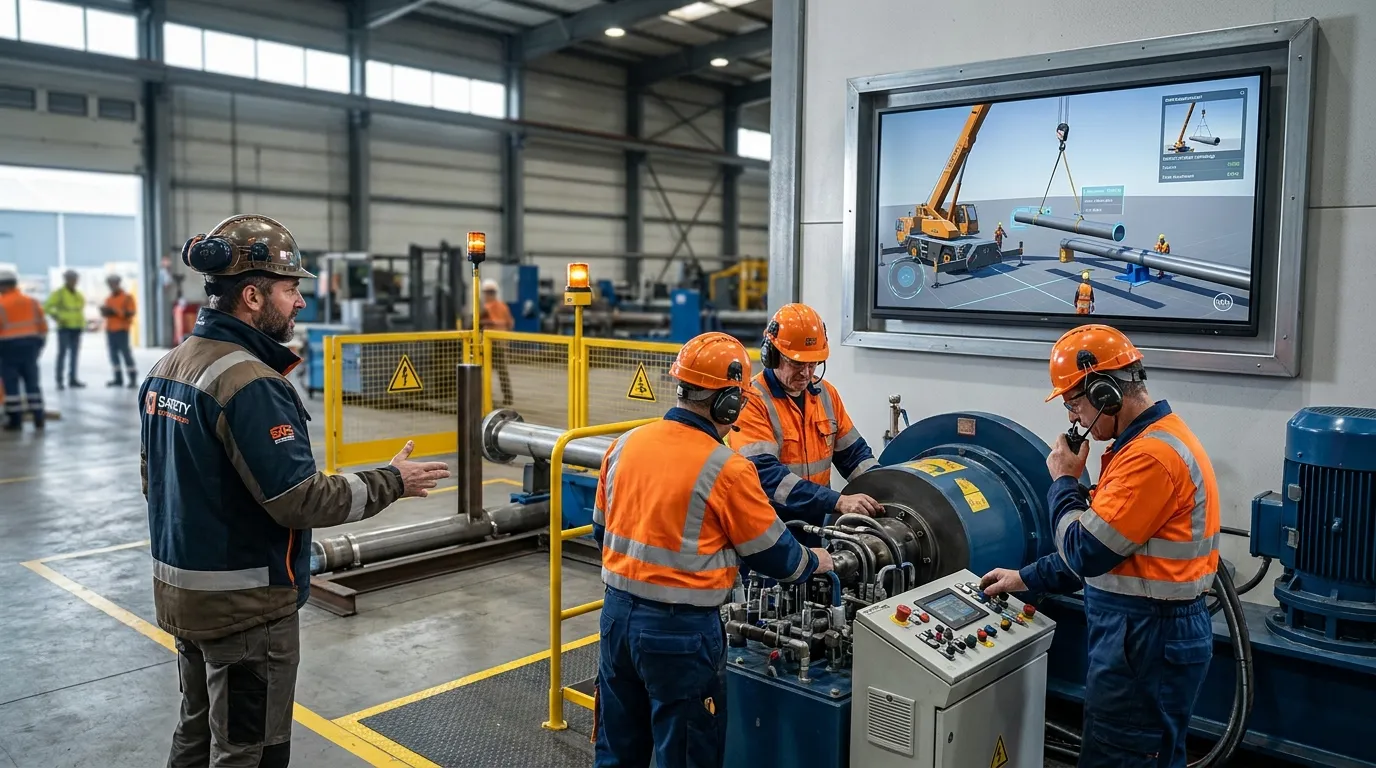
- 3D animated simulations showing equipment, process, and hazard evolution.
- Hybrid videos combining live footage with animated overlays for internal states and hazards.
- Interactive eLearning modules with decision points, quizzes, and scenario branching (via LMS).
- Facilitator guides for use in workshops, drills, and safety meetings.
Related: LMS Development
Integrating Behavioral Cues and High-Risk Simulations
We often combine behavioral safety cues and high-risk simulations in the same program:
- A confined space simulation that highlights cues like unusual odor, changed behavior of the attendant, or ambiguous communication.
- A LOTO simulation that shows cues such as missing tags, unclear shift handover notes, or pressure to “just quickly” start work.
- A process upset simulation where operators must notice subtle instrument trends, challenge assumptions, and decide when to escalate or shut down.
This integration helps learners:
- See how behavioral factors interact with technical risks.
- Practice both the “what” (procedure) and the “how” (behavior) in the same scenario.
- Develop situational awareness and judgment, not just procedural knowledge.
Related: Industrial Safety Videos & On-Site Factory Shoots
How We Deliver These Programs
1. Discovery and Behavior Mapping
We start by:
- Understanding your EHS and operational priorities and past incident/near-miss patterns.
- Identifying critical behaviors and decision points linked to high-risk scenarios.
- Mapping where behavioral cues matter most (pre-task, during task, post-task, handovers, shift changes).
- Defining a multi-phase roadmap (pilot → scale → enterprise rollout).
This ensures our program targets the behaviors and scenarios that drive your biggest risks.
2. Scenario Design and Scripting
For each module, we:
- Develop realistic scenarios based on your SOPs, risk assessments, and incident data.
- Embed behavioral cues (e.g., rushed handover, missing tag, unusual sound) into the narrative.
- Create decision points where learners must choose actions and see consequences.
- Write scripts and storyboards that highlight internal thought processes and safe vs. at-risk choices.
- Review and iterate with your EHS, operations, and training teams.
3. Production: Animation, Simulation, and Interactivity
We produce:
- 2D/3D animated simulations for high-risk scenarios and behavioral sequences.
- Live-action segments where real people and sites add authenticity.
- Hybrid videos combining footage with animated overlays for hazards and internal states.
- Interactive modules (where required) with branching paths, quizzes, and scenario choices.
We add:
- Voiceovers in your chosen languages.
- Subtitles and on-screen text as needed.
- Graphics and callouts to highlight cues, decisions, and consequences.
4. Pilot, Rollout, and Reinforcement
We:
- Run a pilot with a small group (one shift, one plant, or one contractor group).
- Gather feedback from workers, supervisors, and EHS teams.
- Refine scenarios and cues before broader rollout.
- Support reinforcement via toolbox talks, leader observations, and follow-up modules.
Delivery options include:
- LMS and safety app integration for assigned training and tracking.
- Workshop and drill packages with facilitator guides.
- Microlearning clips for campaigns and refreshers.
Related: LMS Development
Industries We Serve
We provide behavioral safety cue training and high-risk simulations for:
- Manufacturing and factories (auto, engineering, consumer goods, etc.).
- Chemical and petrochemical plants.
- Oil & gas facilities (refineries, terminals, pipelines, offshore support bases).
- Power plants and utilities.
- Construction and EPC project sites.
- Warehouses, logistics parks, and ports.
- Mining and heavy industry sites.
- Food processing, pharma, and other process industries.
Related: Industries We Serve
Why Clients Choose Sanskriti Infotech
Clients choose us as their go-to provider because we:
- Combine advanced 2D/3D animation and simulation capabilities with deep EHS and industrial knowledge.
- Specialize in complex behavioral and high-risk topics that generic vendors cannot handle well.
- Design training that targets real decisions and behaviors, not just rules.
- Support extensive multilingual voiceovers and subtitles for diverse workforces.
- Deliver LMS-ready content with clear documentation and integration support.
- Provide structured project management, single point of contact, and transparent timelines.
- Offer competitive pricing without compromising on quality or technical accuracy.
For EHS, operations, L&D, and procurement leaders, this makes it easier to roll out safety training that is consistent, compliant, and comprehensible across languages and locations—while directly addressing the behaviors and scenarios that drive risk.
Get Started: Discuss Your Behavioral Safety and High-Risk Simulation Program
If your organization wants a go-to provider for complex behavioral safety cues and specialized high-risk simulations:
- Fill out the contact form: Contact Us
- Email: [email protected]
- Call / WhatsApp: +91 9660377250
We can:
- Conduct an initial remote consultation to understand your sites, hazards, and behavioral priorities.
- Review your existing EHS data, incident reports, and training programs.
- Recommend the right mix of behavioral cue modules and high-risk simulations for your risk profile.
- Plan multilingual versions based on your workforce and visitor profiles.
- Arrange on-site visits if deeper data collection or filming is needed.
We respond quickly to inquiries, provide clear proposals, and work with you to define a phased, practical roadmap for your behavioral safety and high-risk simulation program.
Ready to enhance workplace safety with engaging visuals?
Contact us