Table of Contents
Introduction
Realistic 3D Visualizations of Process Upsets, Leaks, Fires, Explosions & Spill Scenarios
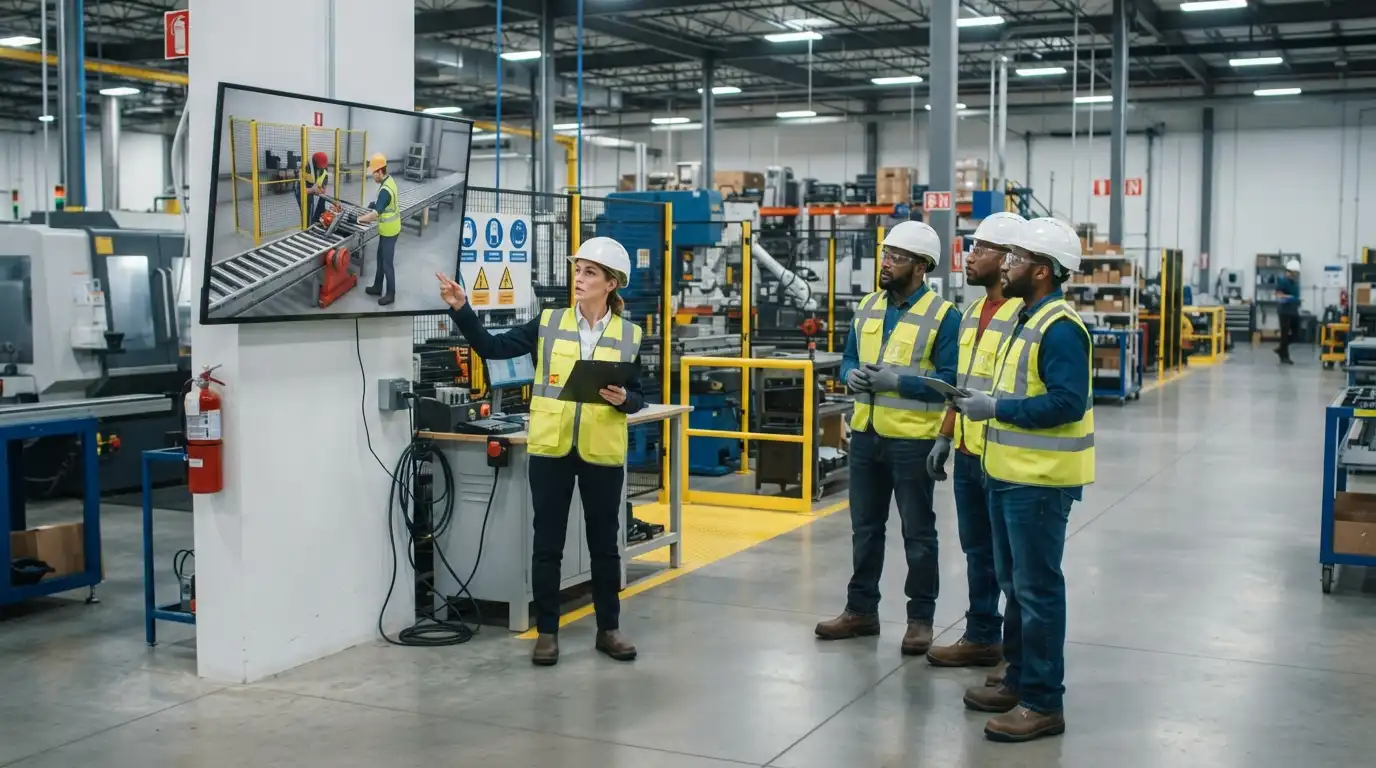
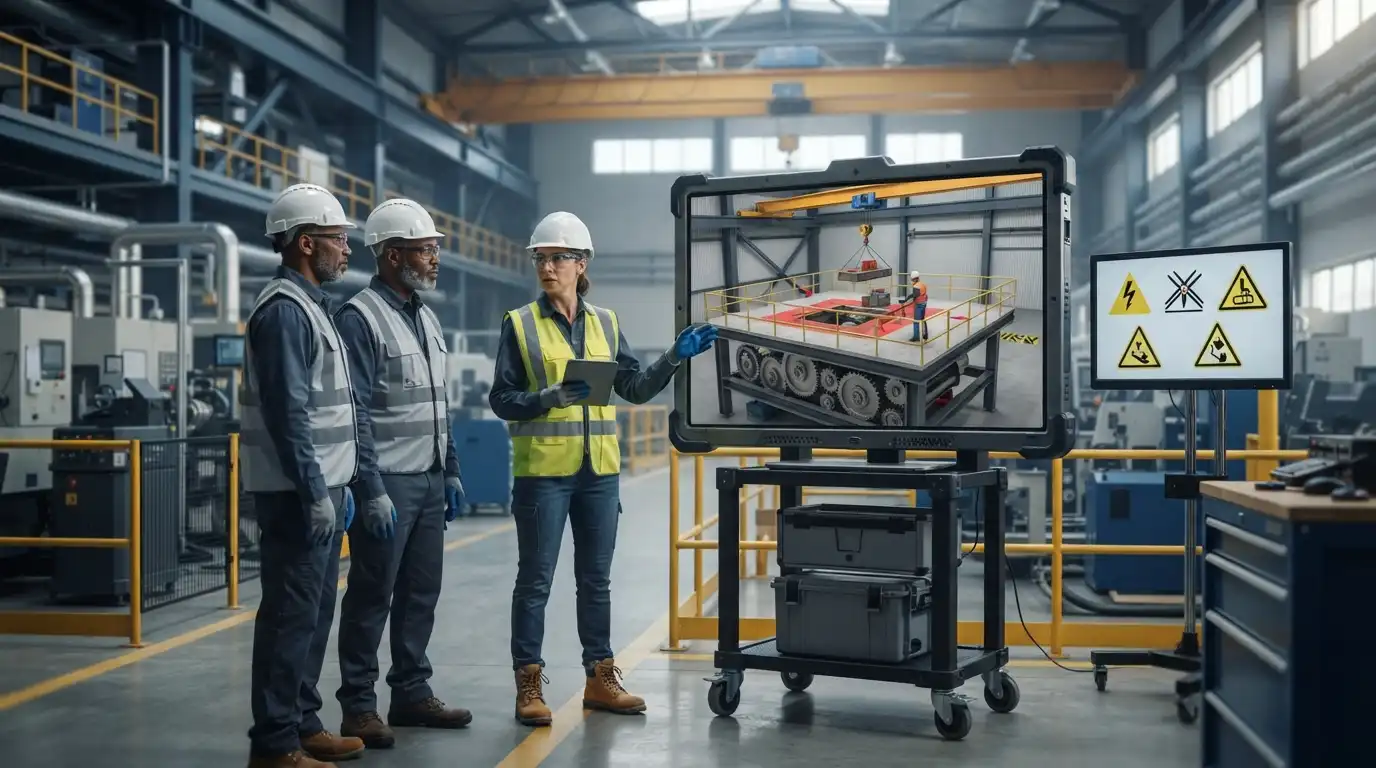
Sanskriti Infotech creates process safety and chemical spill simulation animations that turn abstract, high-consequence risks into clear, engaging, and technically accurate visual training. Designed for chemical, petrochemical, oil & gas, pharma, food, manufacturing, power, and other process industries, our simulations help EHS, operations, quality, and L&D teams explain what can go wrong, why it matters, and how to prevent and respond—across shifts, sites, and languages.
Related: 3D Safety Animation
Why Process Safety & Chemical Spill Risks Need Specialized Simulations
In process industries, many of the most dangerous risks are complex, invisible, or hard to show with photos:
- Process deviations (pressure, temperature, level, flow) leading to runaway reactions.
- Leaks of flammable, toxic, or corrosive chemicals from vessels, pipelines, and fittings.
- Fire and explosion scenarios with ignition sources and escalation paths.
- Overpressure and relief system actions (PSVs, rupture discs, flare systems).
- Chemical spills on floors, into drains, or into the environment (soil, water, air).
- Emergency shutdown (ESD) and isolation sequences under time pressure.
Traditional training (text, slides, generic videos) often fails because it:
- Can’t show internal mechanisms, flow paths, and failure modes.
- Uses generic scenarios that don’t match your real process and layout.
- Is hard to localize for multi-lingual, multi-site workforces.
- Fails to engage operators, engineers, and responders who need it most.
Process safety and chemical spill simulation animations solve this by:
- Making invisible process risks visible (pressures, temperatures, gas clouds, spills).
- Showing cause → event → consequence in clear visual sequences.
- Highlighting critical controls, alarms, and response actions with immediate visual feedback.
- Supporting multilingual voiceovers, subtitles, and localized examples.
For process industries, this is not just “better training”—it’s a critical risk control for major accident prevention.
Related: Custom 3D Safety Animation Videos
Process Safety Simulations We Deliver
1. Process Deviation & Runaway Reaction Simulations
We simulate:
- Normal vs. abnormal operations (pressure, temperature, level, flow deviations).
- Root causes: blocked outlets, cooling failures, overcharging, wrong sequence, instrument failure.
- Consequences: overpressure, thermal runaway, relief system activation, vessel rupture.
- Operator responses: alarms, manual interventions, ESD actions, communication with control room.
Impact:
- Operators and engineers see how small deviations can escalate into major incidents.
- Clear visualization of why procedures, interlocks, and alarms exist.
- Improved early recognition and correction of abnormal conditions.
Related: Incident Recreation Animation
2. Leak, Fire & Explosion Simulations
We simulate:
- Leak scenarios: flange leaks, seal failures, corrosion holes, overfill spills.
- Gas cloud dispersion (toxic, flammable) and affected zones.
- Ignition sources and fire/explosion development (flash fire, VCE, jet fire, pool fire).
- Escalation paths: fire impingement on nearby vessels, BLEVE potential, domino effects.
- Emergency responses: isolation, deluge systems, firewater, evacuation, muster.
Impact:
- Workers understand how leaks can lead to fires and explosions.
- Clear visualization of exclusion zones, evacuation routes, and emergency actions.
- Stronger appreciation of process safety barriers and emergency systems.
Related: 3D Safety Animation
3. Overpressure & Relief System Simulations
We simulate:
- Overpressure scenarios: blocked outlets, runaway reactions, external fire exposure.
- Relief system actions: PSV lifting, rupture disc bursting, flare system activation.
- Correct vs. incorrect relief system design and maintenance (wrong set pressure, blocked vents).
- Consequences of failed or bypassed relief systems: vessel rupture, explosions.
Impact:
- Operators and engineers see why relief systems are critical last lines of defense.
- Clear understanding of set pressures, blowdown, and relief paths.
- Reduced risk of tampering, bypassing, or poor maintenance of relief devices.
Related: Safety SOP Video
4. Emergency Shutdown (ESD) & Isolation Simulations
We simulate:
- ESD triggers: high pressure, high temperature, gas detection, manual activation.
- Sequence of actions: valve closures, pump trips, compressor shutdowns, blowdown.
- Operator and control room coordination during ESD.
- What-if scenarios: failed valves, delayed actions, partial ESD.
Impact:
- Operators see exactly what should happen during an ESD and their role in it.
- Improved coordination between field and control room during emergencies.
- Reduced risk of incorrect or delayed ESD actions.
Related: Safety Training Videos
Chemical Spill Simulations We Deliver
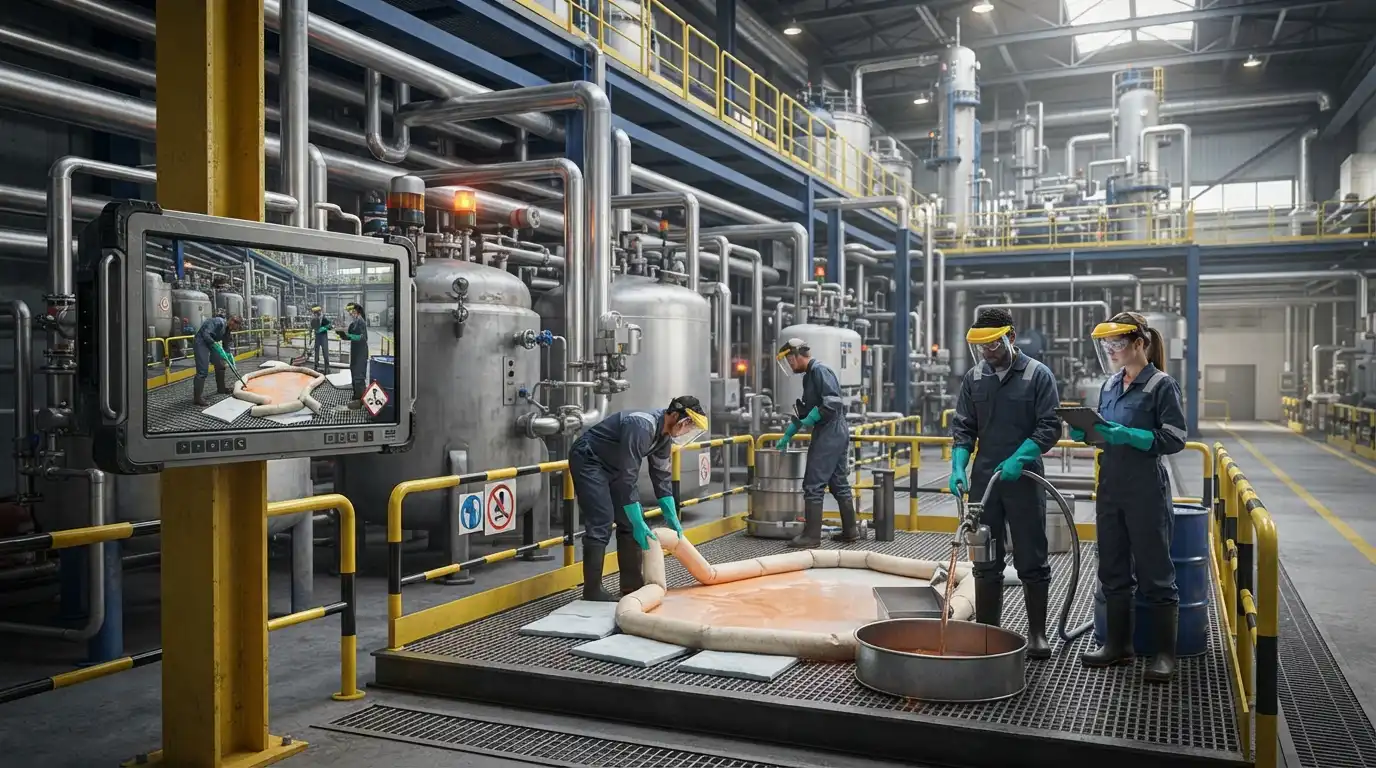
1. Indoor Chemical Spill Simulations (Process Areas, Warehouses, Labs)
We simulate:
- Spill sources: drum leaks, container tips, pump seals, sampling points, lab benches.
- Spill behavior: pooling, spreading, evaporation, reaction with other chemicals.
- Exposure pathways: inhalation of vapors, skin contact, slip hazards, environmental discharge.
- Correct response: alarm, evacuation, PPE selection, containment, neutralization, cleanup.
- Incorrect response: wrong PPE, incompatible absorbents, spreading the spill, ignoring vapors.
Impact:
- Workers understand how quickly a small spill can become a major incident.
- Clear visual guidance on spill prevention, containment, and cleanup.
- Stronger compliance with chemical handling and spill response procedures.
Related: Safety Induction Animation
2. Outdoor & Environmental Spill Simulations (Tank Farms, Loading Bays, Effluent Areas)
We simulate:
- Spill scenarios: tank overfills, hose failures, loading/unloading spills, drain discharges.
- Environmental pathways: soil contamination, surface water runoff, sewer entry, groundwater impact.
- Containment systems: bund walls, drains, interceptors, booms, absorbents.
- Emergency response: isolation, diversion, containment, recovery, disposal.
- Regulatory and reputational consequences of uncontrolled spills.
Impact:
- Clear visualization of how spills can impact the environment and community.
- Improved understanding of bund integrity, drain systems, and interception.
- Stronger alignment with environmental compliance and spill prevention plans.
Related: Manufacturing Safety Animation
3. Hazard-Specific Chemical Spill Simulations
We simulate spills for:
- Flammable liquids (solvents, fuels): fire/explosion risks, vapor clouds, ignition control.
- Toxic chemicals (acids, alkalis, toxics): exposure limits, PPE, decontamination.
- Corrosives (sulfuric acid, caustic): skin/eye burns, material damage, neutralization.
- Reactive chemicals (oxidizers, water-reactives): incompatibilities, runaway reactions.
- Compressed gases (chlorine, ammonia): gas releases, dispersion, evacuation zones.
Impact:
- Workers see chemical-specific hazards and response actions, not generic “spill” training.
- Reduced risk of wrong response due to chemical incompatibility or misunderstanding.
- Better alignment with SDS-based procedures and site-specific controls.
Related: Safety Video Production Company
How We Create Process Safety & Chemical Spill Simulations
1. Discovery & Process/Spill Hazard Analysis
- Understand your process units, chemicals used/stored, and incident history.
- Map your existing risk assessments, SOPs, permits, and emergency plans.
- Identify priority scenarios (e.g., runaway reaction in Reactor R-101, acid spill in Tank Farm).
- Define a multi-phase roadmap (pilot → multi-site → enterprise).
2. Data Collection & 3D Modeling
- Collect P&IDs, layout drawings, chemical lists, SDS, photos, and incident reports.
- Arrange on-site visits for reference footage and process familiarization.
- Build accurate 3D models of your process units, tanks, pipelines, and work areas.
- Set up realistic lighting, materials, and camera angles for clarity.
Related: 3D Safety Animation
3. Scripting, Storyboarding & SME Review
- Develop clear scripts aligned with your procedures and training objectives.
- Create visual storyboards that map each scene to a learning point.
- Apply instructional design principles: show, don’t just tell; highlight critical steps; use scenarios.
- Review and iterate with your process safety, EHS, and operational SMEs for technical accuracy.
4. Production: 2D/3D Simulation, Voiceover & Post
- Produce custom 3D simulations for process upsets, leaks, fires, explosions, and spills.
- Use 2D overlays for decision trees, checklists, and key messages.
- Record professional voiceovers in your chosen language(s).
- Edit and integrate animation, graphics, voiceovers, subtitles, and on-screen text.
We ensure:
- Professional editing with clear pacing and focus.
- Consistent branding (logos, colors, intro/outro).
- High-quality audio with clear voiceovers and minimal background noise.
Related: Safety Video Production Company
5. Multilingual Localization & LMS Integration
- Add voiceovers and subtitles in multiple languages (Hindi, Tamil, Telugu, Kannada, Malayalam, Bengali, Marathi, Gujarati, Arabic, English, Spanish, etc.).
- Package simulations as SCORM/xAPI modules with quizzes and tracking.
- Integrate with your LMS, emergency response platforms, and contractor/visitor systems.
This turns your simulations into a scalable, measurable training program, not just a one-off video.
Related: Safety Training Videos
6. Review, Pilot & Rollout
- Share draft simulations for internal review.
- Incorporate feedback from operations, maintenance, EHS, and emergency response teams.
- Optionally run a pilot with a small group (one shift, one unit).
- Validate that training improves understanding and behavior before full rollout.
Final deliverables are provided in formats suitable for LMS, classroom, on-floor screens, and mobile.
Related: Safety SOP Video
Why EHS & Process Safety Leaders Trust Us for These Simulations
Clients choose us because we:
- Focus specifically on process safety and chemical spill simulations, not generic safety content.
- Combine strong 3D simulation capabilities with practical process safety and EHS knowledge.
- Create truly site-specific simulations that reflect real process units, chemicals, and controls.
- Support extensive multilingual voiceovers and subtitles for diverse workforces.
- Deliver LMS-ready content with clear documentation and integration support.
- Provide structured project management, single point of contact, and transparent timelines.
- Offer competitive pricing without compromising on quality or technical accuracy.
Many of India’s largest chemical, petrochemical, oil & gas, and pharma companies, as well as global operators in the Middle East, Africa, APAC, and Europe, trust Sanskriti Infotech for impactful process safety and chemical spill simulations.
Related: Best Safety Animation Companies
Get Started: Prevent Major Incidents with Process Safety & Spill Simulations
If your organization wants to:
- Replace text-heavy procedures and generic training with engaging, visual process safety and chemical spill simulations.
- Standardize understanding of process upsets, leaks, fires, explosions, and spills across multiple sites and languages.
- Improve operator response, emergency readiness, and spill prevention through better visual training.
- Integrate simulations into your LMS, emergency drills, and contractor induction programs.
Then it’s time to talk to Sanskriti Infotech.
- Email: [email protected]
- Call / WhatsApp: +91-9660377250
- Fill out the contact form: Contact Us
We will:
- Conduct an initial remote consultation to understand your process units, chemicals, and training gaps.
- Review your existing process safety studies, risk assessments, SOPs, and incident reports.
- Recommend the right mix of 3D simulation and 2D support for different scenarios and audiences.
- Plan multilingual versions based on your workforce and site footprint.
- Arrange on-site visits if deeper process familiarization is needed.
We respond quickly to inquiries, provide clear proposals, and work with you to define a phased, practical roadmap for your process safety and chemical spill simulation program.
Related: Contact Us
Ready to enhance workplace safety with engaging visuals? Contact us