Table of Contents
Introduction
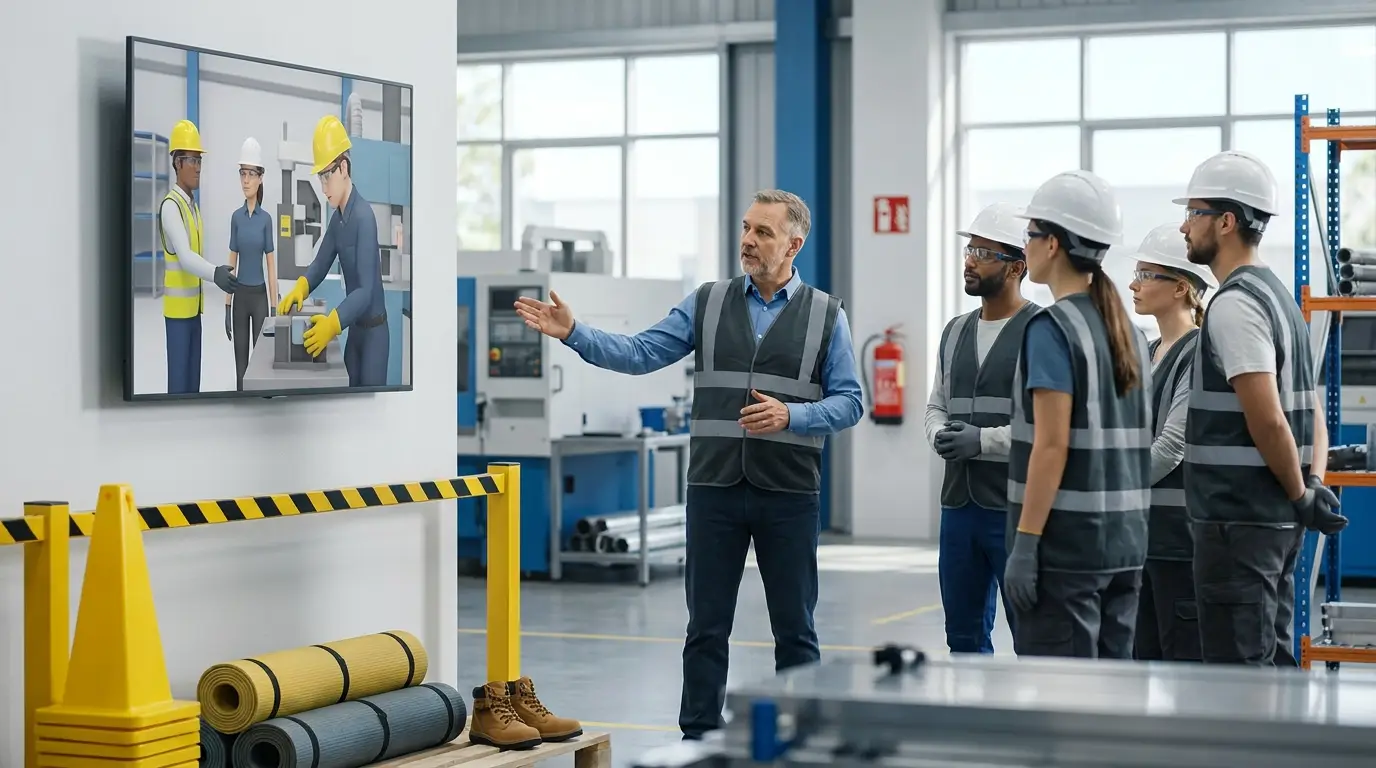
Animated safety videos help organizations turn complex safety rules into clear, visual stories that workers can understand, remember, and apply. For safety-critical industries, they are one of the most effective ways to standardize training across sites, shifts, and roles while supporting OSHA-aligned training, ISO 45001 awareness, and HSE communication.
Sanskriti Infotech creates animated safety videos for industrial workplaces that need custom, site-specific content rather than generic stock training. These videos support safety induction, SOP training, incident learning, hazard communication, and LMS-based eLearning programs for employees, contractors, and visitors.
What Are Animated Safety Videos?
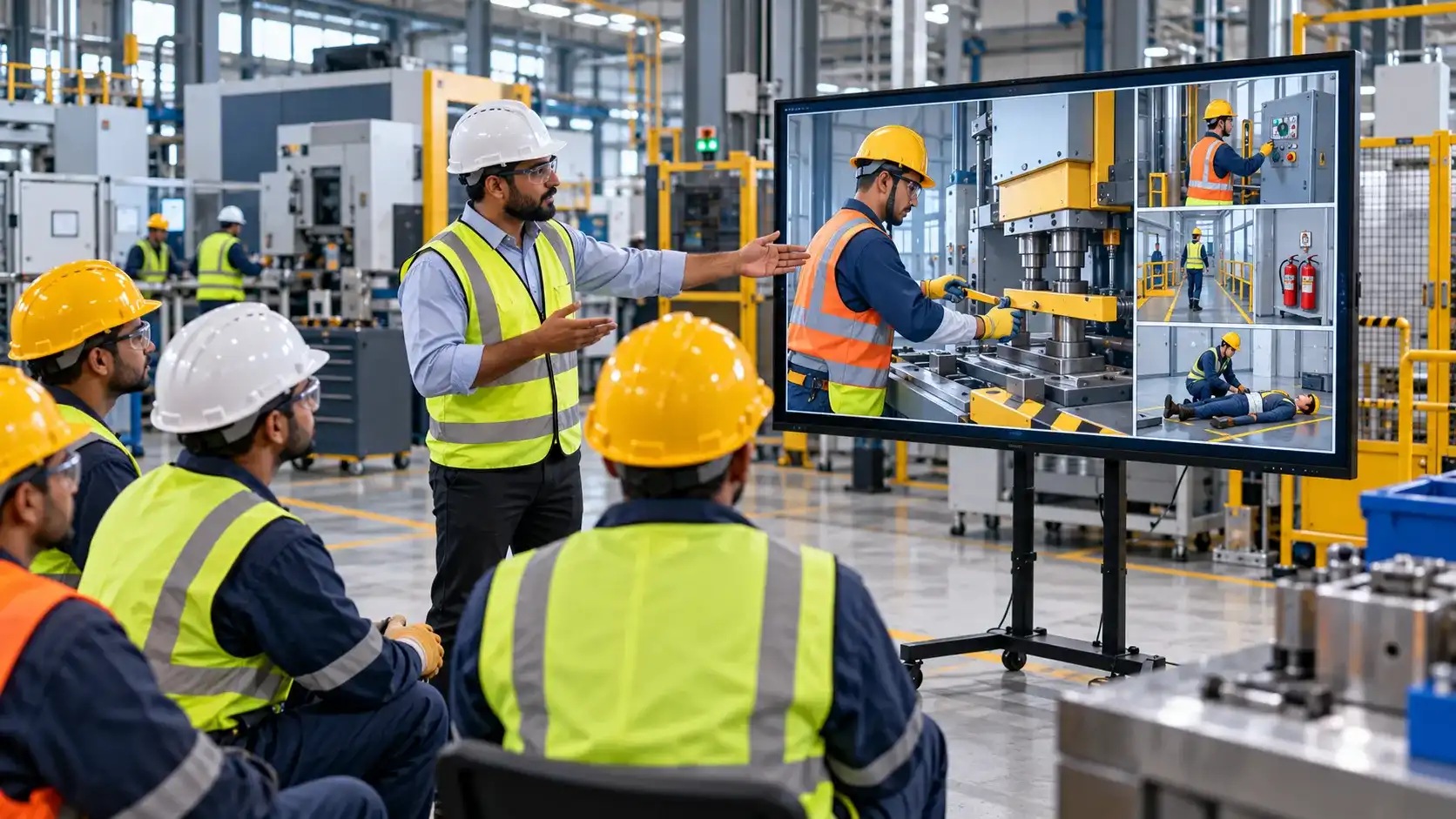
Animated safety videos are visual training assets used to explain workplace hazards, procedures, emergency actions, and safe behavior. They combine storytelling, technical visualization, and clear guidance to show “what to do” and “what not to do” in realistic scenarios.
In practice, they are used to:
- Explain hazards and controls.
- Demonstrate safe procedures step by step.
- Show emergency response actions.
- Support induction and onboarding.
- Reinforce safety culture and compliance.
For HSE and EHS teams, this format reduces dependency on long manuals or one-off classroom sessions and creates reusable training assets that can be deployed across locations.
Why Companies Invest in Animated Safety Videos
Organizations invest in animated safety videos because traditional training formats often fail to engage or clarify complex risk. Workers may sit through presentations without truly understanding how rules apply in their environment.
Animated safety videos address this by:
- Making invisible hazards visible (energy sources, pinch points, contamination paths).
- Showing the consequence of unsafe behavior in a controlled way.
- Providing consistent training content across sites and roles.
- Simplifying complex procedures and standards.
- Supporting multilingual and mixed-literacy audiences.
OSHA’s training guidance stresses that workers must receive appropriate safety training from their employer before hazardous work begins, and ISO 45001 highlights competence and awareness as central to occupational health and safety performance. Animated safety videos are a powerful way to meet those expectations in a modern, scalable format.
Use Cases for Animated Safety Videos
Animated safety videos can be deployed in many different safety programs. Common use cases include:
- Employee safety induction and onboarding.
- Contractor and visitor safety induction.
- Machine and equipment safety training.
- Process and SOP training.
- Permit-to-work, LOTO, and confined space training.
- Incident and near-miss recreation.
- Safety awareness campaigns.
- Toolbox talks and refresher modules.
- LMS and eLearning courses.
Each use case can be tailored to a specific plant, department, or job role, which makes animated safety content much more relevant than generic off-the-shelf videos.
Industry-Specific Safety Animation
Manufacturing
Manufacturing sites often involve machinery, moving parts, material handling, and maintenance activity. Animated safety videos can show machine guarding, lockout/tagout (LOTO), conveyor safety, safe startup and shutdown, and proper maintenance isolation in realistic detail.
For manufacturing teams, this improves:
- Operator training.
- Maintenance training.
- Line changeover communication.
- Incident prevention for hand injuries, entanglement, and pinch points.
Construction
Construction projects need fast, repeatable safety communication for employees and contractors. Animated safety videos are ideal for site induction, working at height, scaffold safety, lifting operations, excavation hazards, and PPE rules.
They help:
- Standardize contractor induction.
- Explain site rules and restricted zones.
- Support toolbox talks and daily briefings.
- Communicate emergency routes and muster points.
Oil and Gas
Oil and gas operations face high-risk scenarios that are difficult to show safely with live footage. Animated safety videos can cover permit to work, hot work, confined space entry, gas testing, isolation, hazardous areas, and emergency shutdown.
They support:
- Process safety training.
- Contractor onboarding.
- Incident prevention and learning.
- Compliance communication in complex environments.
Chemical and Pharma
Chemical and pharmaceutical facilities require precise safety communication around hazardous substances, contamination risks, PPE, emergency response, and controlled processes. Animated safety videos can show safe handling, transfer procedures, spill response, and evacuation steps.
They help:
- Clarify chemical hazards.
- Support GMP-sensitive procedures with safety overlays.
- Train staff on emergency eye wash and shower use.
- Reinforce labeling and storage expectations.
Logistics and Warehousing
Warehousing and logistics operations rely on safe interaction between people, forklifts, pallets, docks, and racking. Animated safety videos can explain forklift-pedestrian segregation, loading dock safety, racking stability, manual handling, housekeeping, and battery charging risks.
They support:
- Warehouse induction.
- Temporary and seasonal staff training.
- Contractor and driver safety briefings.
- Ongoing awareness campaigns.
2D vs 3D Animated Safety Videos
Both 2D and 3D animation can be effective, but they suit different kinds of safety topics.
| Format | Best For | Advantages |
|---|---|---|
| 2D animation | Awareness campaigns, policies, simple procedures, broad messages | Fast to produce, clean and simple visuals |
| 3D animation | Machinery, plant layouts, confined spaces, LOTO, incident recreation | High realism, better spatial understanding, stronger equipment detail |
For general awareness and short compliance reminders, 2D may be sufficient. For plant-specific or machinery-heavy training, 3D animation usually provides clearer understanding.
AI-Assisted vs Custom Animated Safety Videos
AI tools can help generate drafts, subtitles, or illustrative visuals, but safety training content must remain accurate, reviewable, and aligned with real procedures. For serious industrial topics, custom animated safety videos are still the safest and most reliable choice.
Custom production is better when:
- Equipment and layouts must match reality.
- Procedures must be validated by HSE and operations.
- Branding, tone, and legal review matter.
- Multi-language training must be controlled.
- LMS and SCORM packaging is required.
AI may assist parts of the workflow, but the final content should be grounded in site-specific SOPs, risk assessments, and safety standards.
Production Workflow for Animated Safety Videos
A solid production workflow ensures that safety videos are technically correct and suited to training needs. Sanskriti Infotech’s approach can be structured around stages such as:
- Discovery and scoping
Define learning objectives, audience, site context, training environment (LMS, classroom, briefing), and success criteria. - Input gathering
Collect SOPs, JSAs, risk assessments, plant layouts, photographs, existing training materials, and incident records. - Script development
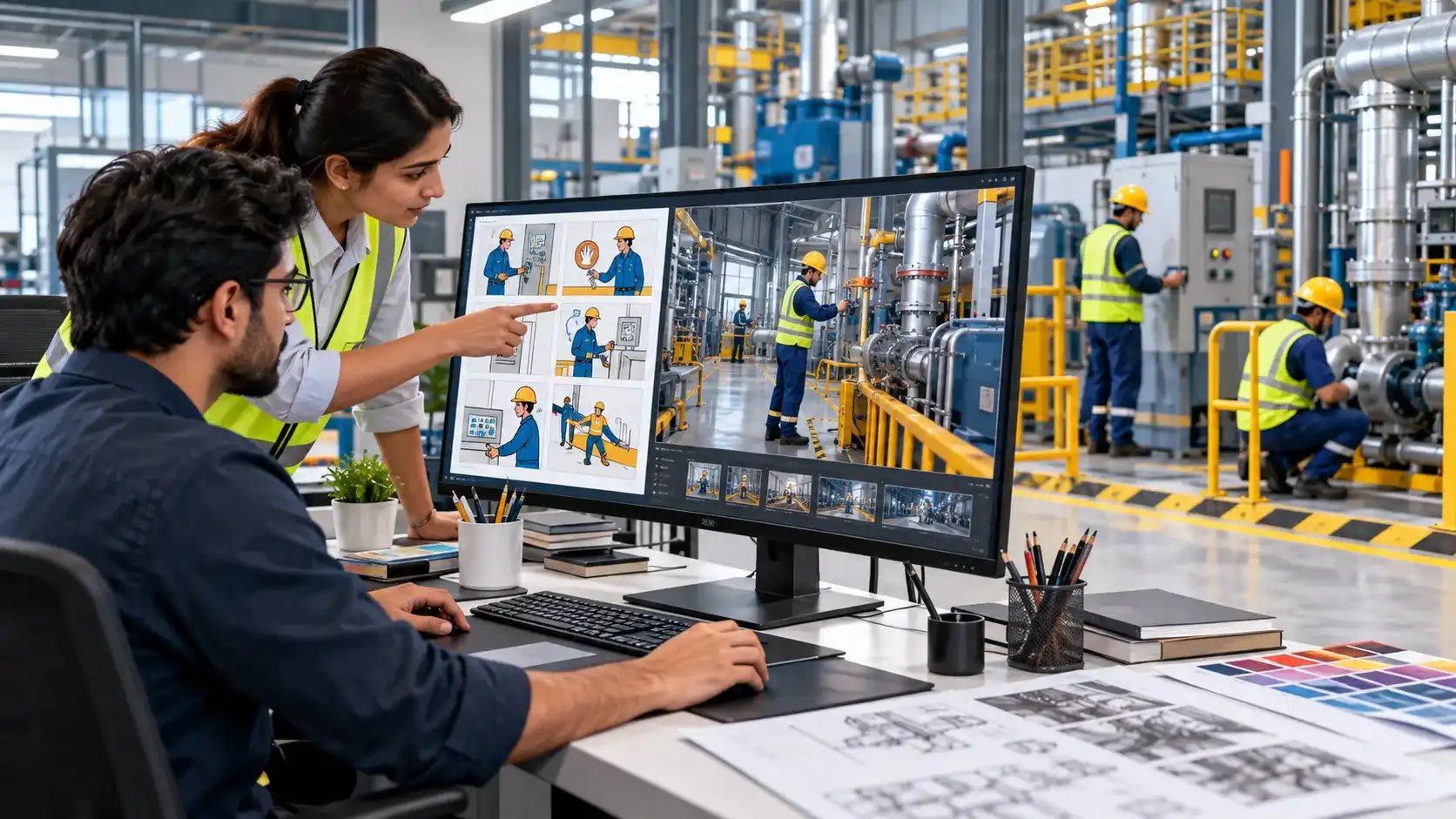
Turn technical content into a clear training script that preserves accuracy while remaining easy to follow. - Storyboarding
Create scene-by-scene visual plans for review by HSE, operations, and training stakeholders. - Design and visual development
Set the visual style, color, camera angles, character or worker representation, and environment details. - Animation and audio
Produce animation, add voiceover, sound design, and on-screen text or captioning. - Stakeholder review
Run review cycles with HSE, operations, maintenance, training, and management to ensure accuracy and clarity. - Final delivery and formats
Export in formats required by LMS (SCORM, MP4), internal portals, displays, or briefing sessions.
This workflow combines creative production with safety governance, which is critical for industrial training content.
LMS and SCORM Deployment
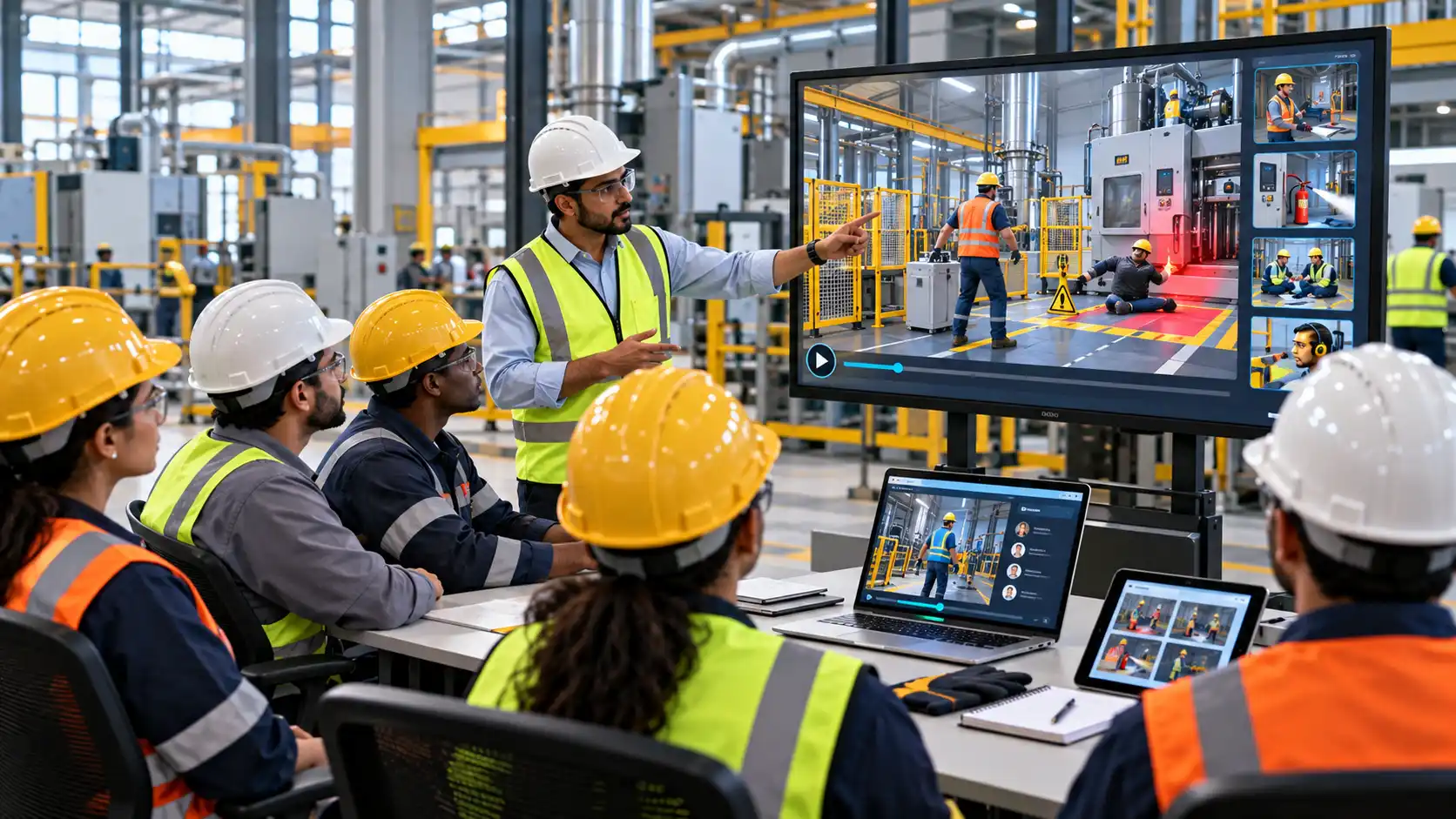
Animated safety videos are most powerful when they are integrated into formal training systems. Many organizations use a Learning Management System (LMS) to assign training, track completion, and manage recertification.
Strong animated safety video services should support:
- LMS-friendly video formats.
- SCORM packages for structured courses.
- Role-based training paths (operator, contractor, visitor, supervisor).
- Completion tracking and reporting.
- Integration with quizzes or assessments.
- Mobile and desktop compatibility.
This ensures safety content is not just shown once, but embedded into ongoing training and compliance programs.
Pricing Drivers for Animated Safety Videos
Costs vary depending on technical complexity, length, and production requirements. Instead of fixed rates per minute, pricing should be based on training goals and production needs.
Key pricing drivers include:
- Video length and number of modules.
- 2D vs 3D animation.
- Level of plant- or equipment-specific detail.
- Scriptwriting and instructional design support.
- Number of languages and subtitle versions.
- Voiceover and audio complexity.
- Review cycles and stakeholders.
- LMS/SCORM packaging requirements.
- Urgency and project timelines.
Buyers should focus on clarity and suitability for training rather than only comparing raw minute-based pricing.
ROI and Business Benefits
Animated safety videos deliver value through better comprehension, consistency, and training efficiency. OSHA’s guidance makes clear that effective training is a fundamental employer responsibility, and ISO 45001 links competence and awareness to improved OH&S performance.
Practical ROI benefits include:
- Faster onboarding for employees and contractors.
- More consistent training across sites and shifts.
- Reduced repetitive instructor-led sessions.
- Better hazard recognition and safer behavior.
- Stronger support for audits and compliance.
- Improved engagement and retention in safety courses.
Over time, organizations can build a library of animated safety videos that serve induction, refresher training, and incident learning for multiple roles.
Maintenance and Updates
Safety content must evolve as procedures, layouts, hazards, and regulations change. A good animated safety video program includes a plan for updates and version management.
Best practices include:
- Reviewing content after incident investigations or major changes.
- Updating scenes to match new equipment or layouts.
- Adding languages or subtitles as workforce changes.
- Versioning and archiving older content correctly.
- Reusing assets where possible to maintain cost efficiency.
This approach keeps animated safety content aligned with real conditions and prevents outdated training from remaining in circulation.
Why Choose Sanskriti Infotech for Animated Safety Videos
Sanskriti Infotech focuses on industrial and safety-focused animation, which makes it a strong partner for organizations seeking serious training content rather than generic explainer videos. Its published industry materials around safety animation and chemical-industry 3D safety services show experience in safety-critical environments where precision matters.
For buyers, the company’s value lies in:
- Understanding of industrial safety topics.
- Ability to work from SOPs, JSAs, and incident reports.
- 2D and 3D animation capability.
- Site- and industry-specific customization.
- Support for LMS and SCORM deployment.
- Structured review and approval workflow.
This makes Sanskriti Infotech a strong choice for safety managers, EHS leaders, L&D teams, plant heads, and operations managers who need animated safety videos that are both visually engaging and technically credible.
Ready to enhance workplace safety with engaging visuals? Contact us