Table of Contents
Introduction
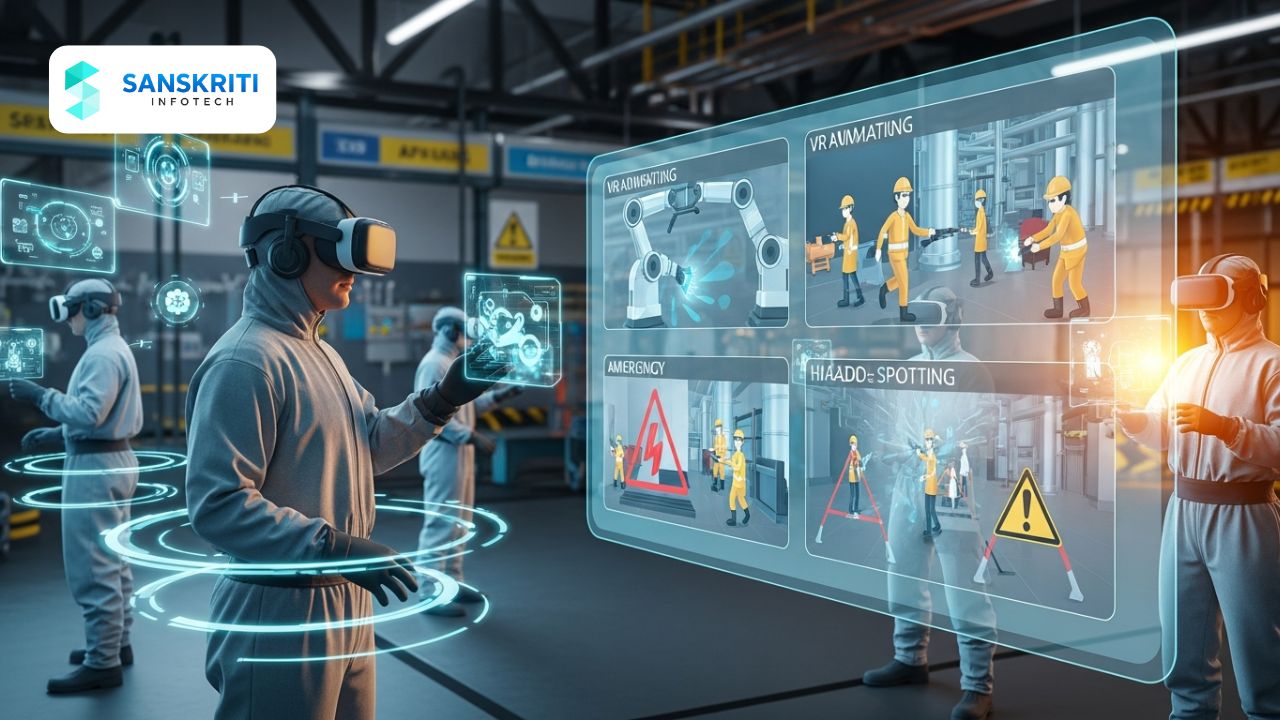
VR Safety Training Animation represents a major shift in the way organizations educate workers about hazards, procedures, and emergency response. By combining Virtual Reality with high-fidelity animated simulations, companies can immerse employees in lifelike situations where they can practice decisions, recognize risks, and learn from mistakes without any real-world danger. Sanskriti Infotech develops VR-ready 3D animated safety modules that allow workers to train inside realistic plant environments, making safety learning more experiential, measurable, and impactful.
Why VR Safety Training Is Becoming Essential
- Creates immersive training experiences that feel real
- Allows safe practice of high-risk tasks without physical exposure
- Improves retention through experiential learning. See NIOSH VR Training Research.
- Supports faster onboarding for new employees
- Reduces human error in complex or hazardous operations
What VR + Animation Can Teach Effectively
- Hazard identification inside real plant layouts
- Emergency response actions during fires, leaks, or equipment failure
- Machine operating procedures
- PPE usage and inspection steps
- Confined space entry, LOTO, and working at height
- Navigating dangerous industrial zones safely
How VR Safety Training Works
- Users wear a VR headset to enter a simulated environment
- 3D animated hazards behave exactly as in real life
- Trainees interact with equipment and make decisions
- System tracks performance, accuracy, and reaction time
- Workers repeat modules until they achieve competency
Benefits of VR Safety Training Animation
- Reduces training time for complex tasks
- Improves confidence before entering real work areas
- Allows multiple practice attempts without risk
- Enhances engagement and reduces training fatigue
- Supports multilingual and diverse workforce training
Industries Adopting VR + Animation for Safety
- Oil & Gas and Refinery Operations
- Mining and Heavy Engineering
- Manufacturing and Assembly
- Pharma and Chemical Plants
- Construction and Infrastructure Sites
- Power and Utilities
How Sanskriti Infotech Builds VR-Ready Animated Training
Our process includes:
- Understanding the client’s safety procedures and risk areas
- Creating VR-compatible 3D models of plants or machinery
- Simulating dynamic hazards with lifelike physics
- Designing interactive tasks and decision points
- Integrating scoring, feedback, and performance analytics
- Optimizing modules for Oculus, HTC Vive, and other VR devices
Learn more about safety training standards at OSHA Safety Training Guidelines.
Realistic Scenarios Demonstrated in VR Training
- Fire outbreaks and smoke movement inside enclosed areas
- Chemical spills and emergency containment steps
- Incorrect vs correct machine handling
- Arc flash, electrical panel hazards, and isolation procedures
- Navigating hazardous zones in refineries or mines
- High-risk lifting or rigging operations
Measuring the Impact of VR Safety Training
- Improved reaction time during drills
- Better hazard recognition accuracy
- Higher safety assessment scores
- Reduced human error in field tasks
- Greater employee confidence and preparedness
Transform Your Safety Training with VR Animation
If your organization wants to adopt VR-based safety training, Sanskriti Infotech creates immersive animated modules that transform theoretical instruction into hands-on, experiential learning. Our solutions meet international standards like ISO Training Standards and deliver measurable safety improvements. For VR safety insights, see UK HSE VR Safety Insights.
Ready to revolutionize your safety training? Contact us for customized VR training solutions designed for your industry.