Table of Contents
Introduction
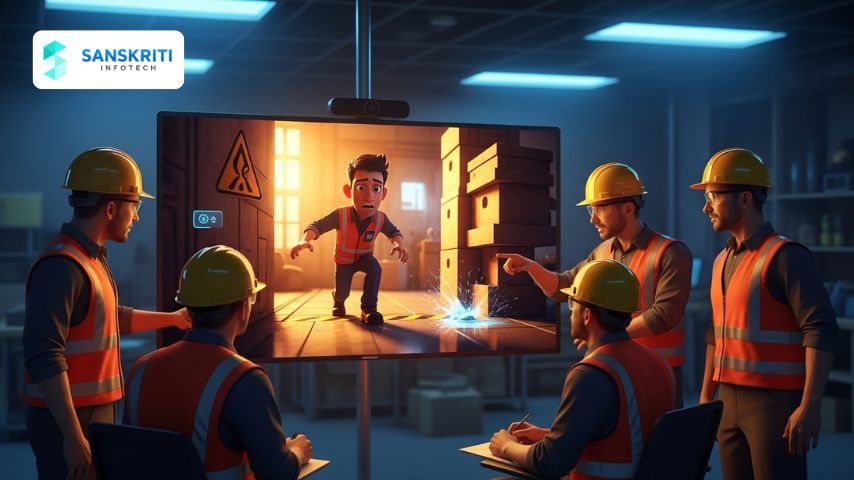
Safety video storytelling is becoming one of the most powerful tools in modern safety communication. Instead of explaining rules as dry instructions, story-based safety training uses relatable characters, scenarios, and consequences to help workers emotionally connect with safety messages. When employees see themselves in a narrative, retention increases, behavior changes faster, and safety culture becomes stronger. Sanskriti Infotech specializes in narrative safety animation that transforms complex safety concepts into engaging visual stories workers remember.
Why Storytelling Works in Safety Training
- Stories activate emotional memory, improving retention.
- Characters make safety lessons relatable to real workers.
- Narratives simplify complex safety concepts.
- Consequences shown visually increase hazard awareness.
- Stories reduce resistance to training by making content engaging.
For evidence-based safety training principles, explore OSHA safety topics and NIOSH training research.
Types of Story-Based Safety Training Animations
- Narrative safety animation featuring real-life worker scenarios.
- Cause-and-effect sequences showing unsafe vs safe behavior.
- Incident recreation stories for learning from near misses.
- Supervisor–worker communication stories to model safety leadership.
- Short episodic animation series for repeated behavioral reinforcement.
How Storytelling Improves Safety Behavior
- Helps workers see direct relevance to their daily tasks.
- Breaks complex procedures into memorable visual chapters.
- Strengthens hazard recognition through emotionally impactful moments.
- Encourages workers to intervene when they see unsafe acts.
- Turns passive viewing into active learning.
Story Elements Used in Safety Animation
- A relatable main character facing a workplace challenge.
- Clear conflict such as a hazard, unsafe shortcut, or system failure.
- A turning point illustrating consequences of unsafe behavior.
- Resolution showing correct procedure and positive outcomes.
- A memorable takeaway message for real-life application.
Industries Benefiting Most from Narrative Safety Animation
- Oil and gas drilling and production
- Manufacturing and machine operations
- Construction and infrastructure projects
- Logistics, warehousing, and fleet operations
- Mining and heavy equipment work
How Sanskriti Infotech Creates Story-Driven Safety Animation
- Understanding organizational safety challenges and incident history.
- Developing characters that represent real workers or roles.
- Building narrative arcs aligned with training objectives.
- Animating consequences and corrections with high visual clarity.
- Delivering multilingual versions for diverse teams.
These story-driven modules are crafted to align with occupational safety standards such as those from ISO occupational safety and UK HSE safety learning resources.
Impact of Storytelling on Safety Culture
- Higher employee engagement during training.
- Deeper understanding of hazards and root causes.
- Improved compliance with SOPs and safety rules.
- Stronger reporting culture due to increased awareness.
- Reduced incidents through behavior-based learning.
Sanskriti Infotech helps organizations use narrative safety animation to shape behavior, improve retention, and build a proactive safety culture. To develop story-based safety training videos tailored to your workplace, you may reach us anytime through the Contact Us page.