Table of Contents
Introduction
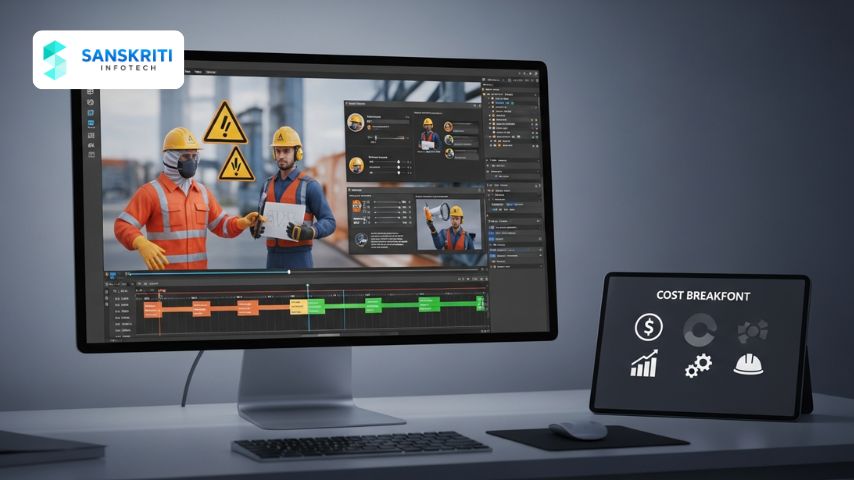
Safety training animation cost is one of the first questions global organizations ask when planning digital safety programs. Whether operations span manufacturing, construction, energy, logistics, healthcare, or large enterprise environments, understanding how much a custom safety animation should cost is essential for budgeting, ROI planning, and vendor evaluation.
This guide explains what drives safety training animation cost, how to budget realistically, and how to evaluate value without relying on country-specific pricing, currencies, or regulations.
Why Safety Training Animation Cost Varies Globally
There is no universal price for safety training animation because these projects are custom-built. A safety animation is a risk communication tool designed to influence behavior, reduce incidents, and standardize training across global operations.
Organizations worldwide face similar challenges such as multilingual workforces, inconsistent training delivery, limited attention during inductions, and rising audit expectations. As a result, safety training animation cost depends on scope and complexity rather than geography. For global safety training guidance, see OSHA – Safety Training & Hazard Communication.
Core Factors That Influence Safety Training Animation Cost
Key factors that typically influence cost include:
- Type of safety scenario (induction, hazard awareness, emergency response)
- Level of customization to real environments and SOPs
- Technical complexity of hazards and processes
- Intended audience and training depth
- Reusability across sites and years
Safety Training Animation Cost vs Traditional Training Methods
Traditional classroom training often lacks consistency and scalability. Live-action safety videos are difficult to update and cannot visualize invisible hazards.
Safety training animation offers standardized delivery, visual clarity, and long-term usability across regions and languages, often resulting in lower cost per employee over time. For insights on video effectiveness, visit Wyzowl – Video Marketing Statistics.
How to Budget for Safety Training Animation
Instead of asking for fixed prices, global organizations should evaluate safety animation budgets based on risk exposure and long-term usage.
Higher-risk environments justify higher investment, as even one prevented incident can offset the entire animation cost.
Safety Training Animation Cost and ROI
From a business perspective, safety animation is a risk mitigation investment. Organizations typically see ROI through reduced incidents, improved audit readiness, faster onboarding, and consistent safety culture across locations. Learn more about global occupational safety perspectives at the International Labour Organization (ILO).
Choosing the Right Partner Matters More Than Cost
Selecting a safety animation partner based only on cost often leads to ineffective training outcomes. Experienced global solution providers focus on accuracy, instructional clarity, scalability, and alignment with real operational risks.
Providers such as Sanskriti Infotech support organizations globally by aligning safety animation design with real-world hazards and training objectives, without relying on generic templates. For strategic views on risk and vendor selection, see Forbes Business Council – Risk Management Strategy.
Why Safety Animation Pricing Is Not Public
Publishing fixed prices can be misleading because projects vary widely in scope and risk level. Professional providers discuss pricing only after understanding safety goals, environment, audience, and deployment scale.
For pricing-related discussions or budget planning, organizations should directly contact the animation provider with project details.
Global Use Cases for Safety Training Animation
- Employee and contractor induction
- High-risk task training
- Emergency preparedness and evacuation
- Incident recreation and root-cause learning
- Standardizing safety culture across regions