Table of Contents
Introduction
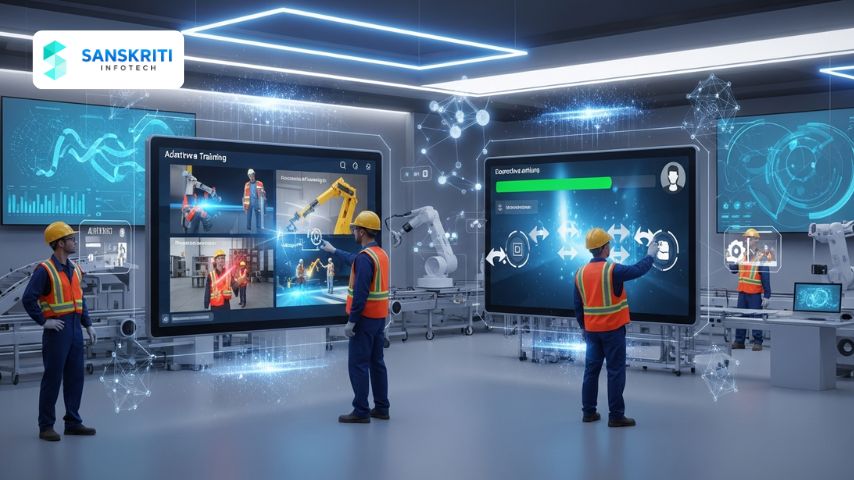
Safety Animation Trends are rapidly evolving as companies increasingly rely on digital training, immersive learning tools, and visual SOPs to strengthen workplace safety. In 2025, organizations across industries such as manufacturing, oil and gas, construction, pharmaceuticals, logistics, and utilities are shifting from traditional training to high-impact animation-driven learning. Sanskriti Infotech continues to support this transformation by delivering advanced animated safety modules that align with modern workforce expectations, regulatory requirements, and technological advancements.
Why Safety Animation Is Becoming Essential in 2025
- Workforces want short, visual, and interactive content
- Global plants require standardized multilingual safety communication
- Risk-heavy industries prefer simulated hazard training over live demos
- Regulators expect stronger documentation and verifiable training. See OSHA Training Guidelines.
- Remote learning demands digital-first formats
1. AI-Driven Safety Animation
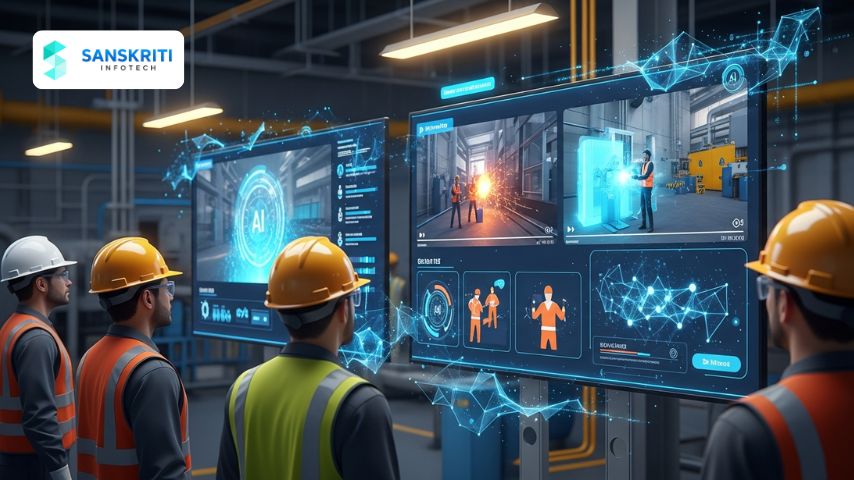
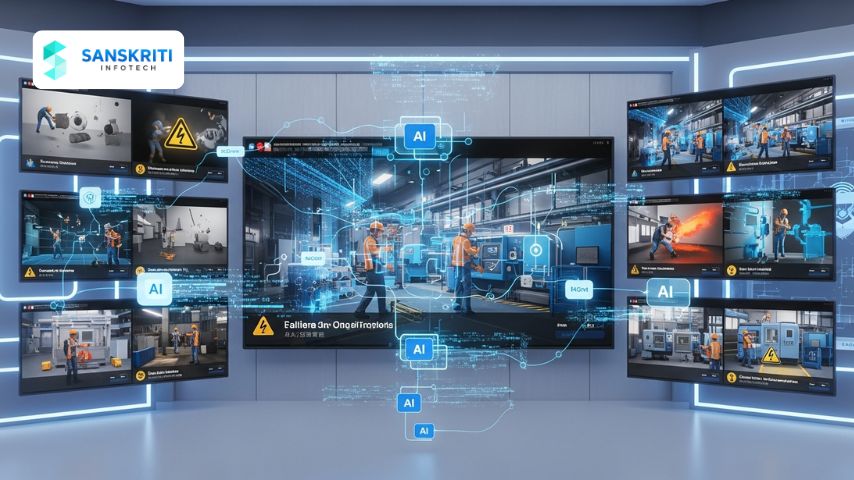
AI-enabled animation tools are reshaping safety training by speeding up content creation, generating accurate character movements, and supporting data-driven customization. AI allows training modules to be updated quickly when SOPs change, making them more flexible for large organizations. Sanskriti Infotech integrates AI-assisted workflows to reduce production timelines while maintaining quality.
2. VR and AR Safety Training Content
VR and AR are now widely adopted in high-risk sectors where real-world training is unsafe. VR headsets simulate hazardous activities, allowing workers to practice emergency responses, walkthroughs, and equipment handling in a controlled environment. AR overlays digital instructions on real machinery to support maintenance operations and reduce errors. Explore 3D design modeling for immersive solutions.
3. Microlearning Safety Animation Modules
Short, highly focused safety videos remain one of the strongest trends in 2025. Microlearning helps workers learn one procedure at a time, such as lockout/tagout steps, forklift inspections, or confined-space entry rules. This increases retention and minimizes training fatigue.
4. Ultra-Realistic 3D Hazard Simulations
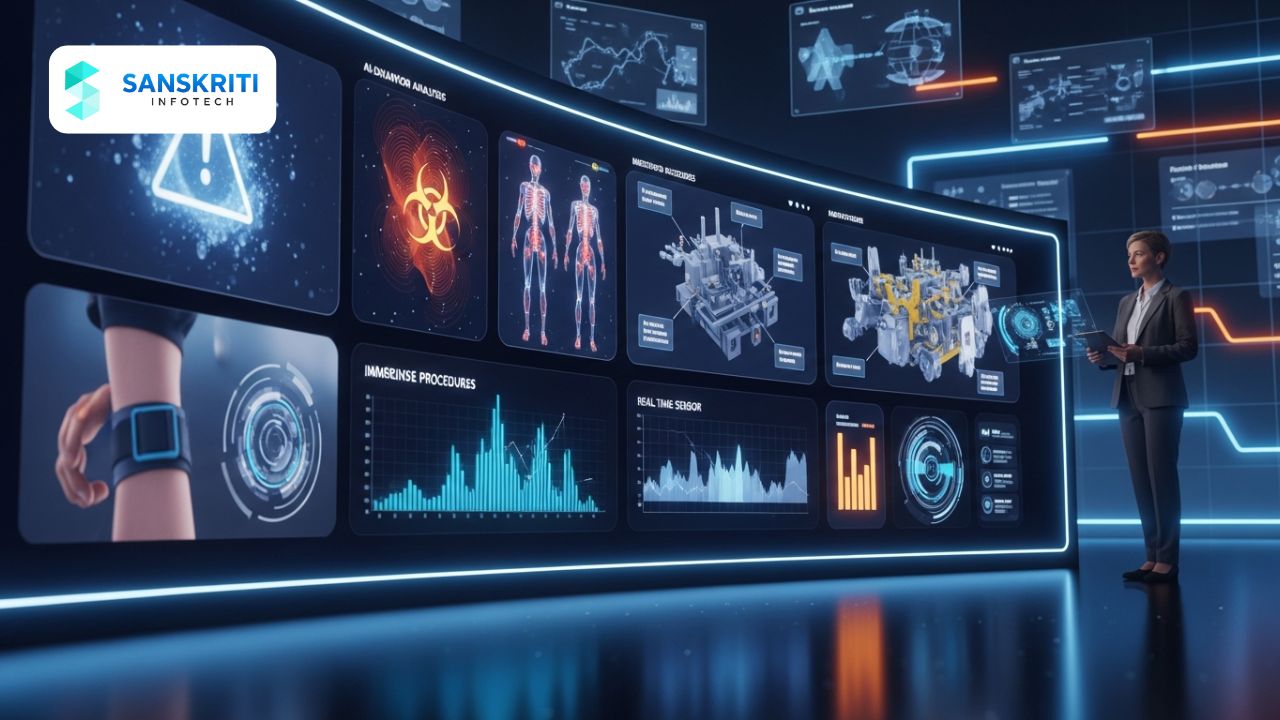
Modern 3D tools allow for highly accurate hazard simulations, creating near-real environments that replicate fires, chemical spills, mechanical failures, structural collapses, and electrical arcs. Companies use realistic 3D sequences to prepare workers for worst-case scenarios without exposing them to danger. Learn more about chemical industry hazard simulations.
5. Digital Twins for Safety Training
Industrial sites now use digital twins—virtual replicas of their plants—to deliver site-specific safety training. Workers can explore digital replicas to understand routes, machinery, equipment, and hazard zones. This is especially useful for shutdowns, turnarounds, and onboarding contractors. Discover 3D documentation services for digital twin creation.
6. Scenario-Based Behavioral Safety Animation
Behavior-based safety remains a major priority for organizations. Animated scenarios help workers recognize risky behaviors, understand root causes, and adopt safer alternatives. These scenarios are more impactful than text-based rules because they show real consequences visually. Research insights available at NIOSH Safety Research.
7. Multilingual and Low-Literacy Safety Training
Workforces in 2025 are diverse and often multilingual. Animation eliminates language barriers by using clear visuals and localized subtitles. This ensures consistent safety understanding across all departments and plant locations.
8. Safety Animation for Remote and Hybrid Work Models
Remote work might not involve industrial hazards, but organizations still require employees to understand emergency protocols, ergonomic best practices, cybersecurity safety, and health guidelines. Animated content supports distributed teams with accessible, mobile-friendly safety learning.
How Sanskriti Infotech Uses Modern Trends in Safety Animation
- AI-enhanced animation pipelines
- Digital twin development for factories and plants
- VR/AR-ready training modules
- Microlearning safety lesson libraries
- Scenario-based behavioral safety animations
- Multilingual versions for global workforce training
- Industry-specific hazard simulations
Benefits of Adopting Safety Animation Trends in 2025
- Improves worker preparedness across all departments
- Reduces the cost of repeated classroom training
- Supports compliance with modern regulatory expectations. See ISO Standards for Safety Management.
- Strengthens safety culture and reporting behavior
- Decreases incident rates through visual learning
Companies implementing these trends gain long-term benefits in safety performance, employee engagement, and regulatory compliance. Sanskriti Infotech continues to lead in next-generation safety animation development, enabling organizations to modernize their training programs.
Conclusion
If your organization is planning to upgrade its EHS training strategy, Sanskriti Infotech offers advanced animation solutions aligned with the latest safety training trends. Stay informed with industry resources at UK HSE Safety Training Resources. You may reach us any time through our Contact Us page.