Table of Contents
Introduction
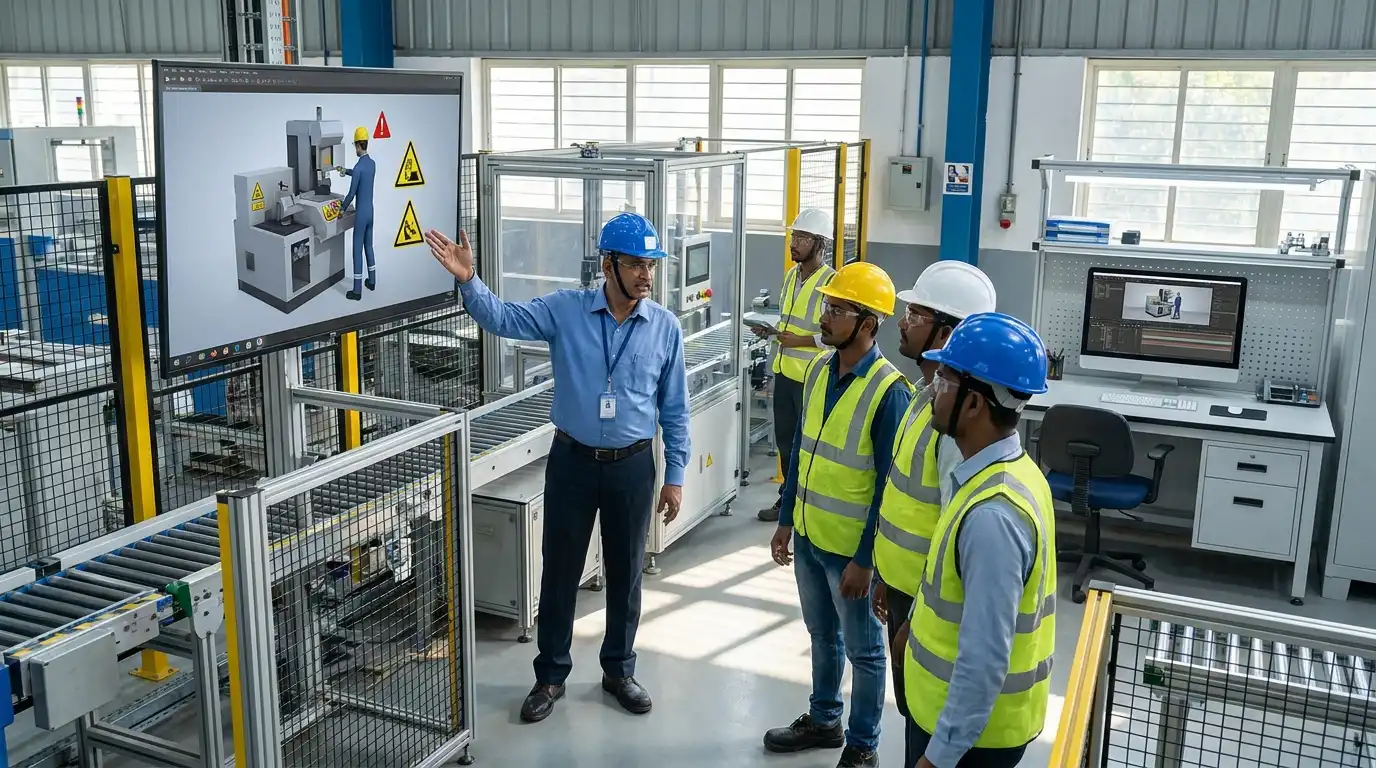
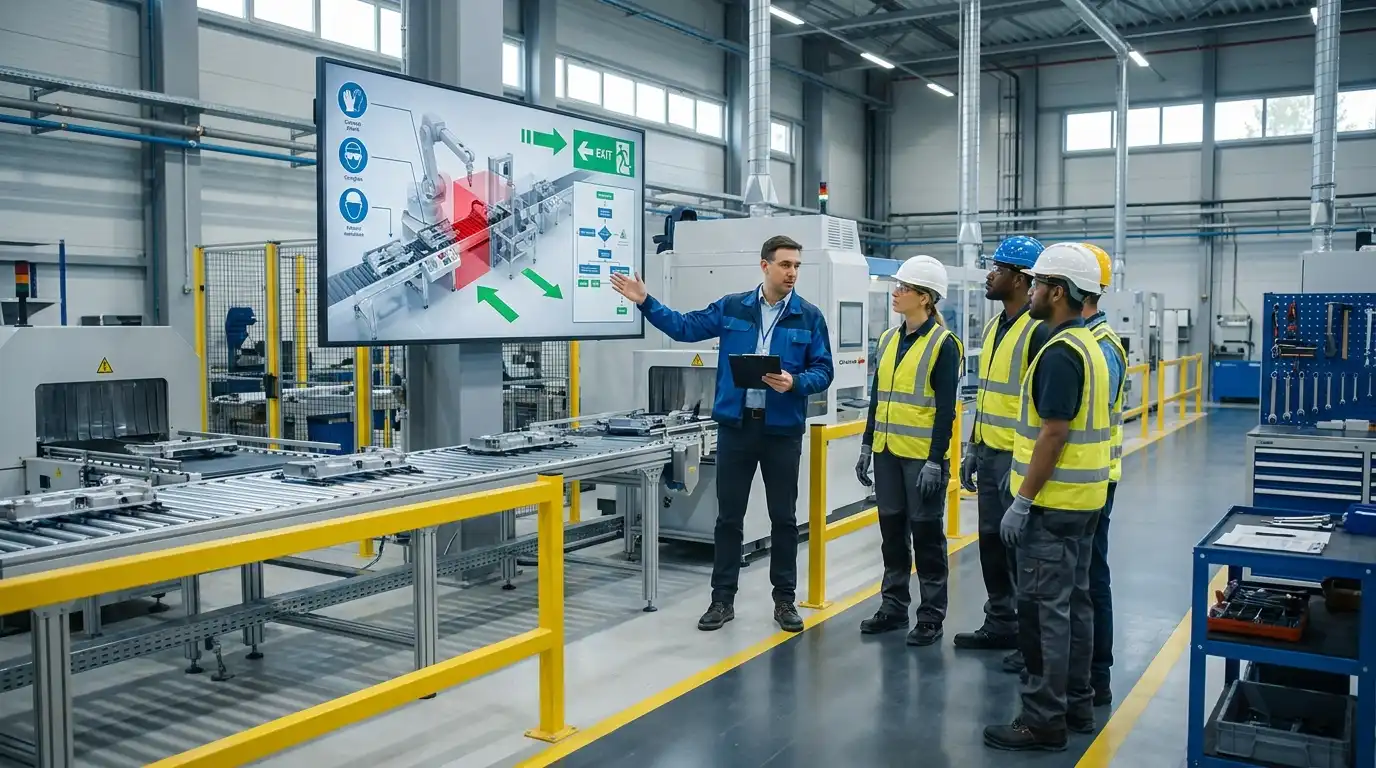
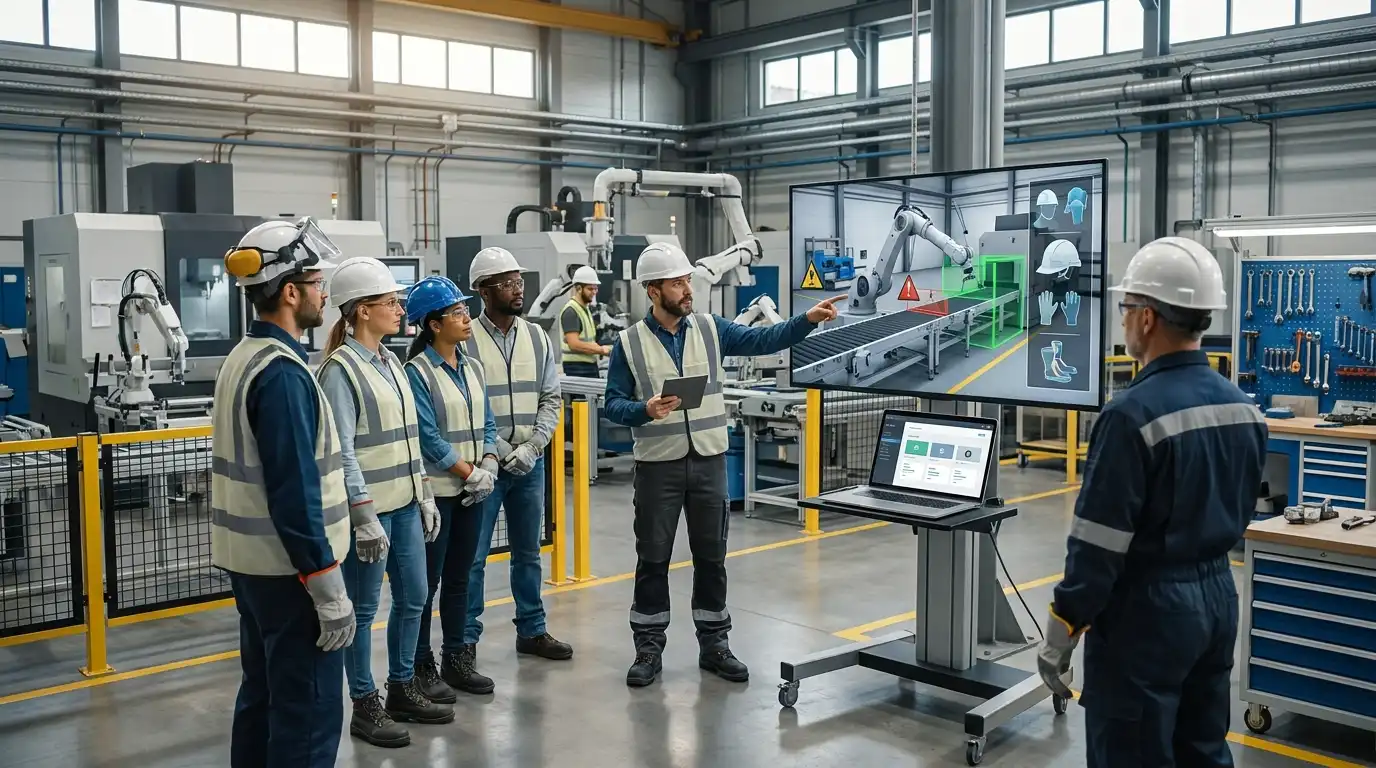
Manufacturing companies need training that is clear, repeatable, and practical. In busy production environments, workers must understand machine behavior, safe operating steps, hazard zones, emergency actions, and plant rules without confusion. That is why safety animation services have become a valuable training tool for manufacturers looking to improve induction, SOP communication, machine safety, and process awareness.
Instead of relying only on manuals, presentations, or classroom sessions, safety animation services turn complex procedures into visual learning content. This makes training easier to understand for operators, supervisors, contractors, and new joiners. For manufacturing companies, the value is simple: better clarity, better consistency, and a stronger way to communicate safety-critical information across teams.
What Are Safety Animation Services?
Safety animation services involve creating animated training content for industrial learning, compliance communication, and workforce awareness. In manufacturing, this usually means 3D visual modules that show how equipment works, where hazards exist, what the correct sequence looks like, and how to avoid unsafe behavior.
These services are commonly used for:
- Employee induction
- Contractor induction
- Visitor induction
- SOP training
- Machine guarding training
- Lockout and tagout communication
- Process safety awareness
- Emergency response training
- Incident recreation
- Shutdown and maintenance safety communication
For manufacturing companies, this matters because many safety topics involve movement, sequence, operator positioning, and equipment interaction. Those elements are difficult to explain through text alone but much easier to understand when shown visually.
Why Manufacturing Companies Need Safety Animation Services
Manufacturing plants deal with moving machinery, restricted zones, maintenance tasks, process steps, contractor movement, and production pressure. Even when safety procedures are documented correctly, teams may still misunderstand how the work should actually be performed on the shop floor.
A written SOP can explain a task, but it may not show the safe path around a machine, the exact guard position, the right lockout sequence, or the consequence of standing in the wrong area. Safety animation solves this by visualizing the environment. It shows the real context behind the instruction.
This is especially useful in manufacturing because training often has to be delivered quickly and repeatedly. New workers need induction. Contractors need plant-specific orientation. Existing teams need refresher learning. Supervisors need a consistent way to explain procedures across shifts. Safety animation services support all of these needs with training content that is easier to reuse and easier to standardize.
What Safety Animation Services Include
A professional safety animation project for manufacturing companies usually includes much more than a finished video. It often covers planning, content design, visual production, review, and final delivery in formats that can be used for ongoing training.
Typical deliverables include:
- Script and storyboard
- 3D modeling of plant layouts, machines, and equipment
- Animation of worker actions, hazards, and safe procedures
- Scene-based SOP explanation
- Machine guarding visuals
- Voiceover and subtitles
- Multilingual versions where required
- Modular clips for induction and refresher use
- LMS-ready or presentation-ready output files
- Static screenshots or supporting visual assets for internal use
For manufacturing buyers, these deliverables are important because training content often needs to serve multiple purposes. One animation may be used in induction sessions, toolbox talks, digital learning systems, audits, safety meetings, and contractor onboarding.
Common Use Cases in Manufacturing
Manufacturing companies use safety animation services for a wide range of applications. The most effective projects focus on training topics where visual explanation can reduce confusion and improve understanding.
Machine Guarding Training
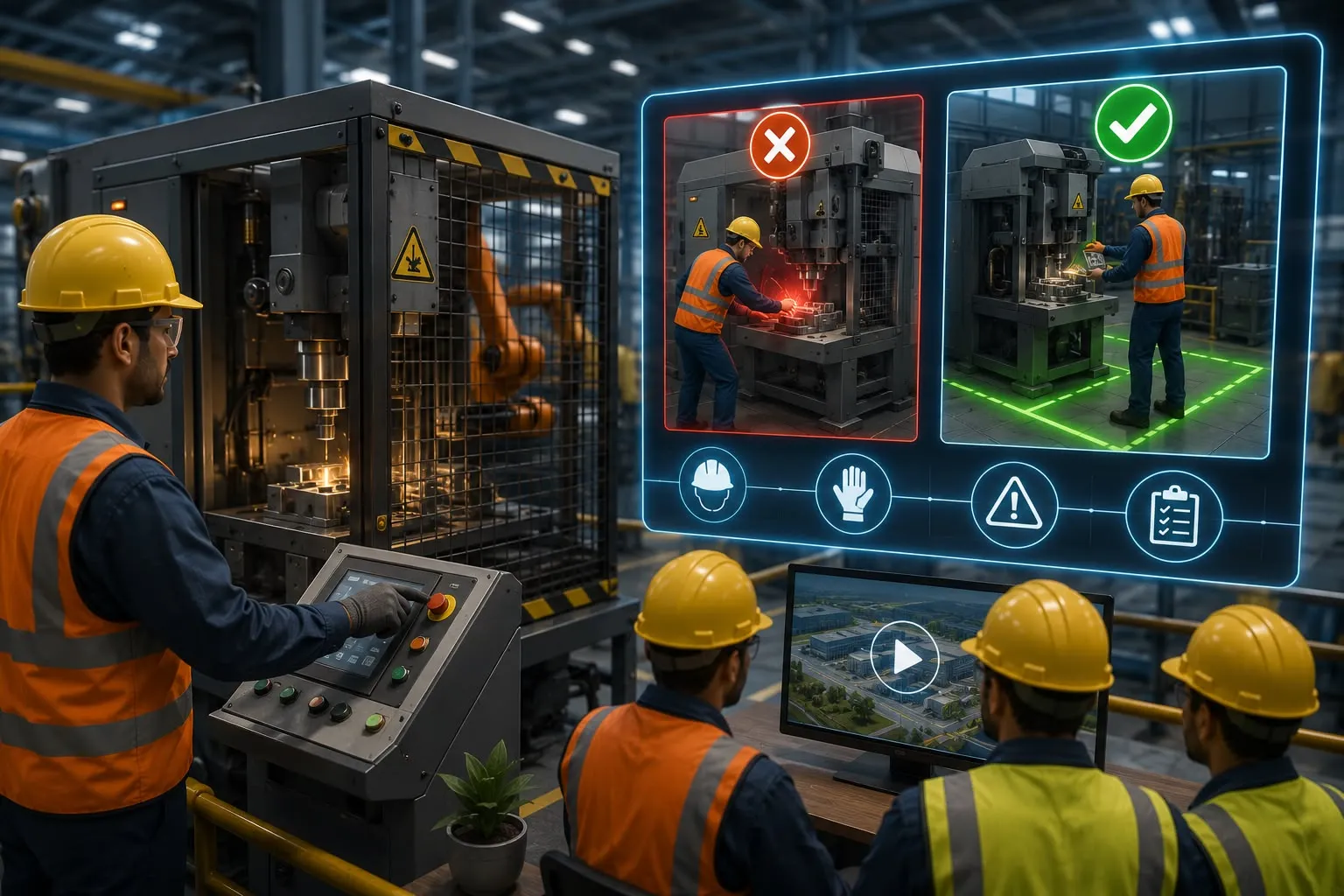
This is one of the most important use cases in manufacturing. Animation can show pinch points, moving parts, safe operator distance, proper guard placement, and unsafe interaction. It helps workers understand not only the rule but also the physical reason behind the rule.
SOP Animation
Many manufacturing procedures are written in detail but still difficult to absorb. SOP animation converts those instructions into a visual step-by-step format that is easier to follow during training.
Induction Training
Employee induction, contractor induction, and visitor orientation all benefit from animated content. Plant entry rules, PPE, movement restrictions, machine zones, and emergency exits can be communicated quickly and consistently.
Lockout and Tagout Communication
Lockout and tagout procedures are critical in manufacturing. Safety animation can help explain isolation points, sequence logic, verification, and worker responsibilities with much greater clarity.
Shutdown and Maintenance Safety
Shutdown periods and maintenance activities often involve additional risks, temporary teams, permits, and unusual work conditions. Animation can help communicate process changes and control measures before work starts.
Process Safety and Emergency Response
In process-driven manufacturing, animation can support communication around hazard scenarios, emergency response steps, evacuation flow, alarm response, and incident prevention.
Benefits of Safety Animation Services for Manufacturing Companies
Manufacturing businesses invest in safety animation because it improves how training is delivered and understood.
Better understanding of complex procedures
Animation makes it easier to explain machine movement, sequence, equipment behavior, and operator actions. This is especially helpful when the process includes several steps or risk points.
More consistent training across shifts and locations
When the same training needs to be repeated for different teams, animation helps standardize the message. Everyone receives the same approved explanation.
Faster induction and onboarding
Visual training helps new employees and contractors understand plant rules faster. This is useful in facilities where induction must happen regularly.
Improved retention
People often remember visual sequences better than long text documents or lecture-based sessions. This increases the practical value of training content over time.
Better support for compliance and internal communication
Standardized safety animation can support SOP rollout, process change communication, internal audits, and cross-functional awareness.
Reduced dependence on repeated explanation
Supervisors and trainers often spend time repeating the same guidance. A good animation module reduces that burden by giving teams a reusable training asset.
Deliverables You Should Expect From a Vendor
When a manufacturing company hires a safety animation partner, it should expect clearly defined outputs and a structured scope of work.
A good vendor should typically provide:
- Discovery and briefing support
- Clear project scope
- Script and storyboard approval stages
- Site-specific or machine-specific visual development
- Review rounds with feedback integration
- Final output in required formats
- Language options if needed
- A practical timeline with milestones
- Cost clarity before production begins
These points are especially important when the training needs to match real equipment, actual workflows, and plant-specific rules. The more relevant the animation is to the actual facility, the more useful it becomes for workforce training.
Typical Timeline for Safety Animation Services
The timeline for a manufacturing safety animation project depends on complexity, scope, and review speed. A short module for induction may move faster than a highly detailed animation covering multiple machines, procedures, and language versions.
A typical workflow may include these stages:
- Project briefing and input collection
- Script writing and storyboard approval
- 3D modeling and scene setup
- Animation production
- Review and revisions
- Voiceover, subtitles, and localization
- Final delivery and deployment
Simple projects can move relatively quickly, while more technical projects take longer because they require more modeling detail, review coordination, and compliance validation. Timeline discussions should always happen before production begins so expectations are clear for both sides.
Cost Factors to Consider
The cost of safety animation services depends on the production scope rather than just the final video length. Manufacturing companies should understand that a short but highly customized animation may require more effort than a longer general-awareness module.
Common cost factors include:
- Number of scenes
- Detail level of plant and machinery
- Need for custom 3D modeling
- Complexity of worker actions and movement
- Technical accuracy requirements
- Number of review rounds
- Voiceover and subtitle requirements
- Number of languages
- Delivery formats and LMS needs
- Whether the project is modular or one continuous film
A structured and predefined scope is useful because it reduces surprises around cost and delivery expectations. This is one reason many manufacturing clients prefer vendors who can define deliverables, timeline, and approval flow clearly from the beginning.
Traditional Training vs Safety Animation
| Factor | Traditional Training | Safety Animation Services |
|---|---|---|
| Procedure explanation | Text-heavy or trainer-led | Visual and process-driven |
| Machine behavior clarity | Limited | Strong |
| Training consistency | Varies by session | Standardized |
| Repeatability | Time-intensive | Easy to reuse |
| Induction scalability | Moderate | High |
| Suitability for technical topics | Limited in many cases | Very strong |
For manufacturing companies, the advantage of safety animation is not just presentation quality. It is the ability to make difficult procedures easier to communicate and easier to repeat without losing clarity.
How to Choose the Right Safety Animation Partner
Choosing the right vendor is as important as choosing the right format. A manufacturing company should look for a partner that understands industrial training, not only animation production.
Key things to look for include:
- Experience with manufacturing or industrial safety topics
- Ability to model plant layouts and machinery realistically
- Understanding of SOPs, induction, machine safety, and process communication
- Willingness to customize for the actual facility
- Clear approval stages and production workflow
- Support for multilingual delivery if needed
- Defined cost and timeline expectations
- Deliverables that can be reused across induction and refresher training
A good safety animation partner should be able to simplify complex factory procedures without making them feel generic. That balance is important for trust, usability, and training impact.
Why Sanskriti Infotech Is Relevant for Manufacturing Safety Animation
Sanskriti Infotech is well aligned with the needs of manufacturing companies because its services already focus on 3D animation for safety, induction, training, machine guarding, and process communication. Its manufacturing-related content also highlights realistic 3D modeling of plant layouts and machines, SOP-aligned scenarios, site-specific customization, multilingual narration, and modular content for induction and refresher training.
This makes Sanskriti Infotech a practical fit for manufacturing businesses that want clear, industry-focused training content rather than generic animated presentations. For companies looking to improve workforce understanding, reduce confusion, and communicate procedures more effectively, safety animation services can be a strong long-term training asset.
Conclusion
Safety animation services help manufacturing companies communicate procedures more clearly, train people more consistently, and explain risk in a way that is easier to understand. For induction, SOP communication, machine guarding, process safety, and emergency awareness, animation provides a practical advantage over text-only training.
For manufacturers that want scalable and site-relevant training content, a specialized animation partner can make a real difference. Sanskriti Infotech is well positioned to support these needs through industrial 3D animation services built around manufacturing safety, clarity, and training effectiveness.
Looking for safety animation services for your manufacturing company? Sanskriti Infotech helps factories and industrial teams create 3D safety animation for induction, SOP communication, machine guarding, process safety, shutdown safety, and workforce training. Contact Sanskriti Infotech to discuss a custom manufacturing safety animation solution.