Table of Contents
Introduction
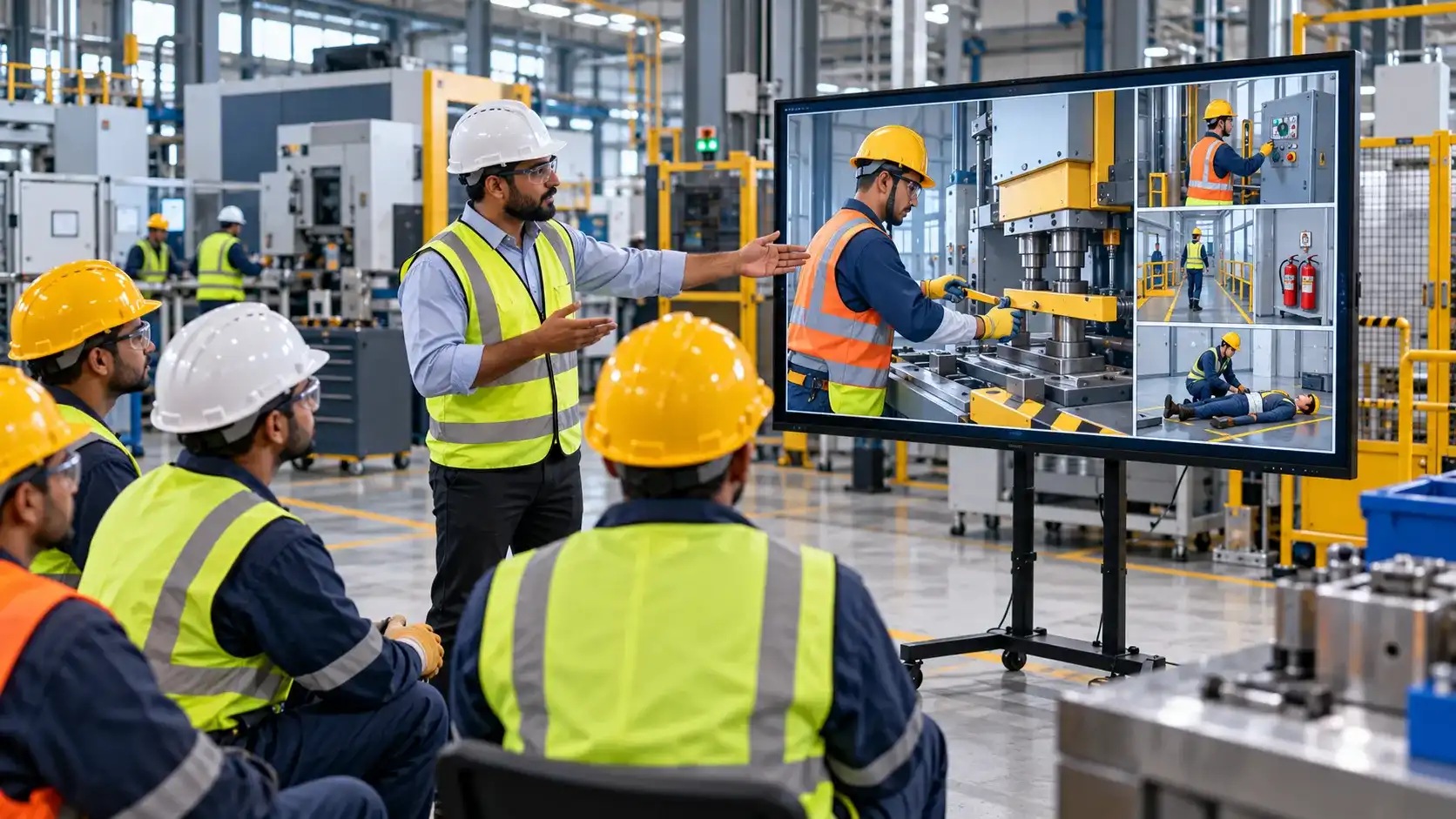
Sanskriti Infotech is a safety animation company that creates industrial safety animation, HSE animation, and animated safety videos for organizations that need to train workers clearly and consistently. For companies in manufacturing, construction, oil and gas, logistics, chemical processing, mining, and heavy industry, custom safety animation is one of the most effective ways to explain hazards, procedures, and safe behavior in a format people actually remember.
Industrial safety animation providers must do more than produce attractive visuals. They must understand workplace risk, operational procedures, and how safety information is used in real training environments. That is why custom safety animation is so valuable for onboarding, induction, refresher training, incident prevention, and compliance communication.
Why Safety Animation Matters
Safety training fails when people do not understand the message or cannot visualize the risk. A written SOP or a slide deck may explain what to do, but it does not always show how the hazard develops, what unsafe behavior looks like, or how the procedure should happen in sequence.
Safety animation solves that problem by making hidden or complex risk visible. It can show machine movement, site hazards, PPE use, emergency response, permit-to-work steps, and unsafe-versus-safe actions in a controlled learning format. This is especially valuable in industries where verbal training alone is not enough.
What Industrial Safety Animation Providers Should Offer
The best industrial safety animation providers understand that different organizations need different levels of detail. A general awareness video for a visitor is not the same as a machine-specific training module for maintenance staff or a root-cause recreation for an incident review.
A strong provider should be able to create:
- Animated safety videos.
- HSE animation.
- Workplace safety animation.
- Industrial safety training videos.
- Safety induction videos.
- Contractor induction videos.
- Machine safety animation.
- Incident recreation animation.
- SOP training videos.
- Process safety visualizations.
Sanskriti Infotech’s service model fits this need because it is built around industrial communication, technical visualization, and training applications rather than generic branding content.
Safety Animation Company for Industrial Training
A safety animation company should help organizations communicate safety in a way that is practical, repeatable, and site-relevant. That means the content should reflect actual work environments, actual procedures, and actual hazards.
This is especially useful for:
- New employee onboarding.
- Contractor safety induction.
- Visitor safety orientation.
- HSE awareness campaigns.
- Workplace safety communication.
- SOP and work instruction training.
- Incident learning and root cause analysis.
- Compliance and audit support.
When safety content is customized, it becomes easier for workers to understand what is expected of them and easier for managers to standardize training across locations.
Industrial Safety Animation for Real-World Hazards
Industrial safety animation is most effective when it deals with hazards that are hard to explain visually in other formats. That includes moving machinery, rotating equipment, electrical isolation, hazardous material handling, vehicle movement, work at height, and confined space entry.
A good animation can show:
- Hazard zones.
- Unsafe access.
- Lockout/tagout steps.
- Permit-to-work controls.
- Machine guarding.
- Emergency shutdowns.
- Safe lifting and movement.
- Restricted area behavior.
This makes animated safety videos especially useful in plants and worksites where the cost of misunderstanding is high.
HSE Animation and Workplace Communication
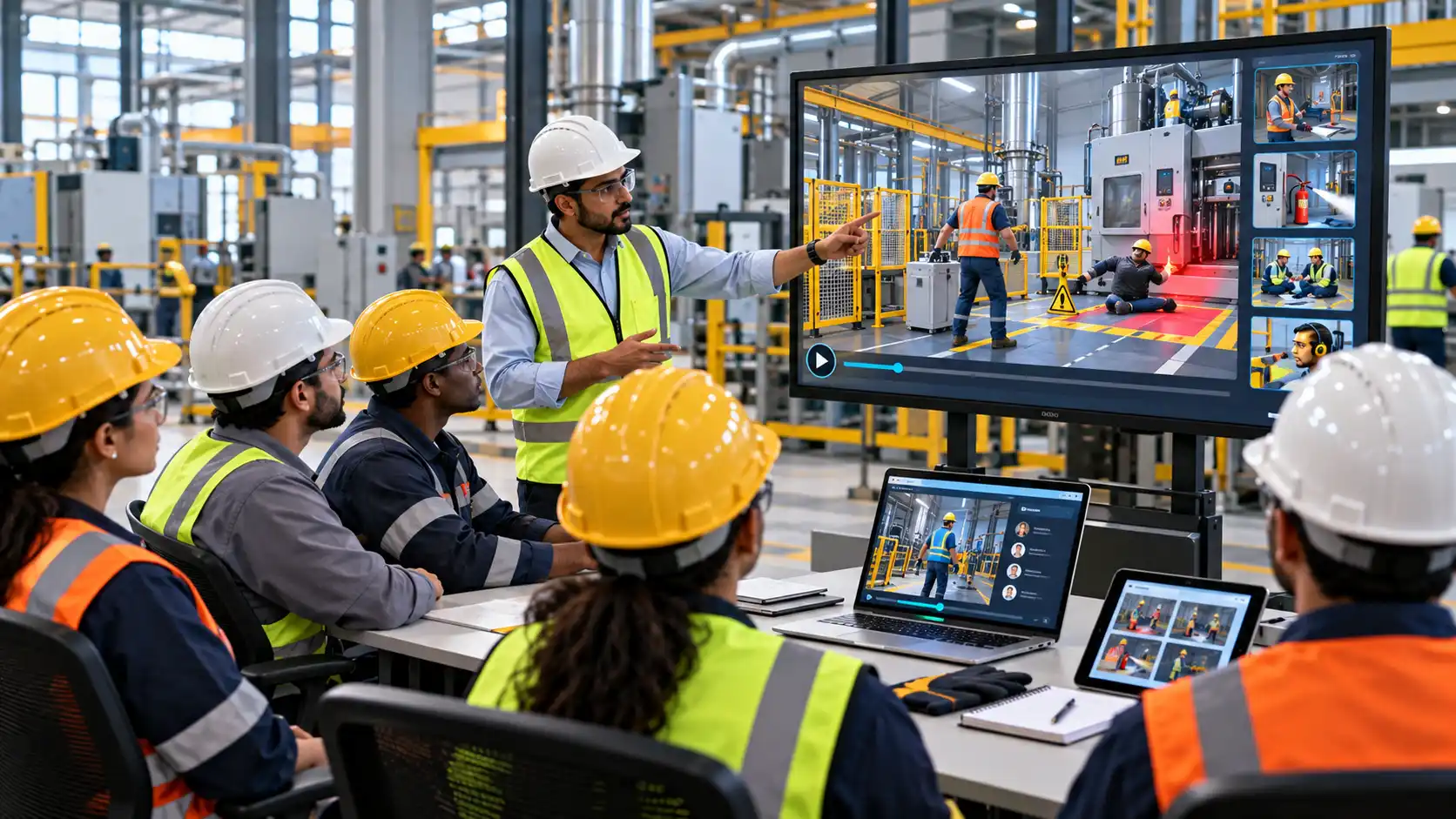
HSE animation helps organizations communicate health, safety, and environment responsibilities in a way that is easy to understand. This is important because HSE teams often need to train people with different language backgrounds, roles, and levels of technical understanding.
The right HSE animation can support:
- HSE training videos.
- HSE induction video content.
- EHS training animation.
- Safety compliance animation.
- HSE awareness videos.
- Workplace safety animation.
This type of content is not just educational. It supports behavior change, compliance awareness, and safer day-to-day decisions.
Manufacturing Safety Animation
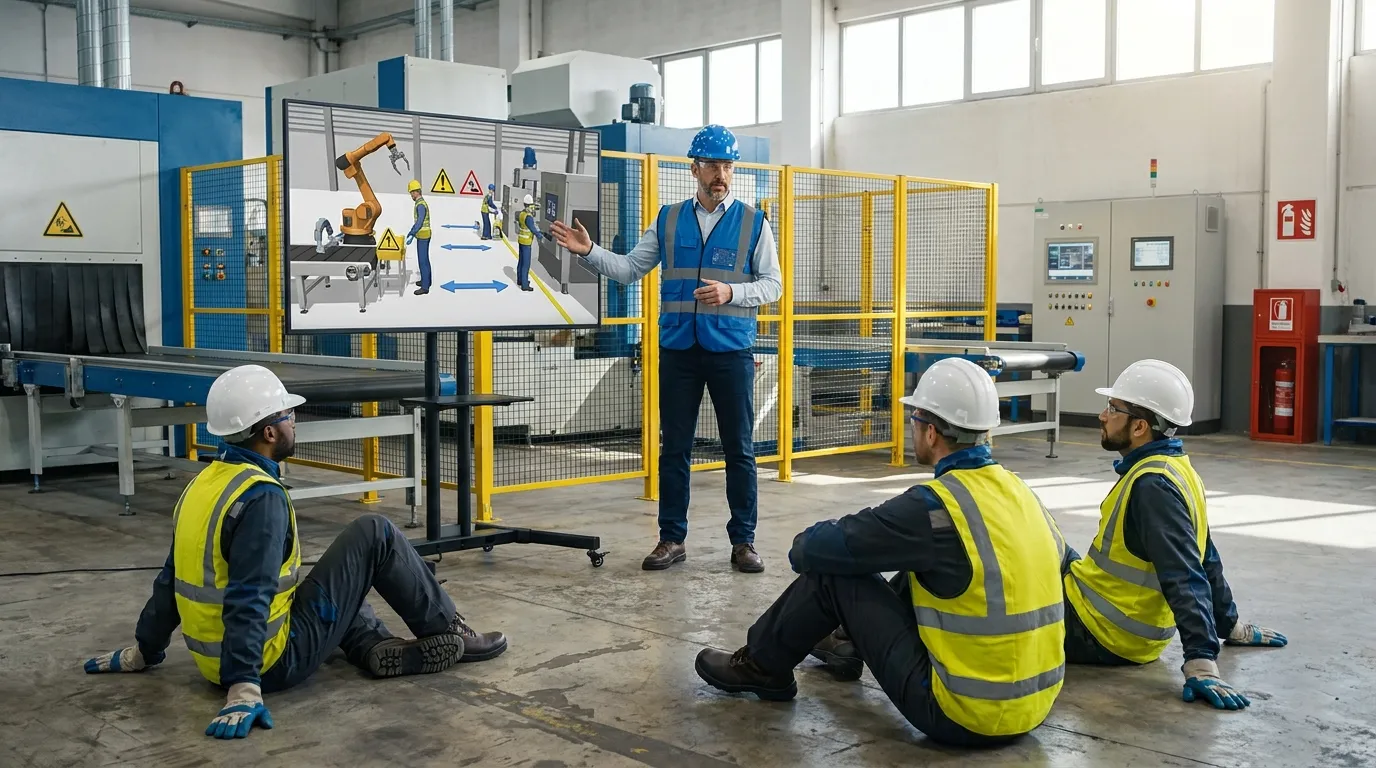
Manufacturing is one of the strongest use cases for industrial safety animation providers. Plants often have equipment-related hazards, maintenance risks, production pressure, and a wide range of worker roles that require different levels of training.
Manufacturing safety animation can be used to explain:
- Machine guarding.
- Lockout/tagout.
- Conveyor safety.
- Safe startup and shutdown.
- Maintenance isolation.
- Line changeover.
- Forklift and pedestrian safety.
- Material handling.
- Safe cleaning and sanitation procedures.
Because the content is visual, it can reduce confusion and help workers follow procedures more consistently across shifts and departments.
Safety Induction and Onboarding Videos
Safety induction videos are often the first safety content a worker sees before entering a site. For industrial organizations, this is one of the highest-value applications of animation because first impressions matter and early mistakes can be costly.
A strong safety induction video can cover:
- Site hazards.
- PPE requirements.
- Emergency alarms and muster points.
- Restricted zones.
- Safe movement routes.
- Reporting rules.
- Behavioral expectations.
- Visitor and contractor protocols.
This makes it easier for organizations to standardize onboarding across employees, contractors, and visitors.
Incident Recreation and Learning Animation
Incident recreation animation is one of the most powerful forms of safety animation because it helps teams understand what happened in a real event. Instead of relying only on a written report, animation shows the sequence, site conditions, equipment behavior, and human actions that contributed to the incident.
This is especially useful for:
- Root cause analysis.
- Accident investigation.
- Near miss learning.
- Toolbox talks.
- Lessons-learned campaigns.
- Management reviews.
A strong recreation video should be based on factual inputs such as photos, site measurements, witness statements, and incident timelines. The goal is learning, not dramatization.
2D and 3D Safety Animation
Industrial safety animation providers should be able to offer both 2D and 3D production depending on the complexity of the message.
| Format | Best For | Advantage |
|---|---|---|
| 2D animation | Awareness, simple procedures, short training modules | Faster and cost-effective |
| 3D animation | Machines, plant layouts, incident recreation, technical detail | More realistic and precise |
For industrial safety content, 3D is usually the better option when the audience must understand equipment behavior, spatial hazards, or site-specific processes.
Buyer Decision Factors
If you are comparing safety animation company options, the key question is not only “Who can make the video?” It is “Who understands the safety problem well enough to make the video useful?”
Important buyer decision factors include:
- Industry experience.
- Understanding of industrial hazards.
- Ability to work from SOPs, JSAs, and safety procedures.
- 2D and 3D production capability.
- LMS and SCORM support.
- Multilingual delivery.
- Review and revision workflow.
- Site-specific customization.
- Incident and compliance expertise.
Sanskriti Infotech is positioned well for buyers who need practical industrial communication rather than generic media production.
Production Workflow
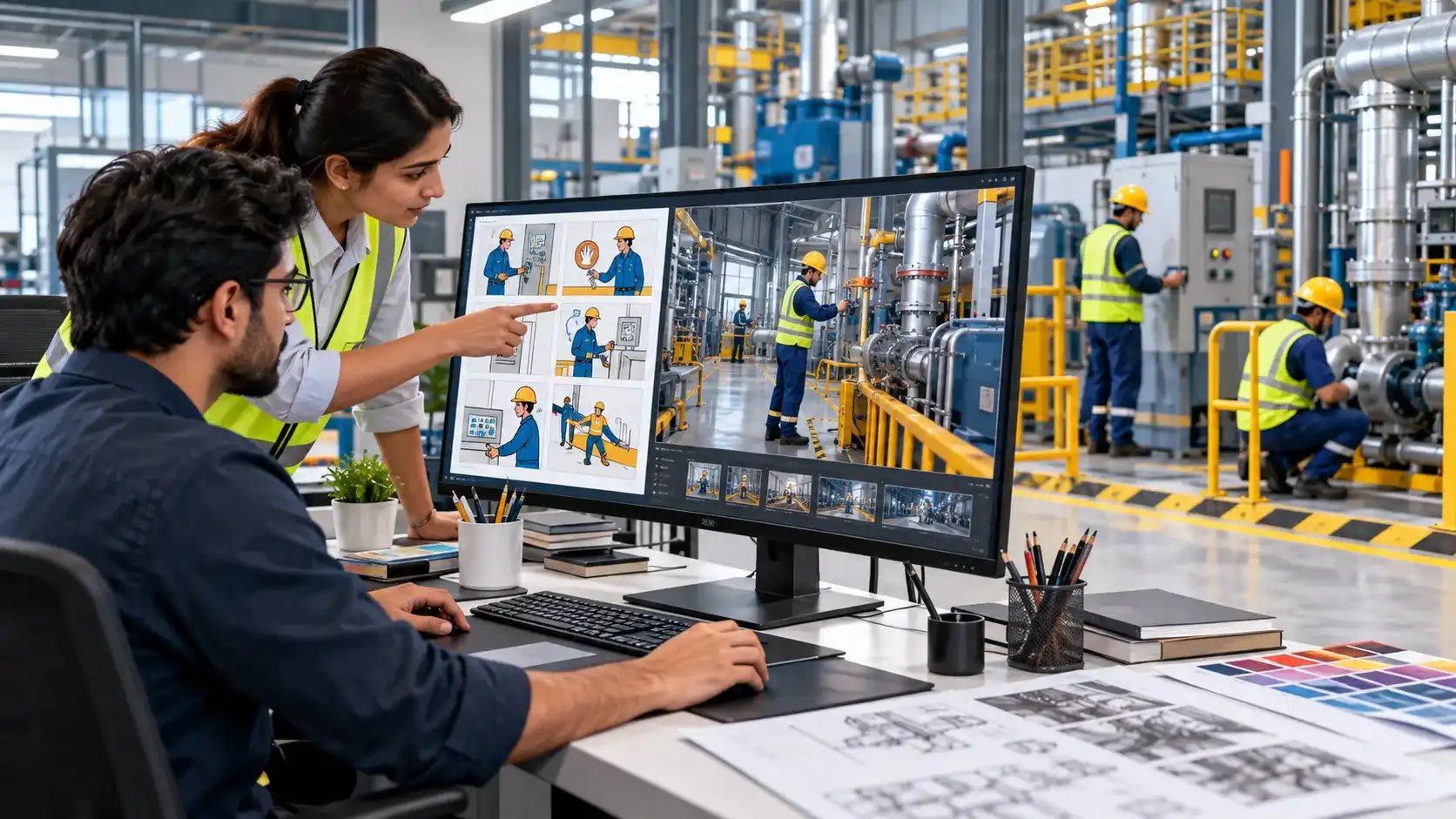
A good safety animation project should follow a structured workflow so that the final video is accurate, approved, and usable.
Typical workflow:
- Discovery and brief.
- Review of procedures and source material.
- Script development.
- Storyboard approval.
- Visual design and style approval.
- Animation production.
- Voiceover and subtitle integration.
- Stakeholder review.
- Final delivery for LMS, web, or internal use.
This workflow matters because safety content must be reviewed carefully by HSE, operations, maintenance, and training teams.
Implementation Timelines
The timeline depends on complexity, approvals, and the amount of site-specific detail required.
Typical delivery windows:
- Simple awareness video: 2 to 3 weeks.
- Mid-complexity industrial training video: 3 to 5 weeks.
- Technical 3D safety module or incident recreation: 5 to 6 weeks or more.
The biggest schedule risks are usually delayed inputs and delayed approval, not animation itself.
LMS and SCORM Delivery
Most industrial buyers need more than a standalone video file. They need content that can be used in an LMS, tracked, assigned, and included in training pathways.
That is why safety animation services should support:
- LMS upload.
- SCORM packaging.
- Completion tracking.
- Recertification support.
- Role-based training paths.
- Digital onboarding.
This is especially important for large organizations with multiple sites or recurring training cycles.
Compliance and Standards Relevance
Safety animation should support compliance communication, not replace it. OSHA training resources emphasize the importance of employer training and worker protection, while ISO 45001 competence and awareness guidance reinforces the need for workers to understand hazards, responsibilities, and safe work behavior.
Induction checklists also show how workplace onboarding typically covers policy, emergency response, hazards, equipment, visitor protocols, restricted zones, and incident reporting. Animated safety videos are a strong way to communicate those topics consistently.
What Makes Sanskriti Infotech a Strong Fit
Sanskriti Infotech is a good choice for buyers who want a safety animation company that understands industrial use cases and training intent. The focus is on clarity, technical accuracy, and practical deployment across safety, compliance, and onboarding workflows.
It is especially relevant for:
- Safety animation company projects.
- Industrial safety animation providers.
- HSE animation.
- Workplace safety animation.
- Manufacturing safety animation.
- Safety induction videos.
- Incident recreation animation.
- SOP and process safety videos.
- Industrial training content.
If the goal is to communicate safety in a way workers actually understand, animation is often the best format.
Ready to enhance workplace safety with engaging visuals? Contact us