Table of Contents
Introduction
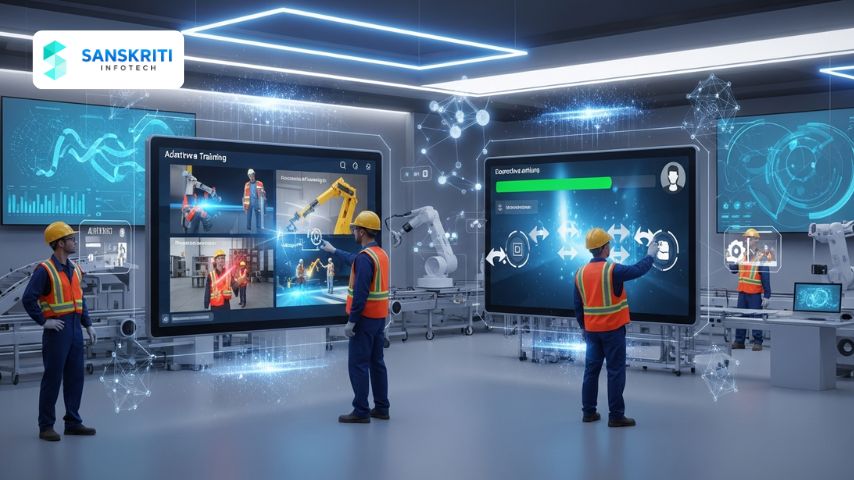
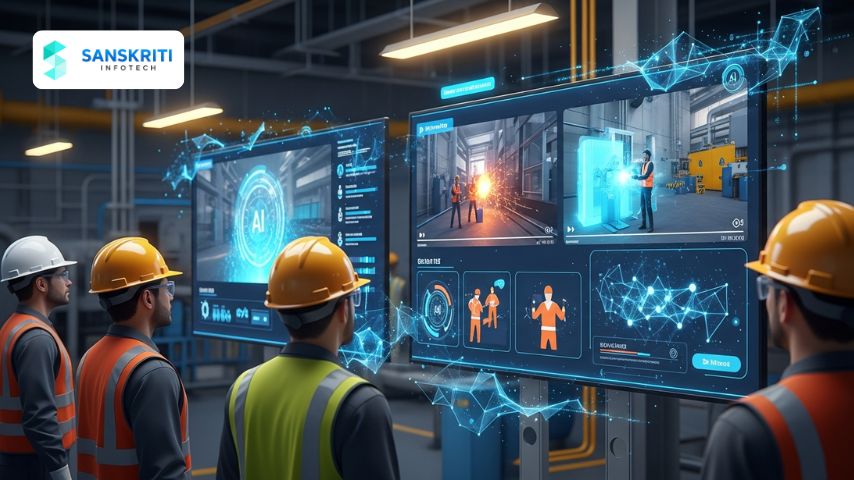
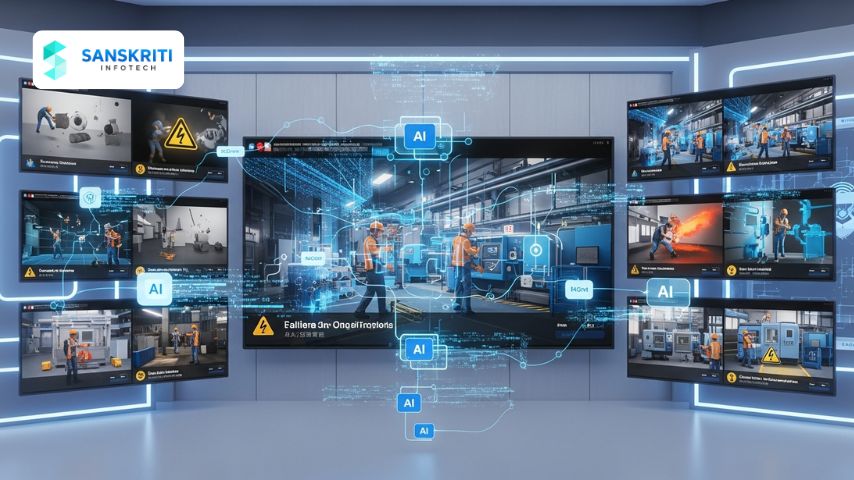
Job Hazard Analysis Animation (JHA Animation) is revolutionizing how organizations approach safety training and risk management. For HSE Managers, Training Coordinators, and Operations Leaders, one of the toughest challenges is ensuring employees not only understand but also apply hazard identification and control measures consistently on the job. Traditional JHA documents, filled with text and checklists, often fail to engage workers, leading to gaps in hazard recognition. With immersive JHA Animation, complex safety procedures are translated into easy-to-understand 3D visuals, making training more effective and retention stronger.
What is Job Hazard Analysis & Why It Matters
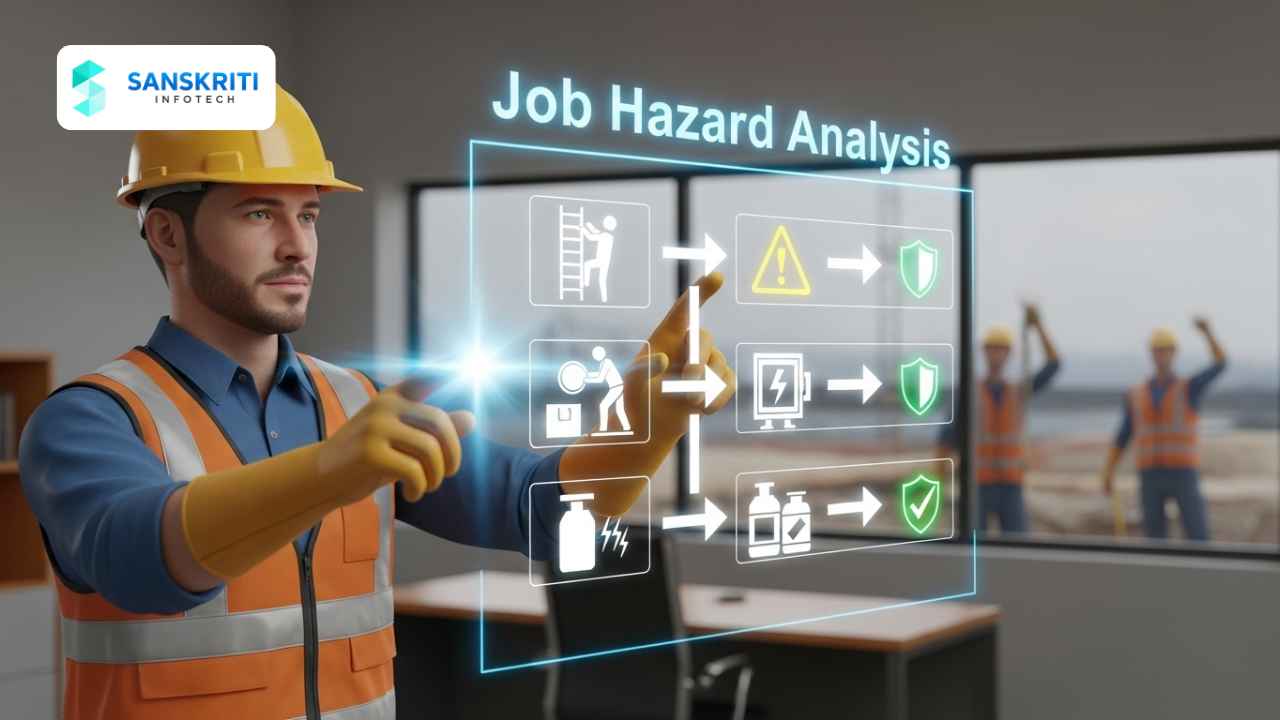
A Job Hazard Analysis (JHA) is a systematic process of breaking down a job into individual tasks, identifying potential hazards, and implementing controls to eliminate or mitigate risks. OSHA emphasizes JHA as a critical component of workplace safety programs. By focusing on step-by-step job activities, JHA helps prevent accidents, improves compliance, and builds a strong safety culture. However, conveying these processes effectively through paper-based documents or classroom lectures often proves inadequate.
How JHA Animation Improves Worker Understanding
Job Hazard Analysis Animation transforms static procedures into dynamic, visual training experiences. For example, instead of simply reading that ‘welding in confined spaces requires proper ventilation,’ workers can watch a 3D animated sequence showing the risks of toxic fume accumulation and the correct use of ventilation systems. This makes hazards tangible, reinforcing correct behaviors. Animations also eliminate language and literacy barriers, ensuring that a diverse workforce fully grasps safety instructions. Discover more about immersive safety training on our 3D Animation Services page.
Step-by-Step Visualization of Hazard Identification & Risk Controls
A typical JHA Animation might walk employees through the following stages:
- Task Breakdown: Showing each step of a job, such as trench excavation or machine maintenance.
- Hazard Identification: Highlighting risks like cave-ins, pinch points, or electrical shock.
- Risk Assessment: Visualizing severity and likelihood of incidents if hazards are ignored.
- Control Measures: Demonstrating engineering controls, PPE, or administrative safeguards in action. For a detailed look at hazard prevention hierarchy, see NIOSH Hazard Prevention.
- Verification: Reinforcing the need for continuous monitoring and adherence to safe practices.
This structured visual journey ensures workers internalize not just what to do, but why it matters.
Industry Applications of JHA Animation
JHA Animation has applications across multiple industries:
- Construction: Teaching workers about fall protection, scaffolding hazards, and excavation risks. Explore more at construction safety animation.
- Manufacturing: Demonstrating machine safety, lockout-tagout, and ergonomic controls. See manufacturing industry animation.
- Oil & Gas: Training on high-risk tasks like hot work, confined space entry, and pipeline operations. Learn more at oil & gas safety animation.
- Utilities & Energy: Visualizing electrical hazards, turbine safety, and line maintenance risks. Discover power and utilities safety animation.
For additional guidance on risk control, see HSE UK Guidance.
Real-World Success Story
A mid-sized construction company adopted JHA Animation for its excavation and scaffolding tasks. Prior to implementation, the company struggled with frequent near-misses and OSHA citations. After integrating animation-based training, supervisors observed a 60% improvement in hazard reporting by workers, and incident rates dropped significantly. This demonstrates the real-world impact of transitioning from traditional paper-based JHA to engaging 3D training.
ROI of JHA Animation
Investing in JHA Animation provides clear returns:
- Reduced Incidents: Fewer accidents mean lower compensation claims and insurance premiums.
- Improved Compliance: Workers understand OSHA, NIOSH, and ANSI standards better through visualization.
- Enhanced Productivity: Training becomes faster and more engaging, freeing supervisors’ time.
- Cultural Shift: Employees become proactive in identifying and controlling hazards.
For organizations with high-risk tasks, the cost of custom animations is quickly justified by improved safety outcomes and financial savings.
Conclusion
Job Hazard Analysis is a cornerstone of workplace safety, but its effectiveness depends on how well it is communicated to the workforce. With JHA Animation, organizations can bridge the gap between policy and practice, ensuring employees clearly understand hazards and controls. Whether in construction, manufacturing, or energy, visual training is proving to be far more impactful than static documents. To explore how customized JHA Animations can strengthen your safety program, contact Sanskriti Infotech today for a tailored solution.