Table of Contents
Introduction
Industrial companies are changing the way they train people. Traditional training methods such as classroom sessions, printed SOPs, manuals, and slide presentations still have a role, but they are no longer enough on their own in complex and high-risk environments. As operations become faster, equipment becomes more advanced, and workforces become more diverse, businesses need training that is clearer, more consistent, and easier to scale.
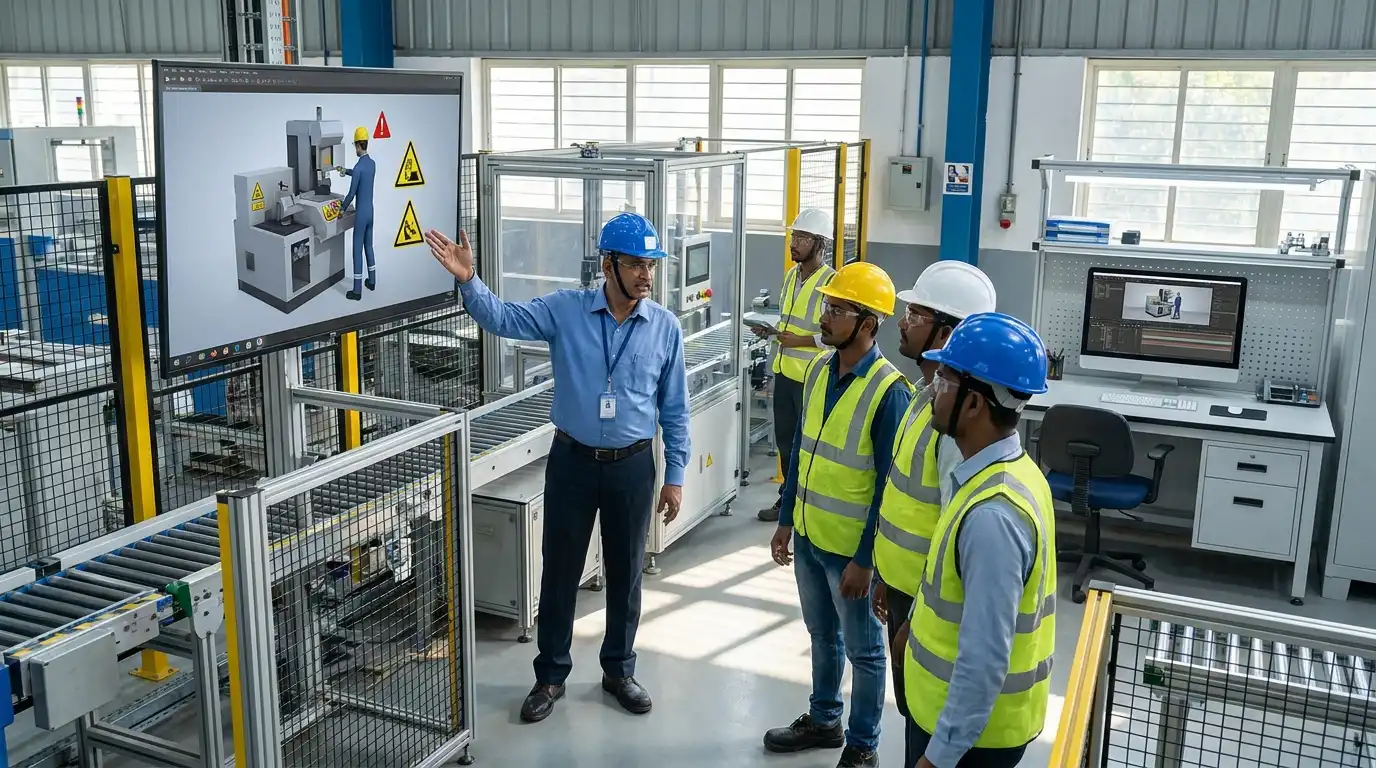
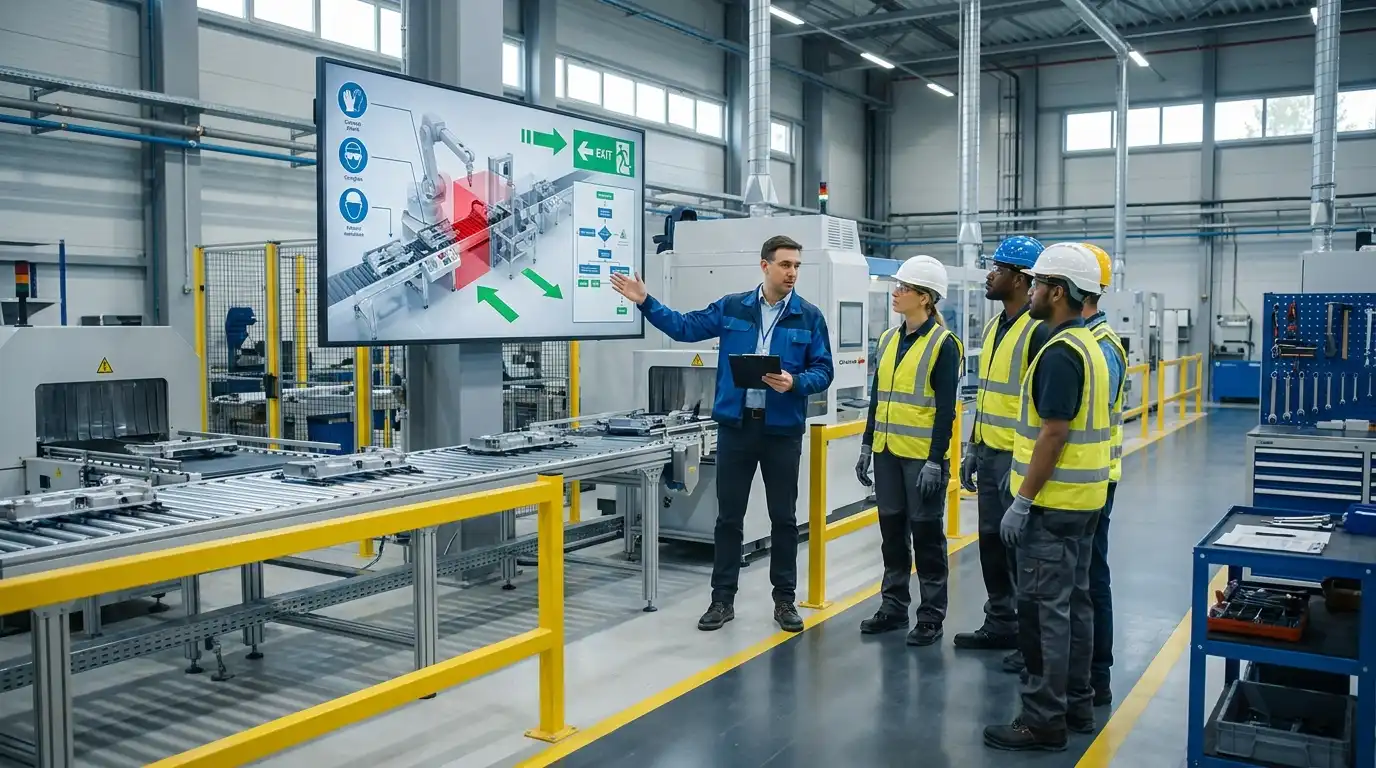
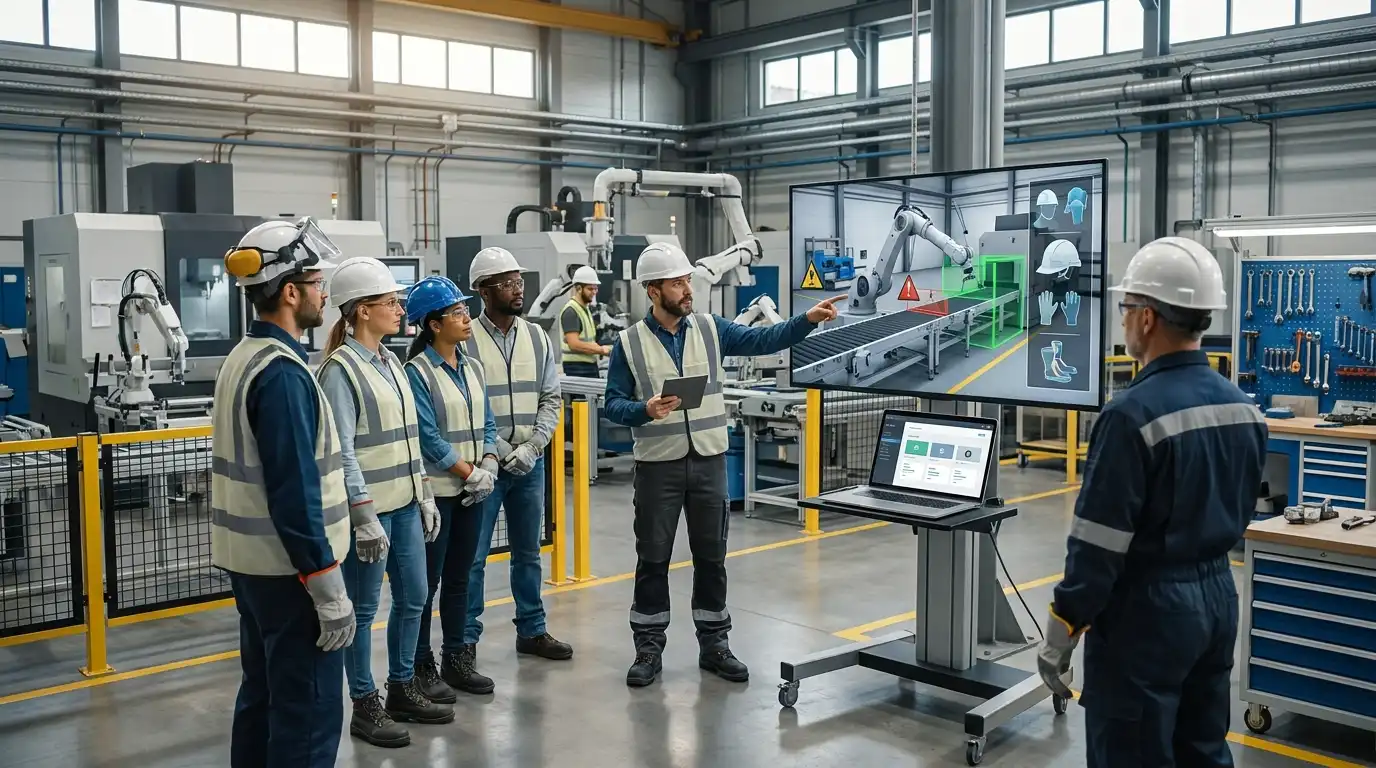
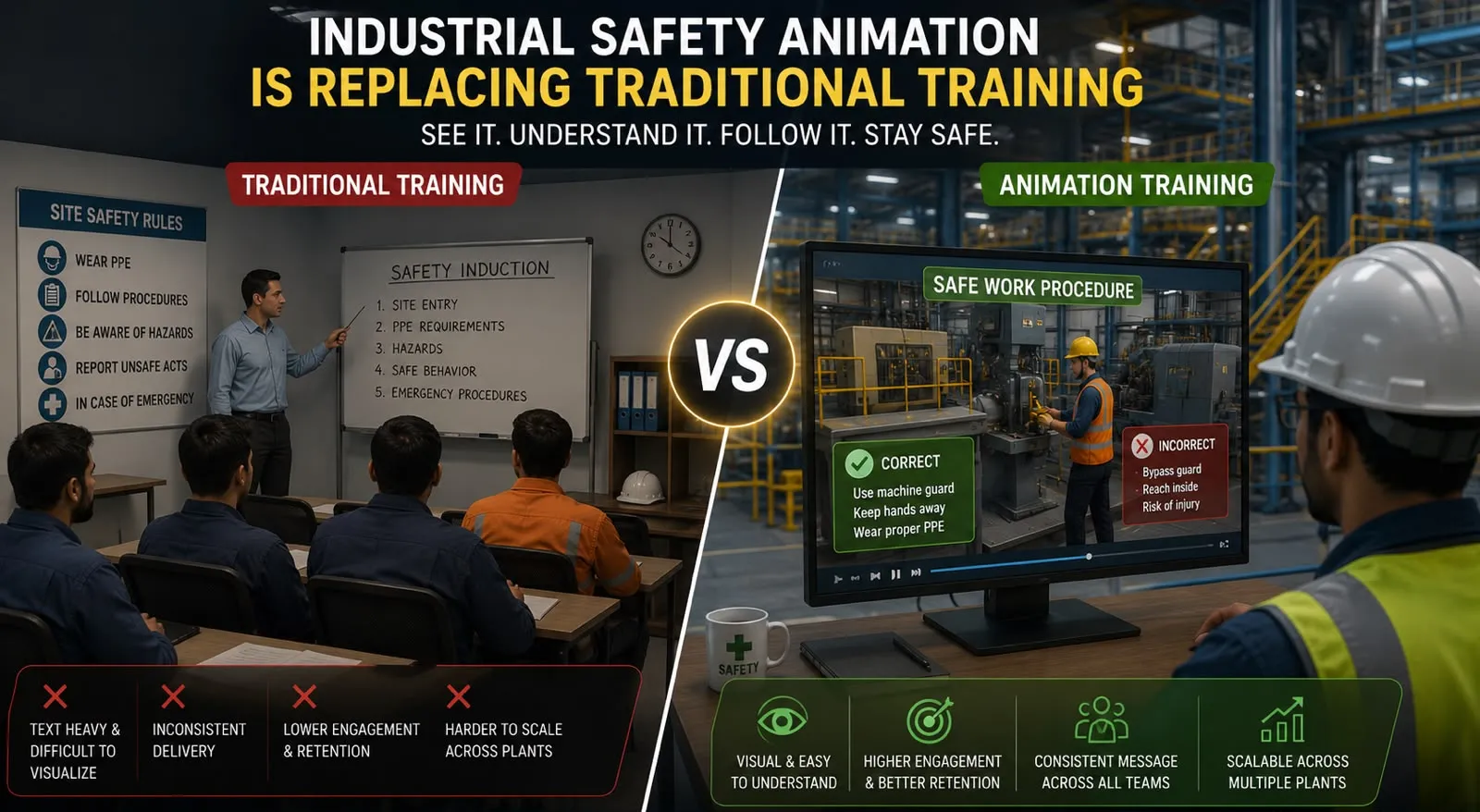
That is why industrial safety animation is replacing traditional training in many factories, plants, and industrial facilities. Instead of asking workers to imagine hazards from text or verbal explanations, animation shows them what the risk looks like, where the safe zone is, what the correct sequence should be, and what happens when a procedure is not followed. This makes training more practical, more repeatable, and easier to understand.
Sanskriti Infotech is well aligned with this shift because its services focus on 3D animation for safety, training, induction, machine guarding, process safety, and factory communication. For industrial businesses that want better training outcomes, industrial safety animation offers a more modern and effective alternative to traditional methods.
The Limits of Traditional Training
Traditional training usually depends on text, lectures, presentations, or one-time demonstrations. While these methods can communicate basic rules, they often struggle to explain movement, timing, equipment interaction, and real-world hazard scenarios clearly.
In industrial settings, that creates a problem. A worker may read a procedure but still not understand the danger zone around a machine. A contractor may sit through an induction but still not remember the safe walking route inside the plant. A team may attend a classroom session on lockout and tagout, but without a visual demonstration, the sequence may remain unclear.
Another challenge is consistency. When training is delivered by different trainers, across different shifts, departments, or locations, the message can vary. Some trainers explain well. Others move too quickly. Some focus on one risk more than another. Over time, this creates gaps in understanding.
Traditional training also becomes resource-heavy. Every repeated induction, toolbox talk, or refresher session takes time from supervisors, HSE teams, and operations staff. That makes it harder to scale high-quality training across large workforces.
What Industrial Safety Animation Does Better
Industrial safety animation replaces guesswork with visibility. Instead of describing a process, it shows the process. Instead of listing hazards in a document, it visualizes those hazards in context.
A strong animation module can show:
- Machine movement and danger zones
- Correct operator position
- Safe and unsafe behavior
- SOP sequence
- Process flow and hazard interaction
- Emergency response steps
- Entry restrictions and walking routes
- PPE use and task-specific precautions
This makes animation especially useful for factory environments where people need to understand physical movement, changing conditions, and exact sequence. It allows workers to see what safe behavior looks like before they perform the task in real life.
Industrial safety animation also improves consistency because every employee, contractor, and visitor sees the same approved message. That creates a stronger training standard across the organization.
Why Factories Prefer Visual Training
Factories are busy environments. Teams work in shifts. Contractors enter and leave. Machines operate continuously. New employees need induction, and experienced workers need refresher training. In this setting, visual training has several practical advantages.
First, it is faster to understand. A well-designed factory animation can communicate a hazard or procedure in a few minutes that might otherwise take much longer to explain through text and discussion.
Second, it is easier to remember. Workers often retain a visual sequence better than a written paragraph, especially when the training shows actual machine interaction, movement, or cause and effect.
Third, it is easier to repeat. Once an animation is created, it can be used across shifts, departments, facilities, contractor programs, and digital learning systems without rebuilding the same explanation every time.
This is one reason industrial training videos and factory animation are becoming more important in modern manufacturing and heavy industry training programs.
Key Reasons Industrial Safety Animation Is Replacing Traditional Training
1. It explains complex procedures more clearly
Many industrial procedures involve multiple steps, timing, machine behavior, and human interaction. Animation helps workers understand the entire sequence visually instead of piecing it together from text.
2. It improves hazard awareness
Workers can see pinch points, restricted zones, moving equipment, and emergency scenarios in a controlled environment. This makes hazard communication more direct and easier to understand.
3. It standardizes training
Traditional training can vary from one trainer or shift to another. Animation creates a repeatable and approved version of the message.
4. It supports induction at scale
Factories often need repeated induction for employees, contractors, vendors, and visitors. Animation makes this easier to manage while keeping the content consistent.
5. It is easier for multilingual workforces
Visual training reduces overdependence on long text. With subtitles, narration, or language-neutral visual sequences, the message becomes easier to understand across a broader workforce.
6. It supports modern digital training systems
Industrial safety animation can be used in LMS platforms, digital onboarding systems, safety meetings, internal portals, refresher training, and audit support.
Industrial Use Cases Where Animation Works Best
Industrial safety animation is most effective when the subject involves motion, sequence, risk, or physical environment.
Machine Guarding
Animation can clearly show moving parts, danger zones, guards, safe operator distance, and unsafe contact points. This is difficult to explain through text alone.
SOP Communication
Animated SOPs make step-by-step procedures easier to understand, especially when the process involves timing, movement, or coordination between people and equipment.
Employee and Contractor Induction
Animation is ideal for plant entry rules, PPE, movement restrictions, emergency routes, restricted zones, and basic hazard awareness.
Process Safety Training
For plants with process-driven operations, animation helps teams visualize scenarios, equipment interaction, and procedural control measures.
Shutdown and Maintenance Safety
Temporary shutdowns and maintenance activities often introduce unfamiliar work conditions and extra risk. Animation can explain permits, isolation logic, temporary access, and unusual site conditions more clearly.
Emergency Response
Emergency actions are easier to understand when workers can see the sequence, the evacuation route, and the decision points instead of only reading them.
Traditional Training vs Industrial Safety Animation
| Factor | Traditional Training | Industrial Safety Animation |
|---|---|---|
| Hazard explanation | Often text-based or verbal | Visual and situational |
| Understanding of movement and sequence | Limited | Strong |
| Consistency across teams | Variable | Standardized |
| Engagement | Lower in repeated sessions | Higher |
| Induction scalability | Moderate | High |
| Suitability for industrial complexity | Limited in many cases | Strong |
For most industrial companies, this is the real reason animation is replacing older formats. It does a better job of translating complex operations into practical learning.
Benefits for Industrial Businesses
The move from traditional training to industrial safety animation is not just about style. It is about performance.
Better understanding
Workers understand procedures faster when they can see the task, the hazard, and the correct sequence together.
Reduced confusion
Animation removes ambiguity around machine behavior, route movement, positioning, and timing.
More consistent communication
Every worker sees the same approved visual explanation, which improves standardization.
Stronger onboarding
New workers and contractors can be brought up to speed more effectively with reusable visual modules.
Better long-term training value
Once created, industrial training videos can be reused across departments, sites, and training cycles.
Support for safety culture
Clear communication improves awareness, reinforces expectations, and helps safety messages stay visible in day-to-day operations.
Why Sanskriti Infotech Is Relevant for This Shift
Sanskriti Infotech is relevant because its service positioning already matches the needs of industrial buyers moving away from text-heavy training. Its 3D animation services focus on induction, SOP communication, safety training, and plant-specific visualization. Its related pages also support machine guarding, manufacturing safety animation, process safety communication, oil and gas safety animation, and broader industrial use cases.
That makes Sanskriti Infotech a suitable partner for businesses that want industrial training videos and factory animation designed for practical safety communication rather than generic visual production. For companies that need training to be clearer, more scalable, and more aligned with real operations, industrial safety animation offers a strong replacement for traditional methods.
Conclusion
Industrial safety animation is replacing traditional training because it communicates procedures more clearly, standardizes the message, and makes safety easier to understand in real working environments. For factories, plants, and industrial facilities, visual learning is often more practical than relying only on manuals, lectures, and slide-based sessions.
As industrial operations become more complex, the need for better training tools becomes more urgent. Sanskriti Infotech is well positioned to support this shift through industrial safety animation, industrial training videos, and factory animation designed for clearer, more scalable workforce communication.
Ready to enhance workplace safety with engaging visuals? Contact us