Table of Contents
Introduction
Confined space training animation is a critical safety tool for organizations operating in environments where workers may be exposed to limited entry, hazardous atmospheres, or restricted movement. A confined space rescue animation walkthrough helps workers and rescue teams clearly understand the correct response sequence during emergencies. This blog explains how confined space training animation improves rescue preparedness, what a rescue-focused animation should include, and why animation is essential for high-risk, global work environments.
Why Confined Space Training Animation Is Essential
Confined space incidents are among the most dangerous workplace emergencies due to oxygen deficiency, toxic gases, engulfment risks, and limited escape routes. Training animations help organizations by:
- Visualizing confined space hazards clearly
- Demonstrating correct rescue procedures
- Preventing unplanned and unsafe rescue attempts
- Reinforcing permit-to-work and authorization steps
- Delivering consistent training across sites
For detailed regulations on permit-required confined spaces, see OSHA.
Confined Space Rescue: What an Animation Walkthrough Should Cover
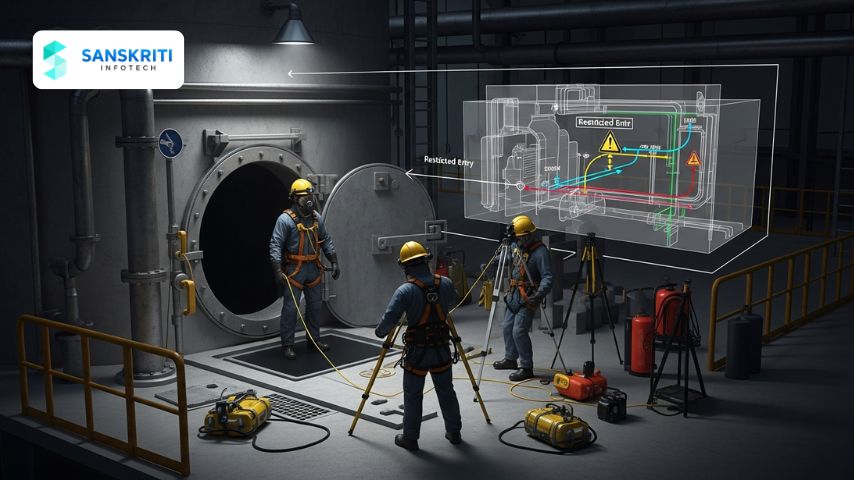
A confined space rescue animation walkthrough focuses on preparation, response, and recovery. Key elements typically included are:
- Identification of confined space hazards
- Permit-to-work and authorization checks
- Atmospheric testing and monitoring
- Use of PPE and rescue equipment
- Entry and non-entry rescue methods
- Communication and standby roles
- Post-rescue procedures
Learn more about manufacturing and oil & gas applications.
Confined Space Training Animation vs Traditional Rescue Training
Traditional confined space rescue training often relies on classroom sessions or limited drills, which may not fully represent real emergency conditions. Animation enables realistic visualization of rescue scenarios without exposing trainees to actual danger. Video training effectiveness statistics are available at Wyzowl.
Why Confined Space Animation Works for Global Workforces
Confined space training animation is particularly effective for multinational organizations with varied languages, literacy levels, and contractor workforces. Visual instruction ensures consistent understanding of rescue procedures across regions and sites. Explore global workplace safety at ILO.
Common Use Cases for Confined Space Rescue Animations
- Maintenance and shutdown operations
- Emergency response training
- Contractor induction
- High-risk task briefings
- Standardizing rescue procedures globally
Developing Effective Confined Space Training Animations
Creating accurate confined space rescue animations requires deep understanding of hazard control, rescue planning, and instructional design. Global solution partners such as Sanskriti Infotech support organizations by translating real confined space rescue procedures into clear, scalable animated training content.
Business Impact and ROI of Confined Space Training Animation
Organizations using confined space training animation often experience improved rescue readiness, reduced secondary casualties, better compliance outcomes, and stronger safety culture in high-risk operations. For insights on emergency preparedness and risk management, visit Forbes Business Council.
Ready to enhance your confined space training with professional animation? Contact Sanskriti Infotech for custom HSE animation solutions tailored to your industry needs.