Table of Contents
Introduction
AI safety training videos are no longer an experimental concept. They are becoming a practical necessity for organizations struggling to keep safety training accurate, compliant, and relevant across large and distributed workforces. Traditional safety videos were designed for static environments. Today’s workplaces are anything but static.
EHS leaders face constant change—procedures evolve, risks shift, contractors rotate, and regulatory expectations increase. Yet training content often lags behind reality. This gap between how work is documented and how work is actually performed is where incidents, non-compliances, and repeat observations originate.
AI-powered safety training videos address this gap by introducing adaptability, speed, and scale—while still requiring strong governance and EHS oversight. Learn more about advanced safety animation solutions at Sanskriti Infotech.
1. Why Traditional Safety Training Is Failing at Scale
Most safety training programs were built for smaller, stable workforces. They struggle when applied to modern operations.
- Training content becomes outdated quickly
- Manual updates are slow and expensive
- Contractors receive inconsistent induction
- Generic videos fail to reflect site-specific risks
- Engagement drops after repeated exposure
As a result, safety training becomes a compliance checkbox rather than a risk control. AI safety training videos aim to change that dynamic. For manufacturing and other industries, see our industry-specific solutions.
2. What AI Safety Training Videos Really Are (and Are Not)
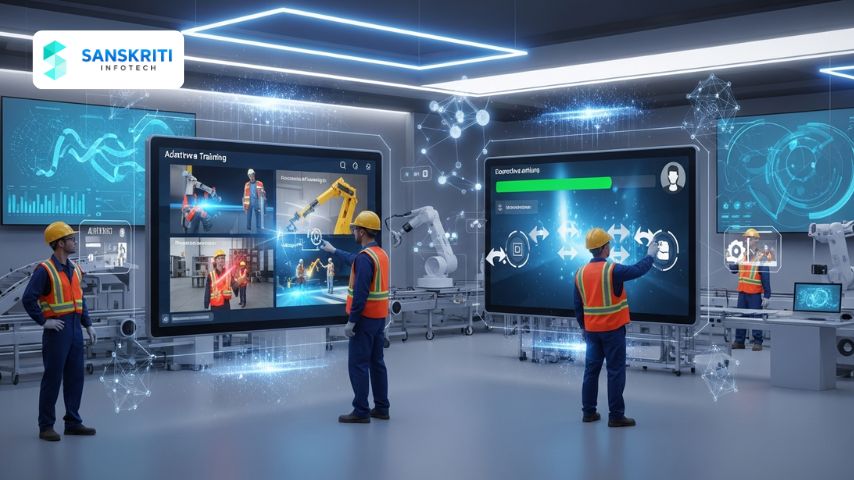
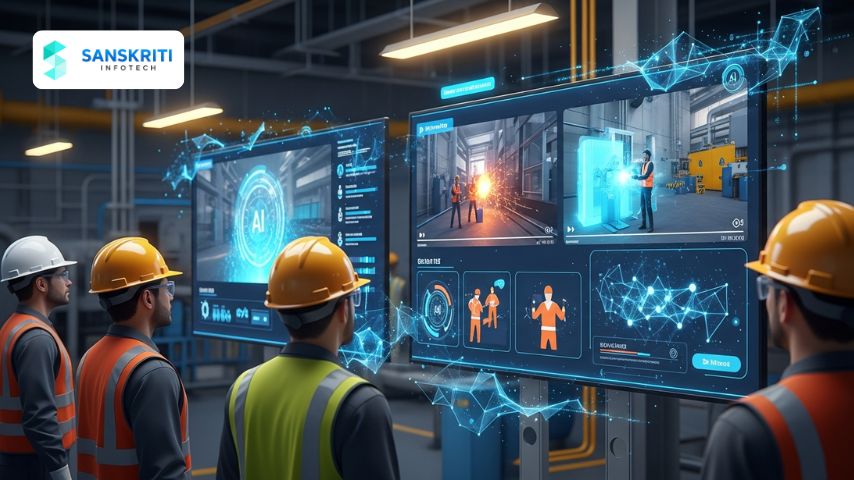
AI safety training videos use artificial intelligence to automate parts of content creation, personalize delivery, and keep training aligned with real-world changes.
What AI safety videos ARE:
- Adaptive and update-friendly
- Scalable across locations
- Role-aware and context-driven
- Integrated with digital EHS systems
What AI safety videos are NOT:
- Fully autonomous decision-makers
- Replacements for EHS expertise
- Uncontrolled content generators
- One-click solutions without governance
3. AI in EHS Training: The Right Way to Use It
Used correctly, AI enhances EHS training rather than replacing it.
Effective AI EHS training combines:
- Human-led risk assessment
- AI-assisted content generation
- EHS validation and approval
- Controlled deployment
- Continuous performance monitoring
This hybrid model ensures accuracy, compliance, and trust. Explore our process productivity improvement services for EHS optimization.
4. Practical Use Cases Across Safety Programs
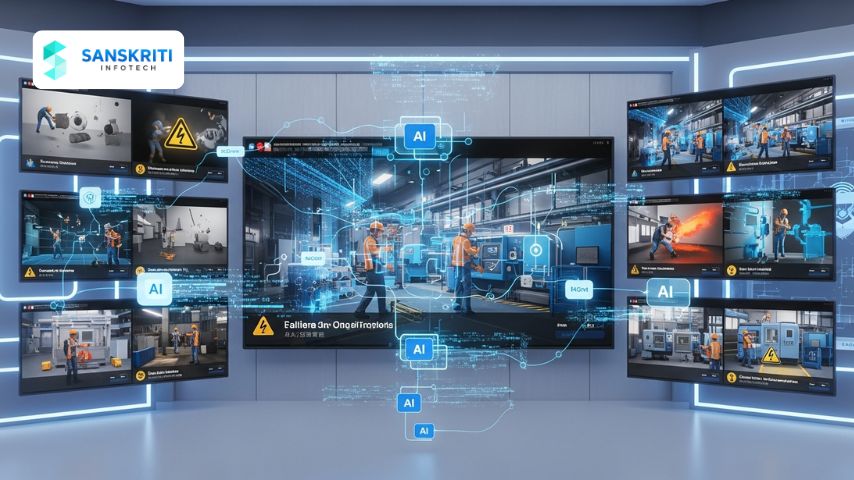
Organizations are using AI safety training videos in very practical, operational ways:
- Safety induction for employees, contractors, and visitors
- Hazard awareness and near-miss prevention
- SOP and permit-to-work training
- Refresher training for high-risk activities
- Incident learning and scenario replay
Because content can be updated quickly, training stays aligned with how work is actually performed.
5. AI Safety Training for Compliance & Audits
Compliance is one of the strongest drivers for AI-powered safety training.
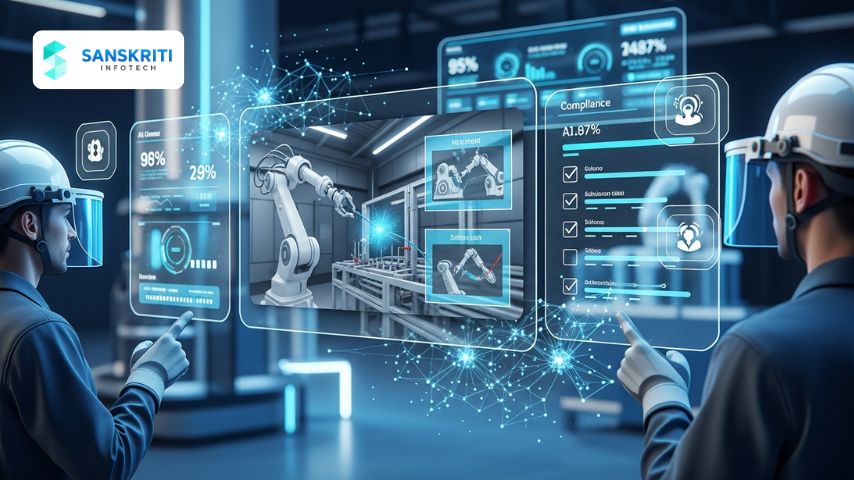
AI compliance videos help organizations:
- Ensure the latest procedures are always shown
- Reduce manual errors during updates
- Standardize training across regions
- Support audit readiness
- Maintain traceable training records
Auditors value consistency. AI supports that—when properly governed. Learn more about compliance in pharma and other regulated sectors.
6. Contractor & Large Workforce Training Challenges
Contractors and temporary workers often represent the highest risk exposure.
AI-powered safety training helps by:
- Delivering consistent induction regardless of location
- Adapting content to task-specific risks
- Reducing reliance on classroom availability
- Supporting multilingual workforces
- Enabling just-in-time safety refreshers
7. AI Governance, Validation & Ethical Use in Safety
AI in safety training must be governed carefully.
Strong governance includes:
- EHS-led content validation
- Clear approval workflows
- Defined boundaries for AI automation
- Transparency in AI-generated content
- Regular review against incidents and audits
Without governance, AI introduces risk instead of reducing it. Our tech support & IT consulting ensures robust governance.
8. Business Impact and ROI of AI Safety Training Videos
Organizations implementing AI safety training report tangible benefits.
- Faster rollout of safety updates
- Improved engagement and retention
- Reduced administrative burden
- Better compliance consistency
- Scalable training without proportional cost increases
9. The Future of AI in Safety Training
AI safety training is moving toward predictive and proactive models.
Future trends include:
- Risk-triggered micro-learning
- Predictive hazard communication
- Digital twin integration
- AI-assisted incident recreation
- Continuous learning ecosystems
10. Why Organizations Choose Sanskriti Infotech
Sanskriti Infotech delivers AI safety training videos that balance innovation with responsibility.
Organizations partner with Sanskriti Infotech because:
- Sanskriti Infotech combines AI with deep EHS expertise
- Sanskriti Infotech applies governance-first AI models
- Sanskriti Infotech supports large, distributed workforces
- Sanskriti Infotech ensures compliance-driven execution
- Sanskriti Infotech operates as a long-term safety partner
Discover our full range of 3D animation services for AI-enhanced safety training.
Ready to modernize your safety training with AI-powered solutions? Contact Sanskriti Infotech today to transform compliance into culture.