Table of Contents
Introduction
AI videos for workplace safety are no longer a future concept — they are becoming a competitive advantage. Organizations that rely on static safety videos, classroom sessions, and annual refreshers are struggling with the same outcomes: low retention, repeated unsafe acts, contractor incidents, and audit findings that keep resurfacing year after year.
The problem is not effort. EHS teams work hard to design programs, write SOPs, and deliver training. The real problem is translation — converting safety rules into day-to-day decision-making on the shop floor, at construction sites, in warehouses, and across offices.
AI-powered workplace safety videos are designed to close this gap by combining automation, intelligence, and governed content workflows to deliver training that actually changes behavior — not just completes a checklist.
Why Traditional Workplace Safety Training Is Structurally Broken
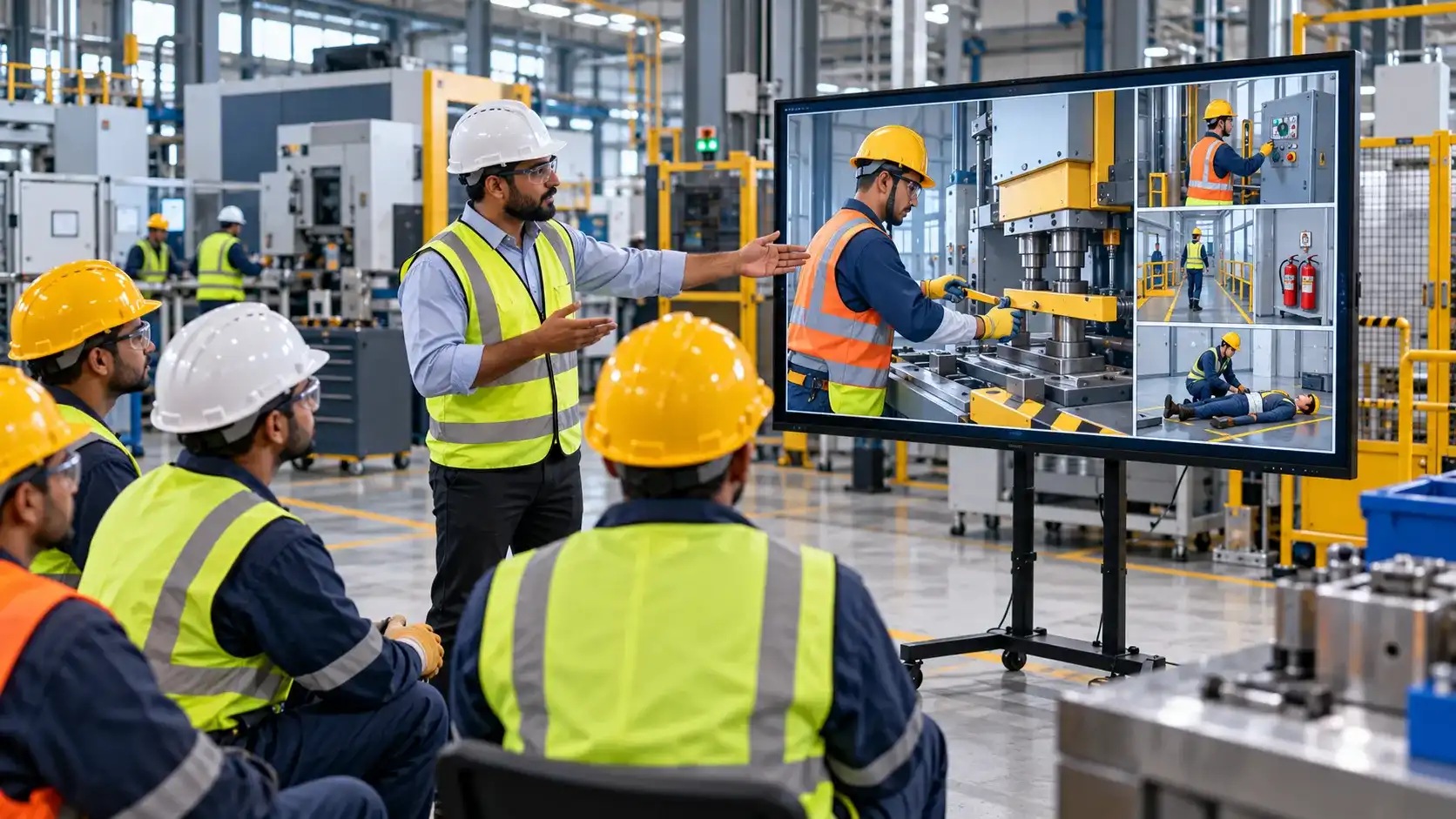
Most workplace safety training models were built for stability. Modern operations are dynamic.
- Workforce composition changes constantly (employees, contractors, gig workers)
- Procedures are updated frequently
- Risks vary by shift, role, and environment
- Training content is refreshed too slowly
- Engagement drops sharply after first exposure
Static videos and slide decks cannot keep up with this pace. AI-driven safety videos introduce speed and adaptability without sacrificing control. Learn more about regulatory compliance at OSHA.
What AI Videos for Workplace Safety Actually Are — and Why That Matters
AI workplace safety videos are not generic AI-generated clips. When done correctly, they are part of a controlled training ecosystem.
At a technical level, AI enables:
- Modular video components linked to safety procedures
- Automated regeneration when SOPs change
- Role-based content delivery (operator, supervisor, contractor)
- Scenario variation for different risk profiles
- Analytics-driven optimization of training frequency
Without this structure, so-called AI videos become uncontrolled content — which increases risk instead of reducing it. Explore AI-enhanced 3D animation services for safety.
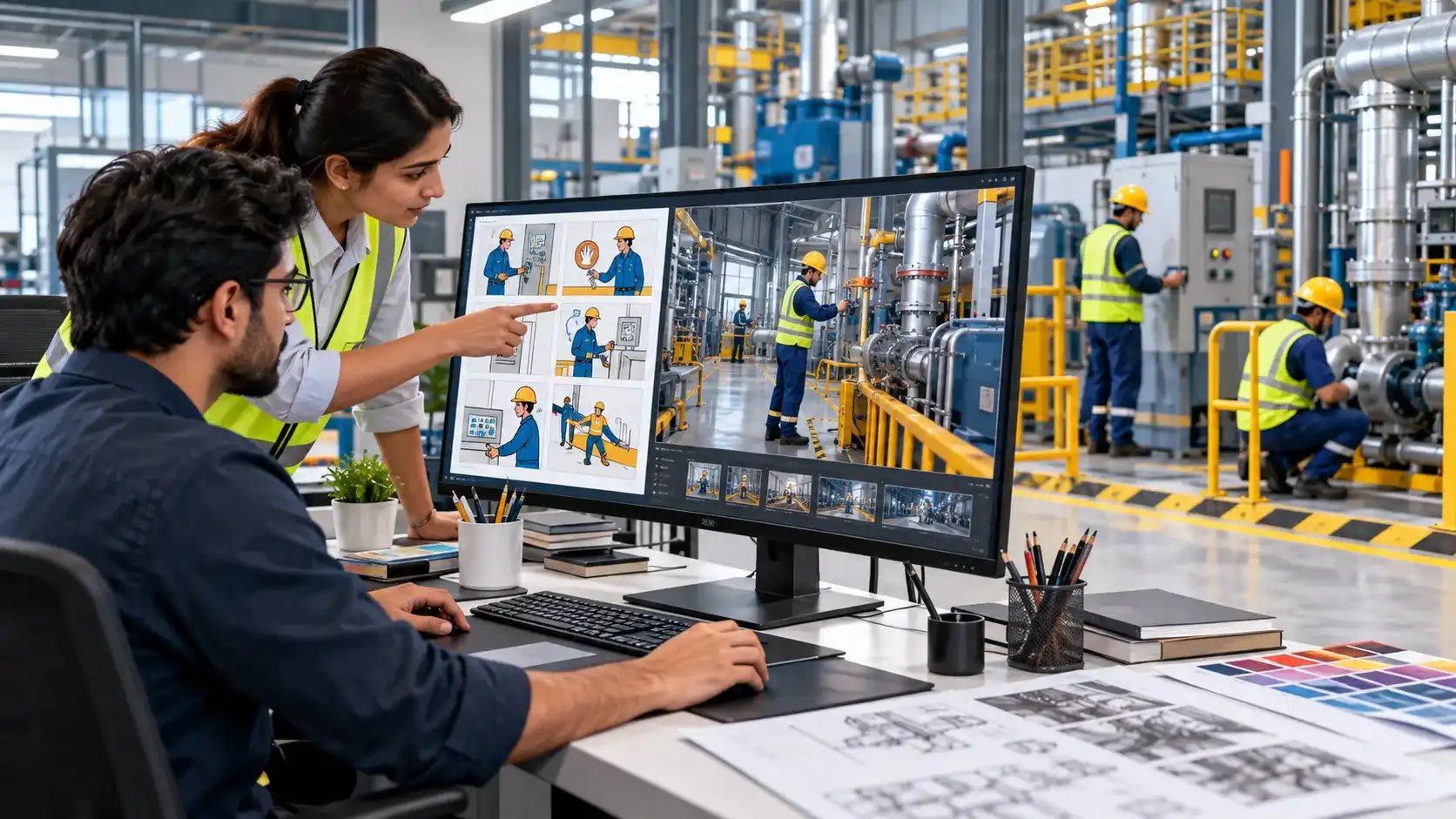
How AI Safety Video Workflows Actually Function
A properly designed AI safety video workflow follows a governed sequence.
Typical workflow:
- SOP / risk assessment input
- AI-assisted script generation
- Scenario modeling and visualization
- EHS validation and approval
- Deployment through LMS or EHS platforms
- Feedback, incident data, and continuous improvement
This workflow ensures speed without losing accountability — a critical requirement for regulated environments. See NIOSH guidelines for safety training best practices.
Where AI Workplace Safety Videos Deliver Immediate Value
High-performing organizations deploy AI safety videos across daily operations.
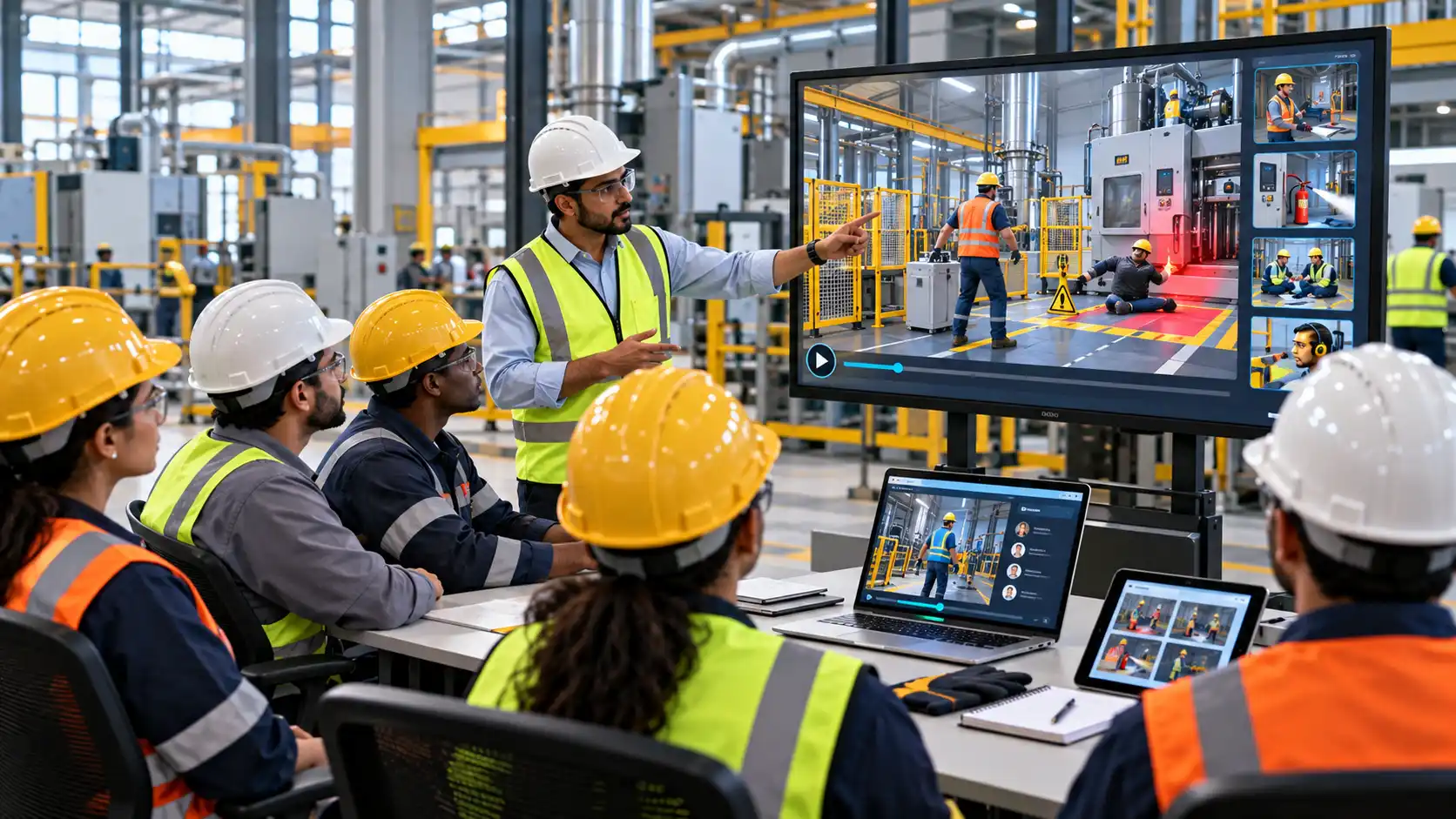
- Employee safety induction that adapts to role and location
- Contractor onboarding with consistent risk messaging
- Hazard awareness refreshers tied to incident trends
- Office and industrial safety micro-learning
- Near-miss learning distributed within days, not months
The result is faster learning cycles and stronger behavioral reinforcement.
Using AI Videos to Strengthen Compliance and Audit Outcomes
Auditors increasingly look beyond training completion records. They look for effectiveness.
AI-powered workplace safety videos support compliance by:
- Ensuring training always reflects current procedures
- Standardizing content across sites
- Reducing interpretation errors
- Providing version-controlled evidence
- Demonstrating continuous improvement
When governed correctly, AI becomes a compliance accelerator — not a liability. Learn more at HSE UK.
Training Large, Distributed, and Contractor-Heavy Workforces
Contractors often represent the highest incident risk.
AI safety videos address this by:
- Delivering identical induction quality across sites
- Supporting multilingual delivery
- Reducing dependency on instructor availability
- Providing just-in-time refreshers before high-risk tasks
- Reinforcing site-specific hazards visually
Discover industry-specific solutions for logistics and construction.
AI Governance: The Difference Between Safe Automation and Dangerous Automation
AI safety content without governance is unsafe.
A responsible AI workplace safety program includes:
- Clear ownership by EHS leadership
- Approval checkpoints
- Separation of learning content from legal records
- Defined AI boundaries
- Regular reviews against incidents and audits
This governance layer is what separates specialist providers from generic AI video vendors.
Business Impact: Why Leaders Are Investing in AI Safety Videos
Organizations investing in AI workplace safety videos see measurable outcomes.
- Faster rollout of training updates
- Reduced training administration cost
- Higher retention and recall
- Fewer repeat incidents
- Stronger safety culture metrics
The ROI is not just financial — it is operational resilience. For safety culture insights, visit National Safety Council.
The Future of Workplace Safety Training Is Predictive
AI safety videos are evolving from reactive training tools into predictive safety systems.
What lies ahead:
- Risk-triggered video deployment
- Integration with sensors and digital twins
- Predictive near-miss learning
- Personalized safety learning paths
- Continuous, adaptive safety communication
Why Most AI Video Providers Are the Wrong Choice for Workplace Safety
Most AI video providers come from marketing or media backgrounds.
They optimize for speed and cost — not safety accuracy.
In workplace safety, incorrect visuals are not cosmetic errors. They create risk.
Why Organizations Choose Sanskriti Infotech
Sanskriti Infotech is not an AI video vendor. We operate as a workplace safety technology partner.
Organizations choose Sanskriti Infotech because:
- Sanskriti Infotech combines AI, 3D visualization, and EHS expertise
- Sanskriti Infotech builds governed AI workflows, not raw automation
- Sanskriti Infotech designs for large and regulated workforces
- Sanskriti Infotech focuses on behavior change, not video volume
- Sanskriti Infotech supports long-term safety transformation
Ready to modernize your safety training with AI-powered solutions? Contact us to transform compliance into culture.