Table of Contents
Introduction
Safety animation videos are transforming how organizations deliver workplace training. Traditional training methods often fail to keep employees engaged, leading to poor retention and compliance issues. By integrating safety animation videos into training programs, companies can make learning more visual, interactive, and memorable. From onboarding to advanced compliance training, safety animation videos play a crucial role in reducing workplace incidents and building a culture of safety. In this blog, we explore how organizations can integrate safety animation videos effectively and how Sanskriti Infotech helps global industries achieve safety excellence.
Why Safety Animation Videos Matter in Modern Training Programs
Workplace accidents are often caused by a lack of proper training or misunderstanding of safety procedures. Safety animation videos simplify complex processes, demonstrate hazards in a risk-free environment, and make compliance training more engaging. They are especially effective in industries such as manufacturing, oil and gas, construction, and logistics, where hands-on safety knowledge is critical for day-to-day operations. Learn more about regulatory standards at OSHA.
Shortcomings of Traditional Training Methods
Traditional approaches to safety training often face these limitations:
- Text-heavy manuals that fail to engage employees
- Classroom lectures with low participation levels
- Inconsistent delivery of information across departments
- Limited ability to simulate high-risk workplace scenarios
- Poor retention of critical safety procedures
Explore additional research and resources at NIOSH.
How to Integrate Safety Animation Videos into Training Programs
Here are five effective ways to integrate safety animation videos:
- Aligning with Compliance Requirements: Safety animation videos should align with OSHA, ISO, and local safety standards. This ensures employees receive training that is not only engaging but also meets regulatory requirements.
- Embedding in E-Learning Platforms: Videos can be integrated into Learning Management Systems (LMS) for seamless access. With SCORM-compliant modules, organizations can track employee progress, completion rates, and assessment scores.
- Using for Onboarding and Refresher Training: Animated safety videos are highly effective for new employee onboarding and refresher training. They ensure employees consistently understand SOPs and emergency protocols.
- Customizing for Multilingual and Diverse Workforces: Global companies benefit from multilingual animated videos that break down language barriers and deliver uniform safety training across multiple locations.
- Leveraging Microlearning and Bite-Sized Modules: Breaking down long training sessions into short animated modules improves retention and allows employees to revisit safety concepts quickly when needed.
Benefits of Safety Animation Videos in Training Programs
Organizations integrating safety animation videos report several advantages:
- Higher knowledge retention rates among employees
- Reduced training time and faster onboarding
- Increased engagement compared to traditional lectures
- Cost-effective training delivery at scale across multiple locations
- Improved compliance audit results
Case Study: Manufacturing Plant Integration
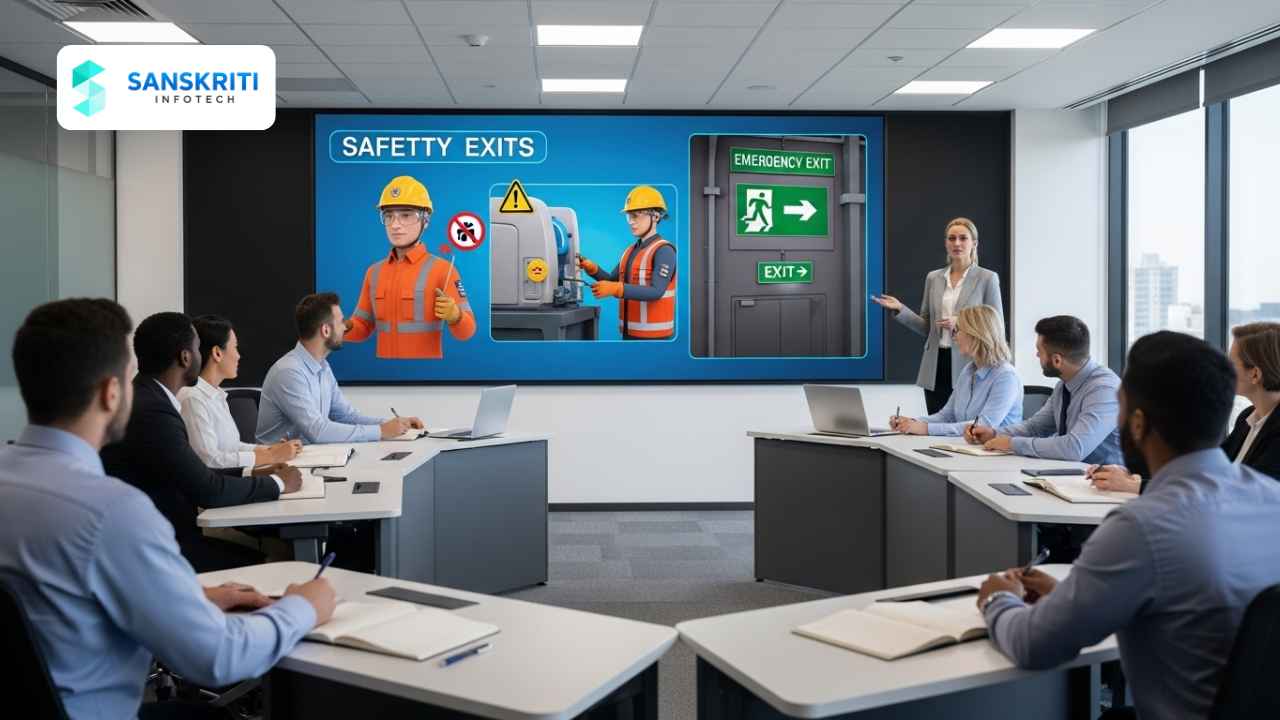
A global manufacturing plant partnered with Sanskriti Infotech to integrate safety animation videos into its workforce training. The animations covered machine operation, PPE usage, and emergency evacuation protocols. After six months, the company recorded a 40 percent reduction in near-miss incidents, and employee feedback showed that the videos were more engaging than traditional manuals or classroom sessions.
Best Practices for Implementing Safety Animation Videos
To maximize the impact of safety animation videos, organizations should follow these practices:
- Involve safety managers and compliance officers in content creation
- Keep videos short, focused, and scenario-driven
- Regularly update content to reflect changing regulations and equipment use
- Use a mix of 2D, 3D, and gamified animations for variety
- Gather employee feedback to continuously improve training effectiveness
Find detailed guidelines and recommendations from HSE UK.
The Future of Safety Training Programs
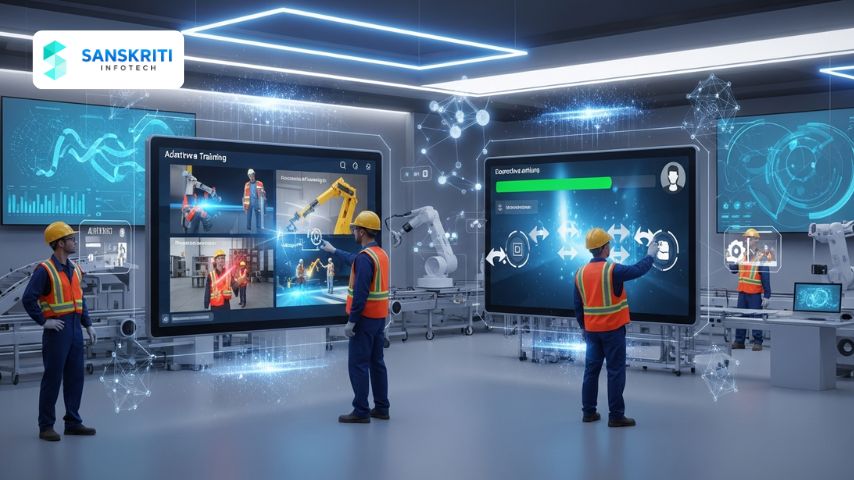
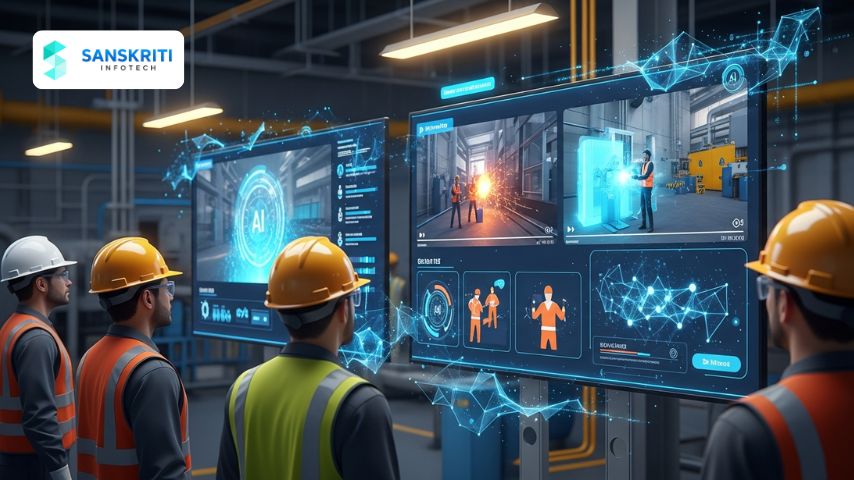
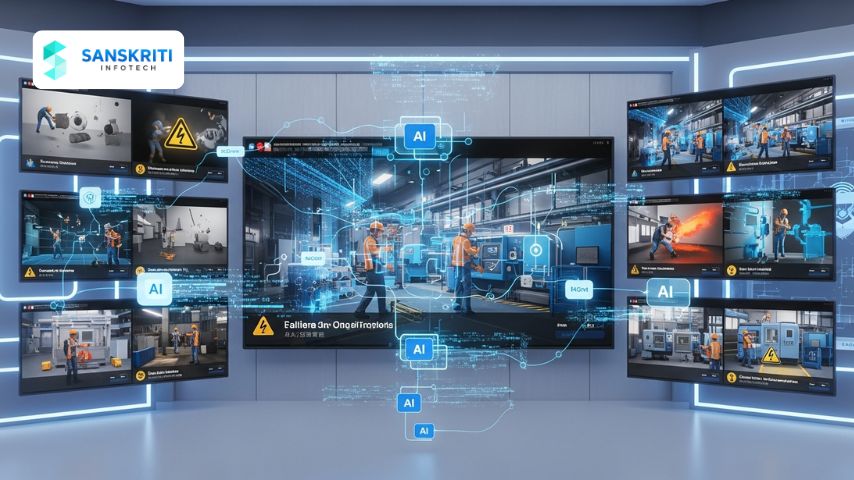
The future of training programs will integrate safety animation videos with advanced technologies like Virtual Reality (VR), Augmented Reality (AR), and Artificial Intelligence (AI). VR-based safety drills, AR overlays for real-time hazard detection, and AI-driven adaptive learning modules will redefine how employees are trained, making programs more immersive and personalized. For future-focused training innovations, see National Safety Council.
Sanskriti Infotech: Driving Safety Excellence
Sanskriti Infotech specializes in creating customized safety animation videos that meet industry-specific requirements. Our animations are SCORM-compliant, multilingual, and designed to integrate seamlessly with existing training programs. By combining creative storytelling with technical precision, we help organizations worldwide reduce workplace risks and build a safety-first culture.
Conclusion
Integrating safety animation videos into training programs is no longer optional—it is a necessity for organizations committed to employee safety and regulatory compliance. By using these videos, companies can make training more effective, reduce incidents, and create a culture where safety is prioritized. Sanskriti Infotech is proud to be a trusted partner for global companies in their journey to safer workplaces.
Ready to transform your training program? Contact us for tailored safety animation solutions.